Image Credit: Dmytro Sheremeta/Shutterstock.com
Nothing tests your patience like trying to start a fire when you really need one. A lighter that won’t spark, damp wood that refuses to catch, or wind that snuffs out every flame—it’s frustrating, and in a real survival situation, it’s dangerous. Fire isn’t just about comfort. It’s about staying warm, cooking food, purifying water, and sometimes, keeping predators away.
A lot of people assume fire-starting is easy until they’re out there struggling to get a flame going. That’s why knowing multiple tricks is a game-changer. You don’t want to be stuck in the cold, wasting time and energy on methods that won’t work. If you want to be the person who can always get a fire going—rain or shine—these are the tricks you need to know.
Light It from the Windward Side

Wind can be your worst enemy or your best friend when starting a fire. If you light it from the wrong side, the flames will struggle and could die out before they spread. But if you work with the wind, you’ll have a much easier time getting it going.
Always light your fire on the side the wind is coming from. This lets the flames travel naturally through your kindling, catching and spreading faster. If the wind is too strong, use your body or a rock as a windbreak to control the airflow. Letting the fire work with the wind instead of against it makes all the difference.
Start the Fire Low

Fire doesn’t burn down—it climbs. If you try lighting the top of your fire lay like a candle, all you’ll get is some brief flickering before it dies out. The real heat needs to start at the base, where it can build and rise.
Use your match, lighter, or spark to ignite the driest tinder at the very bottom. Once the flame takes hold, it will work its way up, catching the kindling and then the larger fuel. If your fire lay is built right, you won’t have to fight to keep it burning—the flames will do the work for you.
Peel Off the Bark

Bark is nature’s armor, designed to protect trees from fire, which means it won’t do you any favors when trying to start one. Most bark holds moisture, especially if your wood has been sitting outside. The good news is that there’s usually dry wood hiding just beneath the surface—you just have to get to it.
Use a knife or hatchet to peel or carve away the bark from your kindling and smaller sticks. If the outside is damp, shaving off that outer layer exposes dry wood that will catch fire much faster. This is especially useful when gathering wood from dead trees, which often look dry but still have moisture trapped under the bark.
Flint and Steel

Flint and steel is one of the most reliable fire-starting methods, and it works even when your gear is soaked. All you need is a sharp piece of flint, a high-carbon steel striker, and some dry tinder. When you strike the steel against the flint at the right angle, it shaves off tiny metal particles that ignite from the friction.
The key to success is having good tinder. Char cloth, dry grass, or even birch bark can catch the spark and smolder long enough to transfer it to a proper tinder bundle. Practice striking at different angles until you consistently get sparks landing where you need them. This method takes patience, but once you get it, it’s as reliable as it gets.
Fire Plough
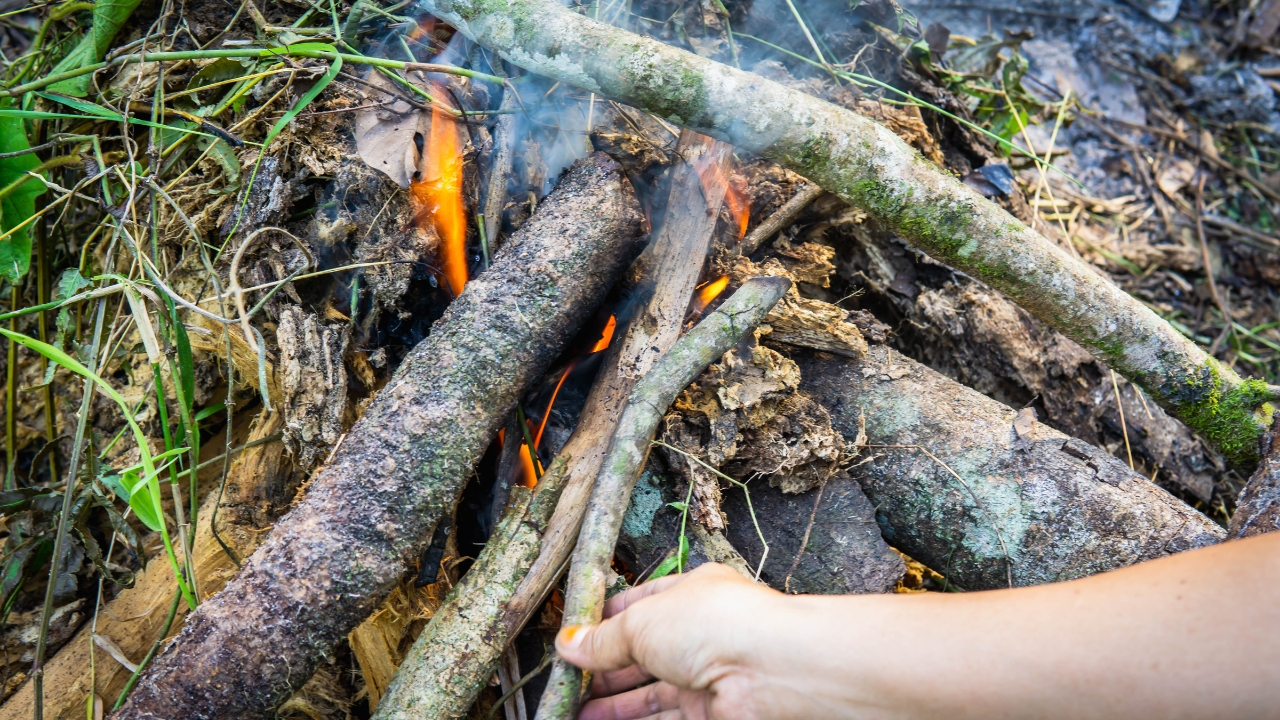
The fire plough is a friction method that generates heat by rubbing a harder wooden shaft against a softer fireboard. As you push the spindle back and forth, fine wood particles gather in the groove, heating up until they ignite. It takes some effort, but it works well with the right technique.
Start with a dry, softwood fireboard and carve a long groove into it. Use a slightly harder spindle and rub it rapidly up and down the groove with steady pressure. The key is consistency—too slow and you won’t generate enough heat, too fast and you’ll scatter the tinder. Once you see smoke and embers forming, carefully transfer them to your tinder bundle and coax it into flame.
Use Sticky Wood

When everything is wet, look for trees with sap. Pine, fir, and spruce all produce pitch, a natural firestarter that burns hot and long. Even in pouring rain, you can often find dry, dead twigs tucked under the lower branches of these trees, protected from moisture.
Collect small twigs and larger branches with visible sap. If you find a broken limb oozing pitch, scrape some off with your knife and smear it onto dry tinder. This resin catches fire easily and keeps burning even in damp conditions. If you ever struggle to find dry fuel, a sticky pine branch can be the difference between a fire that catches and one that fizzles out.
Split Wood Burns Faster

A thick, round stick won’t catch fire nearly as well as one that’s been split down the middle. Splitting your wood exposes the dry inner core, giving you an edge when trying to get a fire going, especially in damp conditions.
Use a hatchet, knife, or even a sharp rock to split your kindling in half lengthwise. These thinner pieces ignite faster and burn hotter than whole sticks, helping you build a fire more efficiently. If the wood is stubborn, use a baton—a thick stick or log—to hammer your knife through the center. The extra effort upfront makes a big difference when you’re trying to get a solid flame going.
Build It the Right Way

Most failed fires don’t even stand a chance because they’re built wrong. If your kindling is too spread out or stacked too low, the heat won’t rise properly, and you’ll end up frustrated with a pile of smoldering sticks instead of a real fire.
Stack your smallest twigs and kindling into a tall tipi shape, at least a foot high. This setup lets heat rise quickly, drying out damp wood as the flames climb. Avoid the common mistake of laying everything flat—fire needs space to breathe. If you start with the right structure, your fire will take off faster and burn hotter.
Pack a Fire Helper

Even the best fire-starting skills can hit a wall when the weather turns bad. Rain, snow, or damp conditions can make it nearly impossible to get a fire going without a little extra help. That’s where fire starters come in handy.
Keep a stash of fire cubes, cotton balls soaked in petroleum jelly, or even dryer lint from home in a waterproof bag. These ignite easily and burn long enough to dry out your kindling and get a sustainable fire going. Fire paste is another great option, especially in freezing temperatures when everything around you is damp. A little preparation now can save you a lot of trouble later.
*This article was created with the assistance of AI.