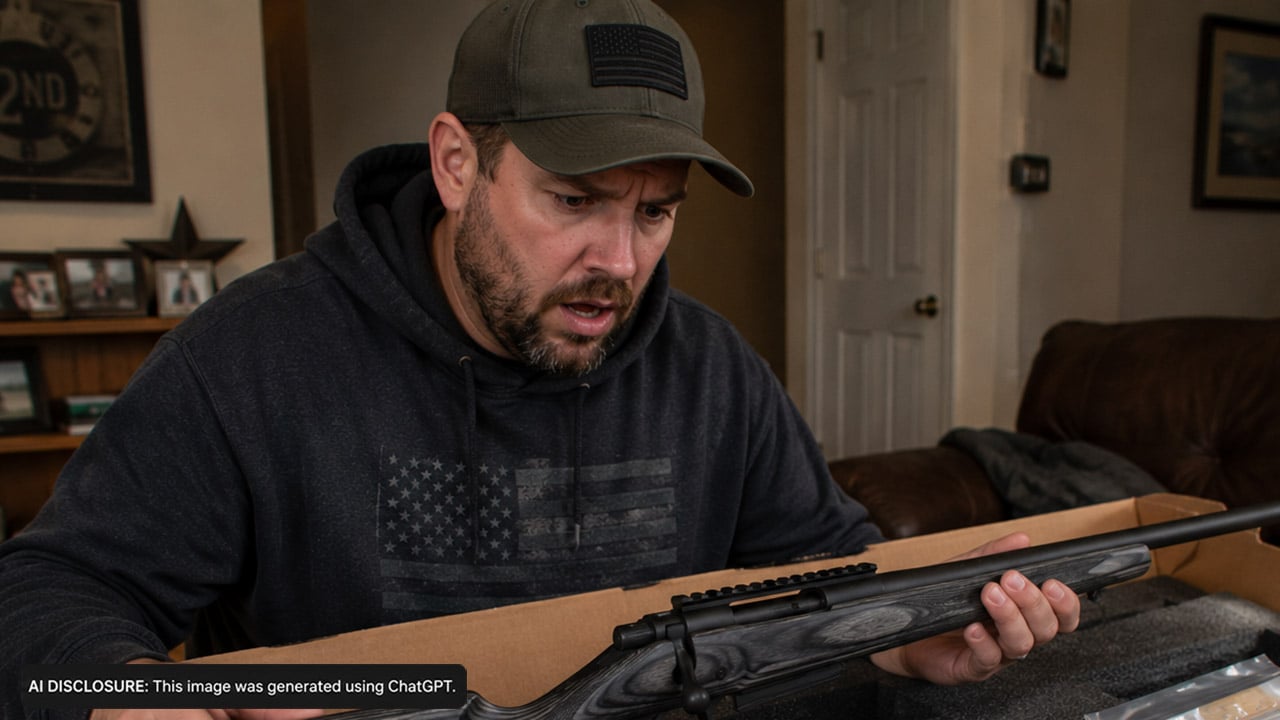
Photo credit: AI-generated image created using ChatGPT. Illustrative only
Most of us have been there: you swing by the local gun shop after work, sign the paperwork, and you’re already mentally packing for the weekend. The rifle is new, the transfer is done, and you just want to get it home, wipe it down, and put it in the safe.
That’s exactly how one buyer ended up with a surprise waiting in the box. In the original post, the buyer explained he’d ordered a rifle from a shop, had it shipped in for transfer at his local gun store, and didn’t realize until the next day that he’d received the stainless-barrel model instead of the all-black version he meant to buy.
A clean transfer, and then the “hold on a second” moment at home
The buyer said the rifle was purchased from a dealer and transferred through his local gun shop. At the counter, he completed the transfer like normal. Nothing seemed off in the moment, and he admitted he was in a hurry and “should have paid more attention.”
It wasn’t until he got home, opened the box again to put the rifle in the safe, that he noticed the finish wasn’t what he ordered. Instead of an all-black rifle, he had a stainless-barrel model sitting in front of him.
Why this kind of mix-up matters more than “just cosmetics”
A different finish can sound minor to folks who don’t spend much time around hunting rifles and hard-use guns. But outdoorsmen know the finish is part of the tool. It affects glare, corrosion resistance, how it blends in the field, and—maybe most importantly—whether the rifle is what you budgeted for and actually wanted.
If a guy ordered black because he hunts open country and doesn’t want a shiny barrel catching sun, that’s not nitpicking. Same goes for someone trying to match other gear, avoid stainless for a certain look, or simply because the all-black model was the one that fit the plan.
And there’s another angle: when you’re paying for a specific SKU or configuration, “close enough” isn’t the deal. A rifle isn’t a box of screws. The model and configuration is the purchase.
The part that complicates it: the transfer is already completed
This is where the rubber meets the road. The buyer had already completed the transfer at his local gun store. In plain terms, that usually means the firearm is now legally his, logged out to him, and the paperwork is done.
Once that happens, the situation often shifts from “simple shipping error” to “how willing is the selling dealer to make it right, and what will the receiving shop do to help?” That doesn’t mean it’s hopeless. It does mean you’re no longer catching the mistake before it becomes your inventory.
The buyer’s main question was straightforward: would the dealer switch it out?
The dealer history added a little worry
In his post, the buyer noted the selling dealer had recently run a “mega sale” that left a lot of people upset. He also mentioned he’d bought four guns from them before without any issue.
That’s a pretty familiar dynamic in the gun world. Big sales bring big volume, and big volume can bring shipping mistakes, mixed SKUs, and rushed picking/packing. Most shops try to keep it tight, but when the warehouse is moving fast, errors happen.
Still, past positive experiences don’t automatically guarantee an easy fix, especially after a transfer is completed. That’s why this situation makes a good reminder for the rest of us.
What gun folks usually focus on in a situation like this
Even without a long comment thread included, you can guess what experienced gun owners tend to hammer on when this happens: documentation and acting fast. If you discover the mismatch, you don’t wait a month, take it to the range, and then call. You treat it like any other order mistake and address it immediately.
They also tend to stress checking the firearm at the counter before you sign anything. That doesn’t mean fondling it for 20 minutes while customers stack up behind you. It means opening the case/box, confirming the model markings, confirming the serial on the gun matches the paperwork, and giving it a quick once-over to make sure the rifle in the box is the rifle you bought.
And there’s a practical reason people harp on it: once you leave and the transfer is complete, everyone involved has less flexibility. Not because they’re trying to be difficult—because the rules and recordkeeping are real, and nobody wants a headache with their bound book.
The most practical path forward when you get the wrong configuration
In a case like this, the cleanest first step is usually to contact both places right away: the selling dealer (who shipped it) and the local shop that handled the transfer. The buyer’s hope was a swap, and that’s often what you’re aiming for—an exchange for the correct finish/configuration.
The local shop may or may not be able to do much beyond advising, because they didn’t sell it and they already transferred it. But they can still be helpful on process: how they handle returns coming back through the shop, whether they’ll assist with shipping, and what their policy is if the selling dealer needs it returned through an FFL on the back end.
On the selling dealer’s side, it typically comes down to customer service and inventory. If the dealer has the correct model available, it’s a lot easier to arrange a clean exchange. If they don’t, you might be looking at a return/refund and then re-ordering—or working out another solution that you’re actually happy with.
One more point: until the issue is resolved, it’s smart to keep the rifle in the same condition you received it. Don’t mount optics, don’t swap parts, don’t take it hunting, and don’t fire it if you’re trying to make a return painless. It’s hard to argue “wrong item shipped” when the item has clearly been used.
Buying a rifle is supposed to feel like the fun part—new gear, new season, new plans. But the unglamorous truth is that a 60-second check at the counter can save you a week of emails and shipping labels. If you’re picking up a transfer, slow down just enough to confirm the finish, the model, and the serial before you walk out the door. It’s a small habit that can save a big headache.
Like The Avid Outdoorsman’s content? Subscribe to our newsletter so you never miss an article.
Here’s more from us: