Photo credit: AI-generated image created using ChatGPT. Illustrative only
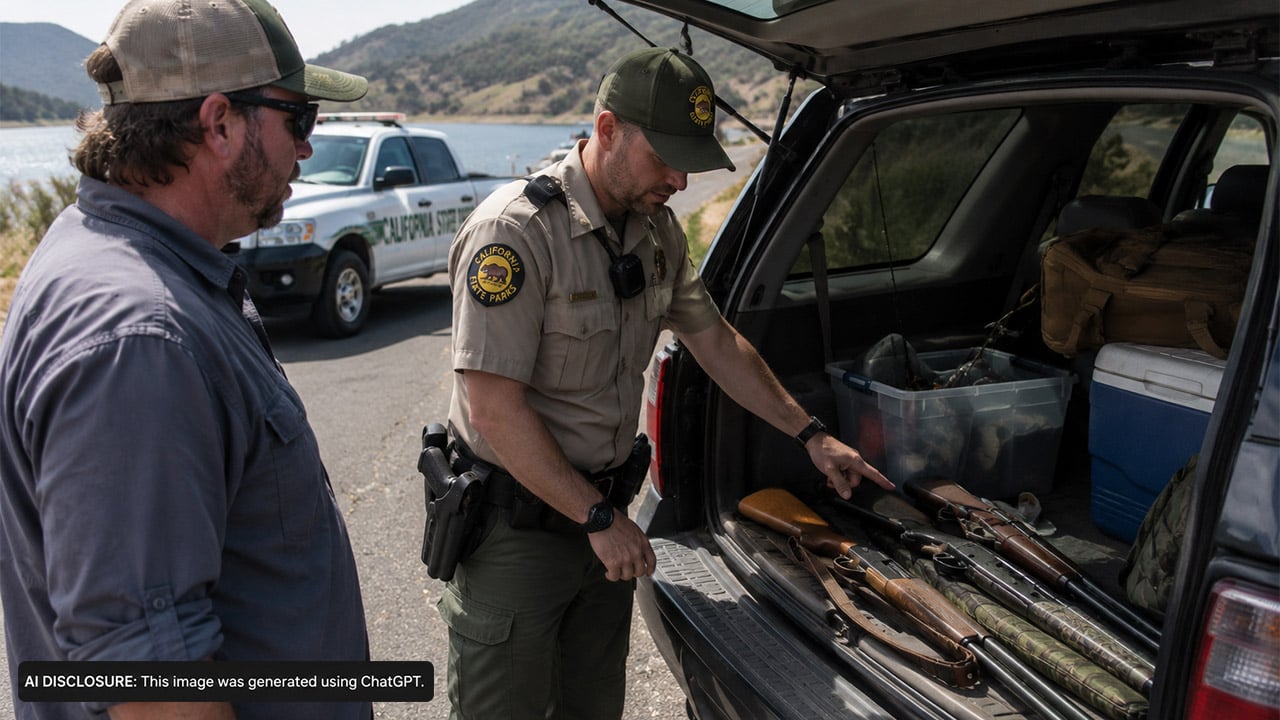
A day on the water can turn sideways in a hurry when a routine check becomes something else entirely. One California angler learned that the hard way after a state park ranger contacted him while he was fishing, checked his license and fish, and then took a deeper look that ended with firearms being discovered inside his vehicle.
In the original post, the outdoorsman said he’s “scared and need advice” after the ranger searched his car while investigating possible unlawfully taken wildlife. The ranger didn’t find the story he expected—but he did find guns that weren’t properly stowed, and that’s where the situation shifted from a fishing problem to a firearms problem.
A fishing check turned into a credibility problem
According to the angler, the contact began like most of us have seen: a ranger checking license and inspecting the catch. Those stops are normal in many parks and wildlife areas, especially when fishing pressure is high and enforcement is trying to keep things fair.
The issue, he admitted, is that he “wasn’t truthful about how much I caught.” Once an officer thinks you’re lying about take, the tone changes. It’s not just about the fish anymore; it’s about whether they can trust anything you say after that moment.
Why the ranger looked in the car in the first place
The angler wrote that the ranger “ended up searching my car because” of that untruthfulness about his catch. From a practical outdoorsman’s standpoint, that’s the part a lot of folks miss: the quickest way to escalate an otherwise routine contact is to be evasive or dishonest when you’re dealing with a warden or ranger.
Most game and park enforcement officers spend their careers talking with people who are having a good day—until they aren’t. When an officer believes there’s unlawfully taken wildlife involved, a vehicle is often the next place they’ll want to look, because that’s where extra fish, gear, coolers, and bags tend to be.
Instead of fish, the search revealed improperly stored firearms
During the search, the ranger found firearms in the vehicle. The angler said they “were not stowed away in the trunk unfortunately.” He didn’t list the types of guns, how many there were, or exactly where they were located, but he was clear that he believed the storage method didn’t meet California’s rules.
That detail matters. California has specific transport and storage requirements that can vary depending on the firearm type and situation, and “truck gun” habits that might slide in other states can create real trouble there. Even well-meaning people who carry for personal safety can get jammed up if the gun is accessible or not secured in the way the law requires.
“For protection while I was camping alone” doesn’t erase transport rules
When asked why he had the guns, the angler told the ranger it was “for protection while I was camping alone.” That’s a relatable reason in the outdoors. Plenty of folks who camp solo keep some kind of protection handy, whether they’re worried about two-legged problems, wildlife, or just being isolated.
But a common-sense reason doesn’t automatically make the method of carry or transport legal, especially inside a vehicle in California. Officers hear the “it’s for protection” explanation all the time, and the deciding factor tends to be whether the firearm was being transported and stored lawfully—not whether the person had a reason that sounds understandable.
The hard reality: trying to “talk your way out” is a bad plan
The angler asked, “Is there anyway I can get out of this? How might a lawyer be able to help me? How likely will the charges be dropped?” He also shared he was emotionally rattled—saying it happened right after a breakup and that he was “literally so sad right now.” That human element is real. Stress makes people ramble, overexplain, and say things that don’t help them.
Outdoorsmen should take a lesson here: when a stop turns investigative and an officer is already questioning your honesty, the words you choose matter. Volunteering extra details, guessing at laws, or trying to negotiate on the shoulder of the road usually doesn’t improve your odds. It often just creates more statements that can be used to frame intent or knowledge later on.
At that point, the most practical move is to stay respectful, keep your hands visible, comply with lawful instructions, and stop digging the hole deeper with nervous talk. If you’re facing potential firearm storage/transport allegations, that’s a “get counsel” situation—not a “maybe I can explain it away” situation.
What outdoorsmen should learn from this before the next fishing trip
This story has two big takeaways that apply whether you’re fishing a state park, hunting public land, or just driving to camp. First: don’t lie during a check. A fish over-limit or a wrong count is already a problem; being untruthful turns it into a trust issue, and trust issues are what lead to searches, deeper questioning, and a longer day.
Second: treat firearm transport like a checklist item before you ever turn the key. If you’re going to have guns in the vehicle in California, know the rules that apply to your exact setup. “Not in the trunk” is the kind of mistake that can follow you long after the camping trip is over.
There’s also a practical gear-and-habit side to this. If your vehicle doesn’t have a real trunk, you need a plan that still keeps firearms properly secured for the state you’re in—especially when you’re moving between fishing spots, trailheads, and campgrounds where you might have contact with rangers or wardens. Build a system that’s legal first, then convenient.
In the outdoors, you can do everything right for 12 hours and still ruin your day in 30 seconds with one bad decision. This California fishing check is a reminder that honesty and lawful storage aren’t “nice to have” details—they’re the difference between going home with a story about the one that got away and going home worrying about what happens next.
Like The Avid Outdoorsman’s content? Be sure to follow us.
Here’s more from us: