Photo credit: AI-generated image created using ChatGPT. Illustrative only
Every now and then, the late-night drive-thru run turns into something you’d normally chalk up to a bad campfire story. In Texas, one driver says his midnight taco trip ended with a masked “monster clown” stepping into the road with a golf club and charging his vehicle—then calling law enforcement after the driver drew a handgun. The account was shared in the original post, and it’s the kind of situation that makes gun owners think hard about what “self-defense” looks like in real time.
It also highlights a reality most of us who carry—or keep a gun close in a truck—already understand: you can do everything you think is right in the moment and still end up with a knock on the door afterward.
A midnight drive turned into a roadside threat
The driver said he was headed home after a late run to Jack in the Box when he noticed someone on the sidewalk in the dark holding something. He flipped on his brights and realized it was a golf club—already a red flag at midnight on a roadway.
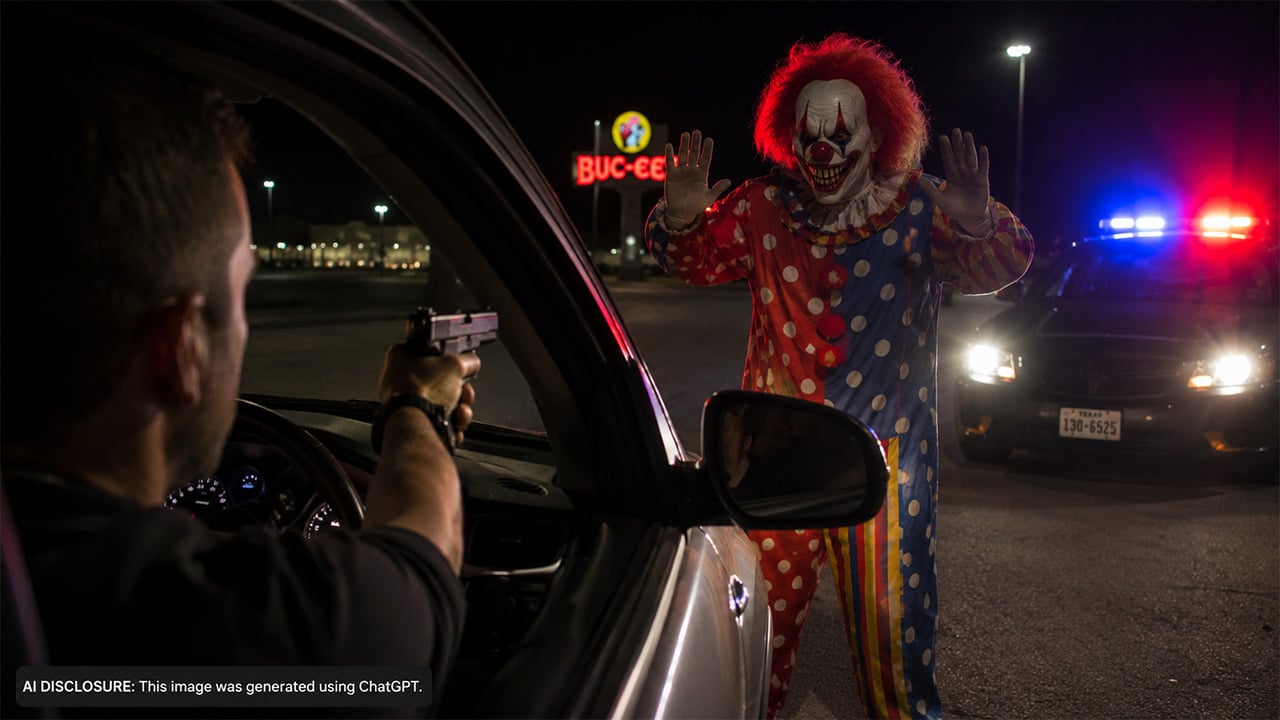
Instead of stepping back, the person turned and moved into the street “at full speed,” closing the distance. As he got closer, the driver says he could see the guy was dressed in a scary clown outfit: a monster-style clown mask and a bright, patterned suit.
Blocking the car changed it from weird to dangerous
Plenty of folks have seen pranks and dumb stunts on back roads, but this one didn’t stay on the sidewalk. The driver tried turning right to go around the clown, but the clown shifted to block the vehicle’s path.
The driver honked. That’s when the clown started running toward the car. A golf club in hand, at night, while actively blocking a vehicle’s movement—those details matter because they’re the difference between “strange” and “I might be getting attacked.”
The driver drew his handgun and the tone changed fast
At that point, the driver says he grabbed his gun, got out, and initially kept the muzzle pointed at the ground while raising his support hand and telling the clown to stop. The clown paused, then started walking toward him again.
The driver then pointed the gun at him. According to the account, the clown didn’t immediately realize what he was looking at, took a few more steps, and then suddenly apologized, dropped the golf club, and put his hands up.
The driver told him to remove the mask. Once it came off, he says he realized it was just a kid, likely 15 to 17 years old. The driver holstered the gun, told him to leave, and the kid ran off. The mask and the golf club were left on the ground as the driver drove home, which he said was just down the street.
Then the knock came: the clown reportedly called police
Not long after, the driver says officers knocked on his door. He didn’t answer. The officers stayed 15 to 20 minutes, and a patrol car remained outside a little longer before leaving.
That’s the part that will make most outdoorsmen shake their head. The person dressed like a nightmare, holding a golf club, and charging a vehicle is the one who apparently made the call. But it happens. The first one to call is often the first one “on record,” and the story that gets told on the phone can be a lot cleaner than what actually happened in the dark.
What gun owners and outdoorsmen keyed in on: display of force, vehicle carry, and talking to police
The driver’s questions were the same ones plenty of folks would ask after the adrenaline wears off: Can you get arrested for pulling a gun on a teenager? Can you get in trouble for not answering the door? And does it matter that he didn’t have a Texas CHL/LTC, even though he believed it was legal to keep the gun in his vehicle?
From a practical standpoint, this is where “being right” and “being able to prove it” become two different things. In a tense encounter, the gun comes out because you believe you’re about to be hurt. Afterward, the legal system may focus on whether you were reasonable, whether you escalated, and whether drawing the gun amounted to criminal behavior.
The other big point is that car carry and on-body carry don’t always get treated the same in every place or every scenario. The driver believed the firearm was legal in the vehicle but not legal “on me” without a license. The moment he exited the vehicle holding the gun, he worried that he crossed a line. That’s exactly the kind of detail that can matter in real life, and it’s why so many gun owners make a point to understand their state’s carry rules before they ever need the gun at all.
As for the knock at the door, not answering doesn’t automatically mean you did anything wrong. But it does mean the only story officers may have in hand is the one the caller provided. When you’re in a self-defense type incident, it’s worth remembering: the “reporting” stage can shape everything that comes after.
The field lesson: avoid the fight, document what you can, and know your local rules
There are a few hard-earned lessons here that apply whether you’re driving a rural road, checking traps, or pulling into your place after dark. First, if someone is in the road trying to stop your vehicle, treat it like a real threat until proven otherwise. A golf club can crack glass and skulls the same way. Costumes don’t make it harmless.
Second, whenever you can, distance is your friend. Staying in the vehicle and creating space is usually safer than stepping out into an unknown situation—especially at night—though the driver felt boxed in when the clown blocked his path and charged. Third, don’t ignore the “after” part of the incident. If you believe you were legitimately threatened, it often makes sense to be the first one to report it, or at least be prepared for the fact that the other party might.
Finally, this is a reminder to get serious about carry laws and training. Many hunters and anglers keep a handgun in the truck for snakes, coyotes, and the two-legged problems you pray you never meet. But the legal difference between “in the vehicle,” “concealed on your person,” and “displayed in public” can be the difference between going to bed and spending the night explaining yourself.
The driver in this case made it home safely, and the kid ran off without anyone being hurt. But it’s a clean example of how fast a bad decision by a stranger can force you into a high-stakes choice—and how quickly the paperwork and questions can start once the danger passes.
Like The Avid Outdoorsman’s content? Be sure to follow us.
Here’s more from us: