Photo credit: Theavidoutdoorsman.com
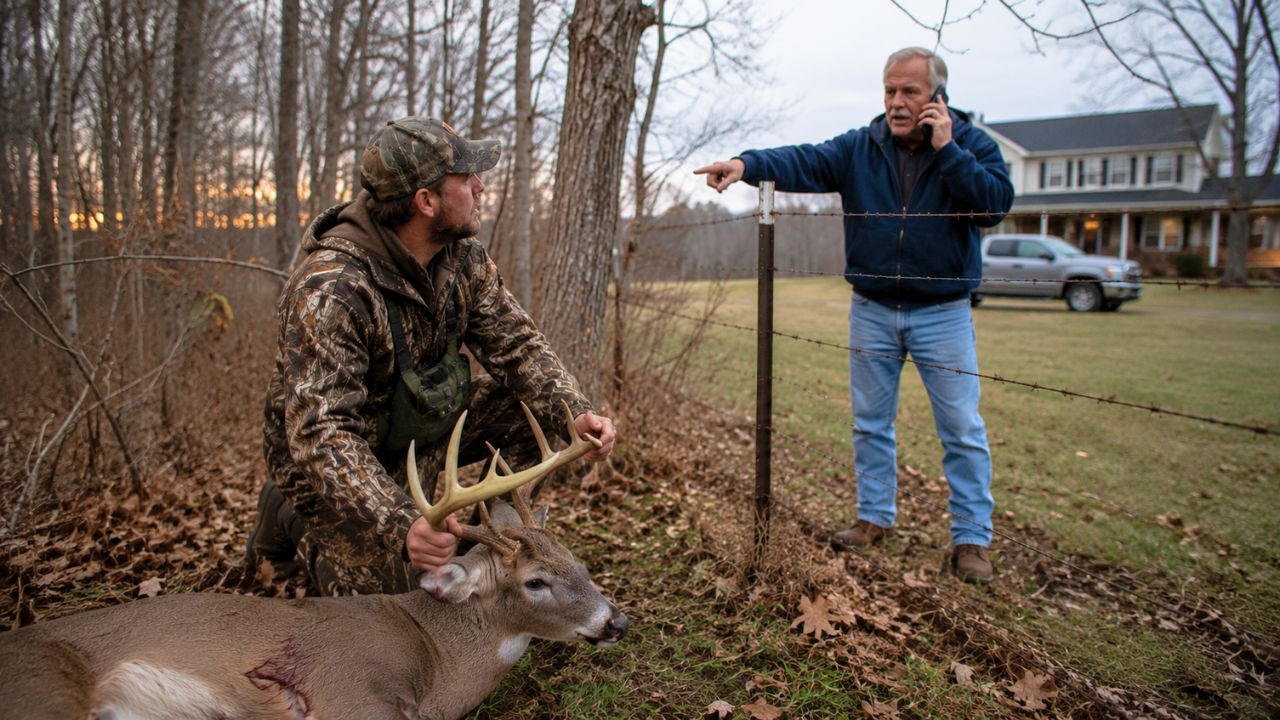
The buck went down clean, but not conveniently. It happened in that no-man’s-land every deer hunter eventually deals with: right on the edge of a property line, with daylight fading and a blood trail that doesn’t care about fences or posted signs.
The hunter had permission on the parcel he was sitting, a tidy little corner of hardwoods pinched between crop ground and a brushy ditch. He’d done the right things—checked his zero, kept his shots honest, and waited long enough before climbing down. But when he eased into the cover to start tracking, the first decent splash of blood angled straight toward the neighbor’s side.
The shot was legal, but the recovery got complicated fast
When you find good blood and then see it hop a line, your stomach drops a little. Not because you’re trying to bend rules, but because you know how these situations can go—especially in places where folks guard their dirt like it’s a bank vault.
The hunter did what most of us would do. He backed out, marked last blood on his phone, and walked to the nearest driveway to ask for access. The neighbor didn’t answer the door. No lights, no movement, nothing. And with temperatures sitting in that risky zone where meat can spoil quicker than you’d like, the pressure to act starts pushing against common sense.
He tried calling the number he had from an old plat map. No luck. Finally, he followed the trail along the line, staying on the side he had permission for, until he could see the deer piled up—dead—just inside the neighbor’s timber, not far over the boundary. Close enough to see, far enough to cause trouble.
Dragging a deer across a line isn’t the same as taking it there
This is where a lot of hunters get tripped up. In many states, the general rule is simple: you can’t enter private property without permission, even to recover game. Some places make room for retrieving a wounded animal under certain conditions, but it’s usually tied to notifying a warden, getting the landowner’s okay, or both.
The hunter weighed it like a lot of guys would. The deer was clearly his—shot on the property he had access to, tracked from there, and recovered just across. He wasn’t out joyriding on somebody else’s place. He wasn’t spotlighting, road hunting, or doing anything shady.
Still, laws don’t care how “reasonable” it feels in the moment. He slipped under the fence, grabbed a rear leg, and dragged the buck back onto the side he could legally be on. Quick in, quick out, no wandering around. He field dressed it on the property he had permission for and loaded up.
That might’ve been the end of it. But rural problems don’t always end when the tailgate shuts.
The neighbor saw the deer, then called in a claim
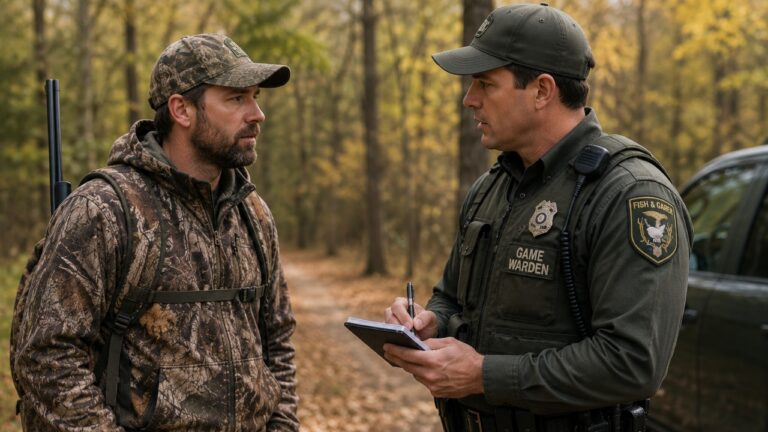
Not long after, the hunter got a call from a conservation officer. Calm voice, direct questions. Where were you hunting? Where did you shoot? Where did you recover? Did you have permission on both sides? Standard stuff, but the tone told him this wasn’t just “checking in.”
The neighbor had called the local Game and Fish office and reported that someone crossed onto his property, took a deer, and then tried to claim it as theirs. And here’s the part that escalated it: the neighbor didn’t just complain about trespass—he reportedly told the officer the deer was his, implying it was shot on his side or that he had some right to it because it died there.
That’s a move that turns a messy boundary issue into a full-blown dispute. A warden can sort out trespass, tag validation, evidence of where the shot happened, and whether the animal was legally taken. But when a landowner starts “claiming” a deer that someone else shot, it adds a layer of ego and entitlement that rarely ends quietly.
The hunter explained his side: permission where he sat, shot angle, blood trail, recovery location, and the fact he tried to contact the neighbor first. He also had time-stamped photos from the track and a pin dropped at the hit site. Those little details matter more than most folks realize.
What the wardens tend to look at in a property-line deer dispute
In a case like this, the officer’s job isn’t to referee feelings. It’s to figure out whether the deer was legally taken and whether any laws were broken during the recovery. That usually means a few practical things.
First is the tag and the timeline. Was the deer tagged according to state rules? Was the hunter properly licensed? Did he check it in if that’s required? If the paperwork is clean, it strengthens everything else.
Second is evidence of where the shot occurred. That can be blood at the hit site, hair on a fence, a clear track that starts on the permitted property, or even the angle of entry and exit wounds that match the hunter’s story. Wardens have seen enough “creative explanations” to know what doesn’t add up.
Third is the recovery itself. Crossing a fence without permission—even for a dead deer—can be treated as trespass depending on the state and circumstances. Some officers use discretion when someone does the right thing and only steps across to retrieve. Others don’t have that flexibility, especially if the landowner is demanding action.
Finally, there’s the neighbor’s “claim.” In most places, you don’t get ownership just because an animal dies on your dirt. Wildlife belongs to the public until it’s legally taken, and legal take hinges on the hunt—not the GPS coordinate where the deer fell over. That said, landowners do have rights about access, and that’s where these situations collide.
Most hunters sided with documentation and keeping it civil
Whenever a story like this makes the rounds at a feed store counter or online, the same themes pop up. Guys want to know if the hunter had OnX or a plat map pulled up. They want to know if the fence line was marked, if the corner pins were obvious, and whether permission was in writing or just a handshake.
A lot of folks also focus on the one thing that keeps you out of trouble more than any “common sense” argument: calling a conservation officer before stepping over the line. It’s not always convenient, and in the moment it can feel like overkill. But if the neighbor turns out to be difficult, that phone call can save you a ticket—or save your deer—from becoming a back-and-forth mess.
Others zeroed in on the neighbor’s move to claim the animal. Most outdoorsmen don’t respect that kind of behavior. A landowner can deny access. A landowner can demand you leave. But trying to take a deer you didn’t shoot is the kind of thing that poisons relationships and makes hunters look bad when the argument spills into the public view.
And almost everyone agreed on one point: don’t handle it face-to-face once tempers are up. People do dumb things around property disputes, especially when weapons and pride are in the mix. Let the warden be the buffer.
The best way to avoid this mess is to plan for it before you ever climb a stand
Property-line deer are predictable. If you’re hunting a corner, a narrow strip, or anything bordered by a neighbor who doesn’t like hunters, assume your deer might run across. Have a plan before the shot ever happens.
That plan can be as simple as introducing yourself pre-season and swapping phone numbers. It can mean getting written permission for recovery only, even if you’re not allowed to hunt there. It can also mean knowing exactly where the line is—down to the fence jogs and the old marker trees—so you’re not guessing in the dark.
And if it does happen, slow down. Mark last blood. Take photos. Try to contact the neighbor. If you can’t reach them, consider calling a warden before you cross. It might feel like you’re making a small problem bigger, but it often does the opposite: it locks in your good-faith effort and keeps the situation from turning into a he-said, he-said fight.
At the end of the day, a deer is a big deal—but it’s not worth a trespass charge, a neighbor feud, or an ugly confrontation. The best hunters I know don’t just shoot straight. They think ahead, document what they do, and keep their cool when somebody else tries to turn a simple recovery into a contest.
Like The Avid Outdoorsman’s content? Be sure to follow us.
Here’s more from us: