Photo credit: AI-generated image created using ChatGPT. Illustrative only
A dog cutting loose in a front yard is something most rural folks have seen a hundred times. Sometimes it’s all noise and chest-puffing. Sometimes it turns into a real bite problem. In Calcasieu Parish, Louisiana, that line is exactly where a heated fight is happening now—after a deputy shot and killed a Rottweiler named Tank and the sheriff’s office released bodycam footage to justify the decision.
The Calcasieu Parish Sheriff’s Office released the video after the dog’s owner filed a federal lawsuit, laying out the agency’s position in public and telling people to watch and decide for themselves. The details reported by the source post show a case that’s part officer-safety call, part pet-owner responsibility, and part courtroom strategy.
A traffic complaint turned into a yard encounter
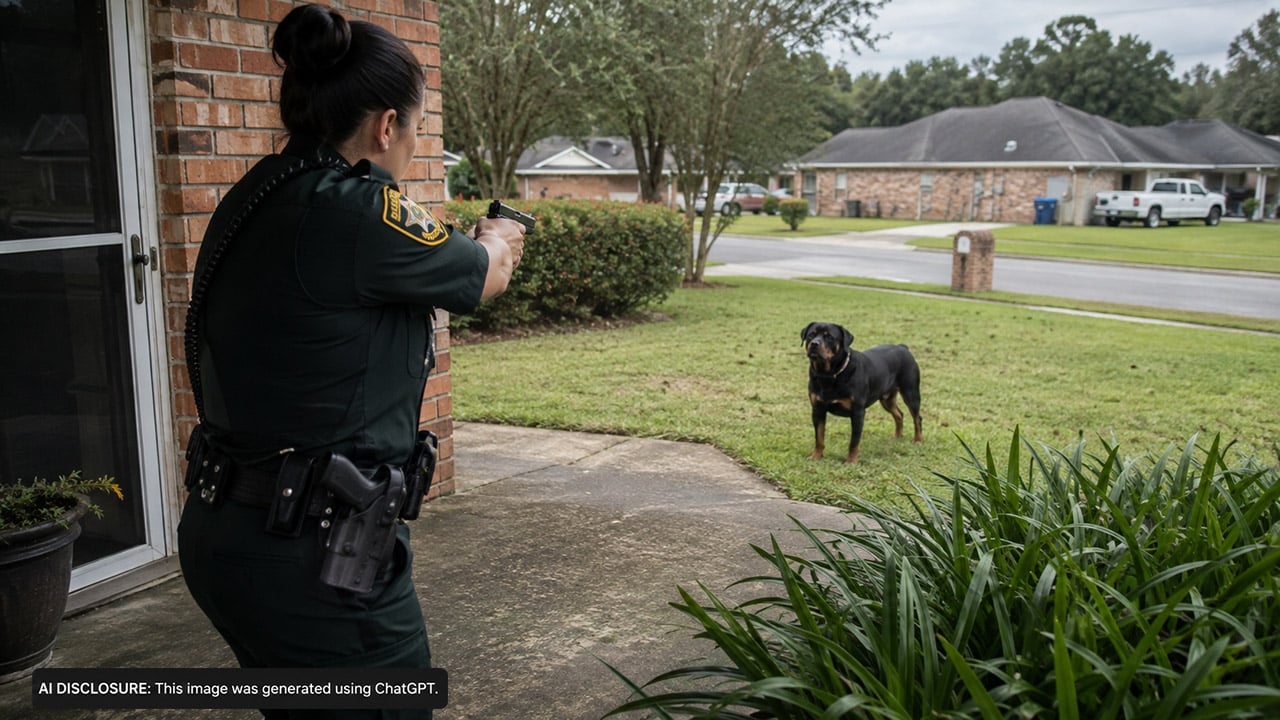
According to the report, the incident happened in August 2025 when a Calcasieu Parish deputy approached Christine Granger’s home after responding to a traffic complaint. That’s the kind of call that usually ends with a quick conversation and everyone getting back to their day.
Instead, Granger’s Rottweiler, Tank, ended up dead in the yard. Granger later filed a federal lawsuit this month claiming the deputy’s actions were unjustified.
Why the sheriff’s office decided to release bodycam anyway
Early on, the sheriff’s office declined to comment because the lawsuit was pending. Then Sheriff Stitch Guillory said he changed his mind after Granger appeared on TV describing Tank as friendly and “family-oriented.”
Guillory’s stance is straightforward: he believes the bodycam shows an aggressive dog and that the public should see the footage and make a judgment. “We stand by our deputy,” he said, and the office released a short clip of the moments leading up to the shooting.
What the video reportedly shows in the seconds before the shot
The station’s description of the footage is blunt, and it comes with a warning that it’s disturbing. The video shows the deputy getting out of his unit when Tank runs toward him while barking.
The deputy repeatedly yells “no” while trying to get away, and then he shoots the dog. Sheriff Guillory defended it as a split-second decision, framing it as a choice between being bitten or stopping the threat in front of him.
Two very different stories about Tank’s history
In the lawsuit, Tank is described as a beloved family pet with no history of aggression. Guillory disputed that directly and said Granger knew she had “an aggressive dog.”
He also claimed animal control had been to the home and had spoken with her about neighborhood complaints. Guillory went further, alleging Tank bit a jogger and calling the dog “a problem for the community.” Those are serious claims—because if documented, they change how a lot of folks look at what happened in that yard.
Where this hits home for landowners: dogs, gates, and what “control” really means
If you live out where people actually use their yards—kids, deliveries, utility workers, deputies, whoever—this story lands in a familiar place. Plenty of good dogs sound mean at the fence line, and plenty of dogs that “would never bite” absolutely will when adrenaline spikes and a stranger steps into their space.
The hard truth is that once a dog is loose and closing distance, the person on the receiving end doesn’t get to read your dog’s heart. They get body language, speed, and teeth. That’s why basic containment matters—latches that work, gates that stay shut, and routines that don’t rely on “he listens to me most of the time.” A big, protective breed like a Rottweiler can be a great family dog, but it also comes with a responsibility tax. If the dog has prior complaints, that tax gets even higher.
On the other side, anyone wearing a badge (or just driving up a rural driveway) knows how fast a dog encounter can go sideways. The best-case scenario is time and distance—space to back out, a barrier, a door, a car. When there isn’t any of that, these situations turn into split-second decisions with ugly outcomes.
The legal fight isn’t just about the shot—it’s about credibility and records
Guillory didn’t just defend the deputy; he attacked the lawsuit as “riddled with false claims,” calling it frivolous and saying it’s meant to erode trust in law enforcement. That tells you where the sheriff’s office plans to fight: not only on what happened in the moment, but on the dog’s history and the owner’s statements.
Granger’s attorney, according to the report, hasn’t offered a detailed response to the release of the bodycam footage in that story. The station also noted it is awaiting responses to multiple records requests, including any prior animal control cases at the home and additional body and dash cam footage. If those records exist—and if they’re clear—they’ll matter in a big way for whichever side is telling the straighter story.
For regular folks, there’s a practical lesson in that paperwork angle. If animal control ever shows up at your place about your dog, treat it like a loaded rifle on the tailgate: it’s not “nothing.” It’s a documented event that can come back later when you least expect it.
Whether you’re a dog owner or an officer, this is the kind of incident that doesn’t end when the yard goes quiet. It rolls into lawsuits, video releases, records requests, and two sides trying to prove they were the one acting reasonably. And in the middle of all that is a reality most outdoorsmen understand: when an animal charges and the distance closes fast, the clock is brutal and the consequences are permanent.
Like The Avid Outdoorsman’s content? Subscribe to our newsletter so you never miss an article.
Here’s more from us: