Photo credit: AI-generated image created using ChatGPT. Illustrative only
Most hunters I know don’t mind hard rules when they’re clear and they’re enforced the same way for everybody. What grinds people down is watching someone treat wildlife like a personal free-for-all—especially when it’s repeated, and especially when it involves baiting bears and stacking up unlawful take after unlawful take.
That’s the lane this Oregon case falls into. In a multi-county investigation, Oregon State Police Fish and Wildlife wrapped up a poaching case against Christopher George Matson, 48, of Umatilla, that ended with a lifetime hunting license revocation and more than $114,000 in fines, as reported in the original post.
How the investigation got rolling
OSP said the case started in 2024 after they received information that Matson—a former Oregon Department of Corrections officer—had been illegally taking big game animals. That’s often how these things begin: a tip, a pattern someone can’t ignore, or somebody seeing something that doesn’t line up with the season, the tags, or the way an animal was taken.
From there, investigators worked it long enough to develop the case and eventually served a search warrant in February 2025. OSP said they seized “multiple big game animals and firearms” as evidence. That detail matters because once wildlife and weapons are part of the seizure, the consequences can go well beyond a simple citation.
What 67 charges looks like in the real world
OSP said a total of 67 criminal charges were referred for prosecution. The alleged violations weren’t narrow or accidental. They ranged from unlawful take and possession of black bear with the aid of bait to unlawful take of deer and elk, along with tag violations and firearms-related offenses.
That’s the kind of spread that tells you investigators believed they were dealing with repeated conduct, not a single bad call on a foggy morning. Even if you strip the story down to basics, the sheer number of referred charges points to a long list of alleged decisions that stepped outside Oregon’s rules.
Two guilty pleas, two counties, one lifetime revocation
The case ultimately split into two court tracks with guilty pleas in two counties. In the first case, Matson pleaded guilty on June 18 in Grant County Circuit Court to four counts of unlawful take of buck deer and three counts of unlawful take of black bear.
His sentence in that Grant County case included 18 months of probation, 300 hours of community service, a lifetime hunting license revocation, forfeiture of firearms and seized property, and a $52,500 fine payable to the Oregon Department of Fish and Wildlife.
Then, in a second case, Matson pleaded guilty on June 29 in Umatilla County Circuit Court to unlawful possession of a short-barreled rifle, unlawful possession of a silencer, unlawful possession of multiple wildlife, and unlawful take of mule deer.
That sentence included 24 months of probation, another lifetime hunting license revocation, 300 hours of community service to run concurrently, forfeiture of seized property, and a $62,000 fine payable to ODFW. Put together, the fines total more than $114,000, and the license revocation is the kind that doesn’t come with a “try again next season” option.
The bear-baiting angle and why it hits hunters differently
There are few things that will get a room full of ethical hunters on the same page faster than a baited bear case—especially when it’s paired with unlawful possession and repeated take. Even for folks who hunt in bait-legal states, the line is simple: you follow the regulations where you are, and you don’t play cute with methods that are specifically prohibited.
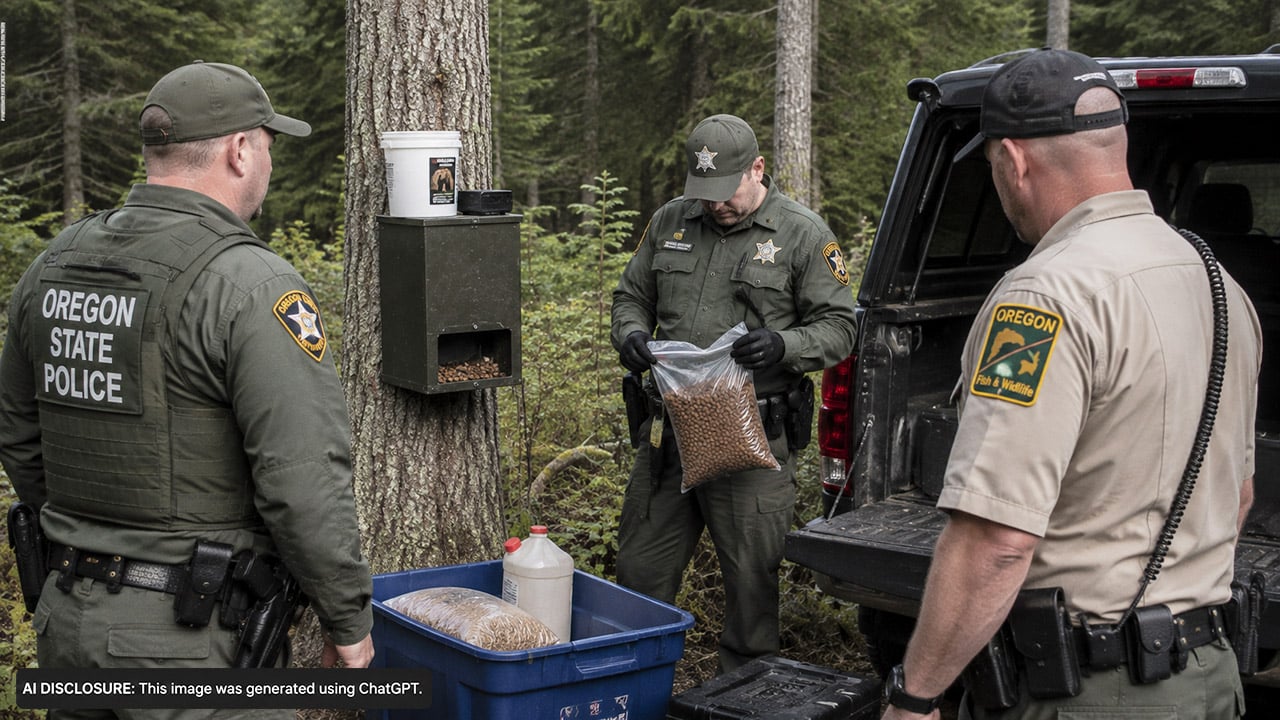
OSP’s allegations included unlawful take and possession of black bear with the aid of bait. That detail is important because it goes straight to method, not just paperwork. When method is the problem, it’s harder to chalk it up to confusion over a tag, a boundary, or a unit line on a map.
And from a practical standpoint, baiting bears isn’t just about “getting one close.” It can pull animals into places you don’t want them—near roads, near homes, near other hunters—changing bear behavior and creating conflicts that the rest of the community ends up dealing with.
What officials emphasized: “serial poaching” and real damage totals
This case was handled by the Oregon Department of Justice’s Wildlife Anti-Poaching Resource Prosecutor, and DOJ Wildlife Anti-Poaching Resource Prosecutor Jay Hall didn’t mince words about the nature of the conduct. “This is another example of serial poaching which rises to the level of felony conduct based solely on the repeated poaching conduct and impact of one individual on Oregon’s game mammals,” Hall said.
Hall also said the case represents one of the highest wildlife damage amounts attributed to a single person in Oregon. That matters for everyday hunters because “wildlife damage” isn’t a vague talking point—it’s how the state quantifies the loss and pushes penalties to a level that actually stings.
OSP also thanked the Washington Department of Fish and Wildlife for help with interviews and evidence collection, along with witnesses who provided information. That’s another reality check: if you’re running illegal activity across lines or interacting with people in different areas, you’re not just dealing with one local office. Agencies cooperate, and evidence travels.
The simplest lesson here is one most of us already live by: hunt clean, tag clean, and keep your methods and firearms legal. Oregon took this one all the way to a lifetime revocation, forfeitures, and six-figure money—because investigators and prosecutors believed it was repeated, serious conduct. For the rest of us trying to do it right, cases like this are a reminder that “everybody does it” isn’t a defense, and the long-term cost of bad choices can dwarf anything you ever got out of a season.
Like The Avid Outdoorsman’s content? Subscribe to our newsletter so you never miss an article.
Here’s more from us: