Photo credit: AI-generated image created using ChatGPT. Illustrative only
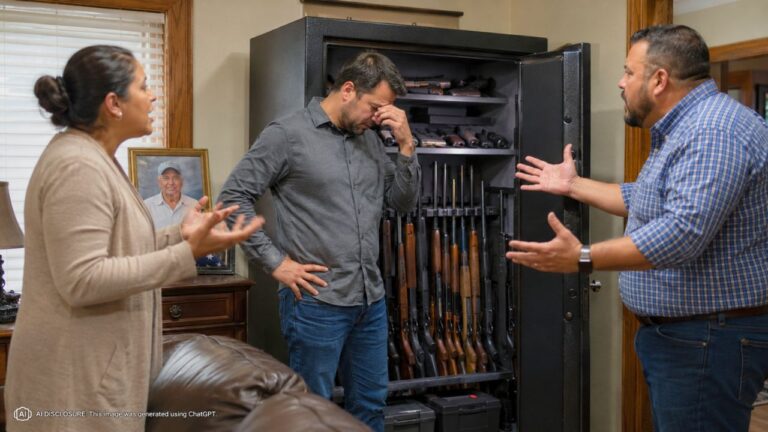
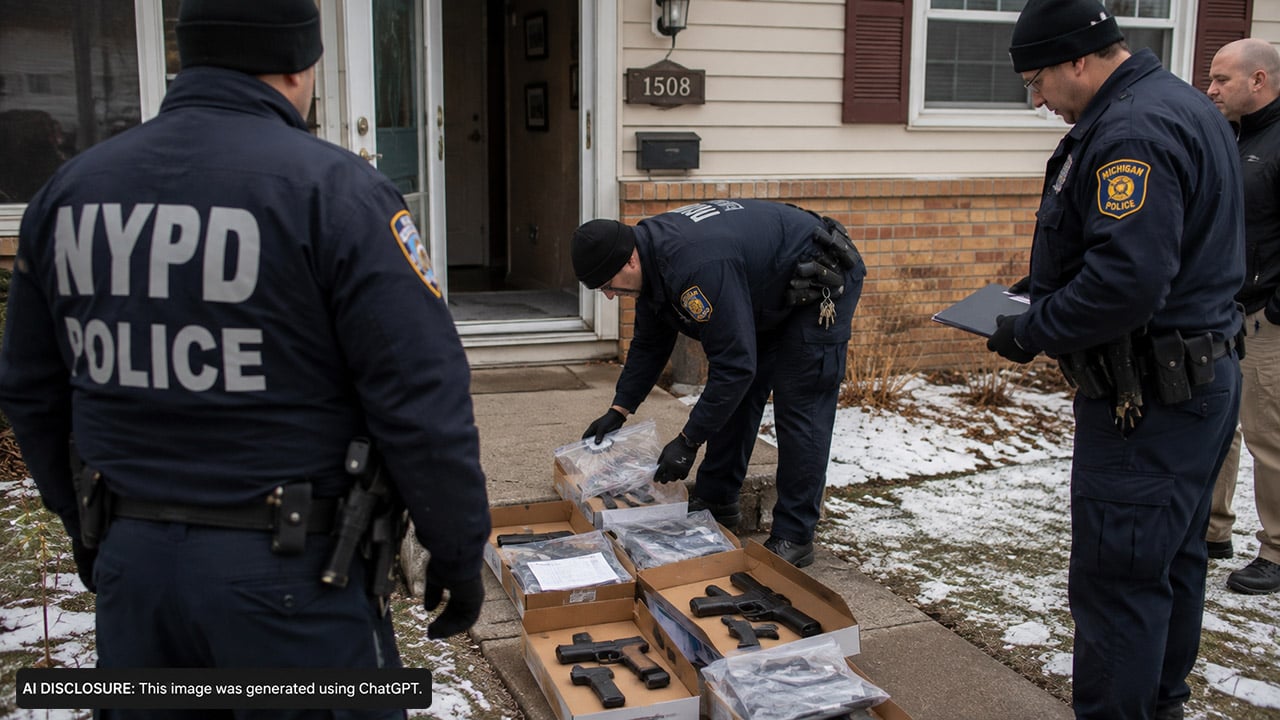
A Michigan gun owner says he was sitting in his own home when the NYPD showed up with a search warrant from New York—served in Michigan—with his local police there to assist. The New York officers “took what they wanted,” but the part that still has him fired up is what happened next: after the NYPD portion was done, his local department allegedly “tossed” the house and took all his guns, including his handguns.
The account comes from the original post on Avvo, where the man asked whether the seizure was lawful and why he didn’t get a property receipt from his local department the way he did from NYPD. For anyone who keeps firearms at home—hunters, folks with a carry setup, or people who just like being prepared—this is the kind of situation that makes your stomach drop.
A warrant from one agency, action from another
In the post, the man says the search warrant was served by NYPD, and he’s a Michigan resident who was served in Michigan. He also says his city police were “assisting,” but the warrant itself was “from NYPD only,” and his city PD “was not listed.” That detail matters, because a lot of regular folks assume a warrant is a simple, one-page permission slip—and that only the name at the top gets to do anything.
Real life is messier. When outside agencies work in another state, they typically aren’t freelancing in the way people imagine; there’s usually coordination with local law enforcement. But the homeowner’s question is a practical one gun owners ask all the time: if one agency comes in under one warrant, how does that turn into another agency conducting what sounds like an additional search and taking additional property?
The moment it turned from “search” to “seizure”
The man claims he wasn’t charged with any crime at the time his local police took the guns. He also emphasizes that he wasn’t violent, wasn’t resisting, and wasn’t a danger to anyone. In other words, from his perspective, there wasn’t an immediate safety justification for stripping him of every firearm in the house after the NYPD already grabbed whatever evidence they came for.
This is where gun ownership stops being a hobby and turns into a life problem. If you hunt, compete, or carry, losing your firearms isn’t just losing “stuff.” It can mean missing seasons, losing the ability to protect your home the way you planned to, and dealing with a long, expensive process to get property back—if you can get it back.
The missing paperwork is the part that will haunt you
One of the biggest red flags in the man’s story is the paperwork—or lack of it. He says NYPD left a property receipt, but his local police did not leave “a property receipt” or any receipt of what they took. If you’ve ever had gear stolen, you already know the feeling: without an itemized list, everything becomes an argument later.
For gun owners, a receipt isn’t just a courtesy. It’s your starting point for proving what was taken, what condition it was in, and which agency has it. Without that, you can end up stuck in a maze of phone calls where nobody wants to own the problem, and every day that passes increases the chance your property gets moved, logged incorrectly, or treated like it’s not a priority.
“All registered” handguns—and why that doesn’t automatically solve it
The man says his local police also took his handguns and that they were “all registered.” A lot of people hear that and think it should be open-and-shut: legally owned guns should come right back. But the legal world doesn’t always move on common sense, and “registered” doesn’t necessarily prevent a seizure if officers claim the firearms are evidence, needed for safekeeping, or tied to an investigation.
Still, lawful ownership is not nothing. Documentation—purchase records, CPL/permit info if applicable, serial numbers, and any prior paperwork—can be the difference between a quick return and a long stalemate. The problem is, if the local department didn’t provide an inventory, the owner may be left trying to rebuild that list from memory, which is a rough way to start any property-return fight.
The attorney’s read: get counsel, review the warrant, and push for return
The attorney who answered on Avvo didn’t pretend to have a magic phrase that fixes everything. The advice was straightforward: hire an attorney to review the search warrant and determine options. That’s not exciting, but it’s realistic—because the fine print on the warrant, what it authorizes, and what it lists as seizable items can change everything.
The attorney also noted it was “troubling” that the weapons were not listed. Generally, he said, the guns “should be returnable” if the owner can legally possess them, they were properly registered, and they’re not necessary for evidence. That last part—“necessary for evidence”—is usually where these cases get stuck. If the department claims they need them, you’re often looking at a legal process, not a friendly front-desk conversation.
He also included a disclaimer that his answer was preliminary, for general purposes, and not a substitute for an actual attorney-client relationship. That’s standard, but it’s also a reminder: when guns get scooped up by law enforcement, there’s rarely a do-it-yourself solution that works fast.
If you keep firearms at home—whether they’re duck guns in the safe, a couple pistols for carry and home defense, or the deer rifle you’ve had since you were a kid—this kind of scenario is a reminder to keep your house in order. Not “perfect,” just squared away. Know what you own, have serial numbers recorded somewhere secure, keep purchase records, and store things safely. That doesn’t prevent a seizure, but it helps you fight your way back to your property if something goes off the rails.
It also reinforces a hard truth: when multiple agencies touch the same scene, confusion multiplies. If one group leaves paperwork and another doesn’t, you can end up battling the administrative side as much as the legal side. And while nobody wants to think about it, having an attorney’s number in your phone—before you need it—can keep a bad day from turning into a months-long mess.
At the end of the day, the man’s question on Avvo is the same one plenty of responsible gun owners would ask: if you weren’t arrested, weren’t resisting, and legally owned what was taken, why did everything leave with the local police—and why didn’t they leave a receipt? The only practical path forward, as the attorney suggested, starts with the warrant paperwork and a lawyer who can force clear answers in the right forum.
Like The Avid Outdoorsman’s content? Subscribe to our newsletter so you never miss an article.
Here’s more from us: