Photo credit: AI-generated image created using ChatGPT. Illustrative only
Most folks who buy a firearm in the Carolinas are thinking about the range, deer season, or keeping the house safe. That’s why this case out of Greenville County is the kind that makes responsible gun owners grind their teeth—because it’s the exact behavior that brings heat down on everyone else.
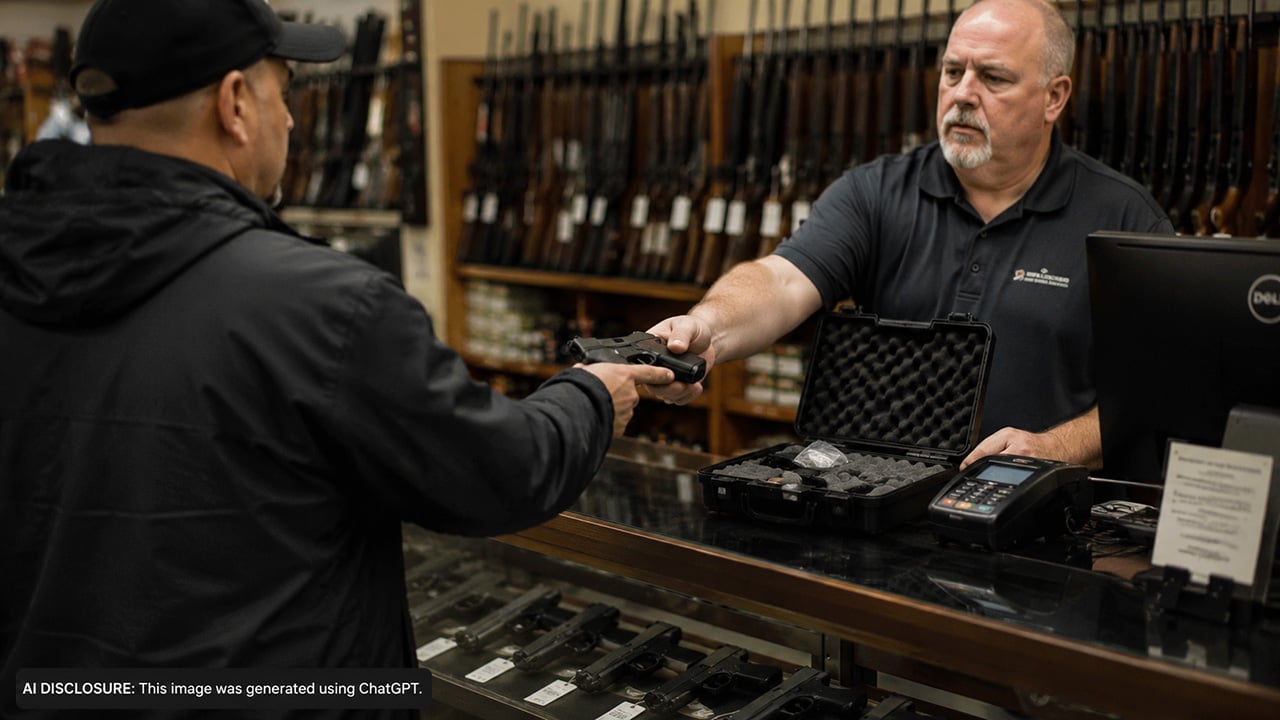
Federal prosecutors say Kelsey Antonio McCallum, 32, used routine dealer purchases in South Carolina and Georgia to stockpile guns for resale, then hauled them to Maryland—where some later showed up at crime scenes. The details were laid out in the original post from FOX Carolina.
Buying patterns that don’t look like hunting season
According to the U.S. Department of Justice, evidence showed McCallum bought 93 firearms over 52 separate purchases between March 2018 and June 2022. That’s not “I found a good deal on a pistol and a duck gun.” That’s a steady drumbeat of transactions spread across years.
Plenty of gun owners do buy multiple firearms over time—collectors, competitors, and folks who just like a good wheelgun as much as the next guy. But 93 guns in 52 trips has a different feel, especially when it lines up with what investigators say happened next.
The key detail: what he checked on the federal form
The government’s case hinges on what McCallum allegedly claimed during the buying process. Prosecutors said he indicated on federal firearms sale forms that he was the actual buyer, while knowing he intended to sell the guns to other people.
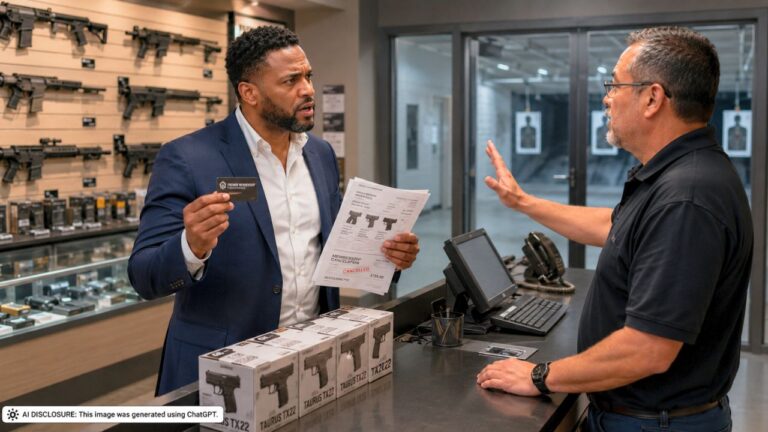
That’s the heart of a straw purchase: using the legal buying process to acquire firearms for someone else. For everyday gun owners, this is why that paperwork matters. It’s not just a box to breeze past—it’s a line that separates lawful ownership from a serious federal problem.
From southern gun counters to Maryland streets
Investigators said McCallum transported the firearms to Maryland and sold them to other people. That pipeline—buying in one region and moving product to another—is what makes cases like this stand out, because it’s not about one bad decision on one day. It’s a system.
And the consequences aren’t theoretical. Authorities said some of the guns were later discovered at crime scenes in Maryland and in other states. When guns that began as clean, dealer-sold firearms end up in violent investigations, it hits hard—especially for the people who go out of their way to follow the rules.
A federal jury conviction and a real prison sentence
McCallum was convicted by a federal jury in 2024 after a two-day trial, the DOJ said. That detail matters because it signals this wasn’t a quick paperwork plea where everyone shrugs and moves on. The case went in front of a jury, and the government proved what it needed to prove.
He was sentenced to 63 months in federal prison, followed by a one-year term of court-ordered supervision. FOX Carolina also noted there is no parole in the federal system, which means that sentence is built to be served in real time, not trimmed down the way some folks assume prison works.
What this means for everyday gun owners and small-town dealers
If you’ve spent time around gun shops—especially the kind that still feel like a community bulletin board—you know most dealers are careful. They watch behavior, they ask questions when something feels off, and they’d rather lose a sale than risk their license. Cases like this are a reminder of why they’re on edge.
For regular buyers, the takeaway is simple: don’t “help” someone get a gun because they can’t pass the background check, don’t buy on behalf of a buddy who “doesn’t want paperwork,” and don’t get cute with the idea that you’re just doing them a favor. A felony case doesn’t care if your intentions felt friendly at the time.
And from a practical, boots-on-the-ground perspective, it’s worth remembering how quickly a legal purchase can become your problem if you lie on a form or hand a firearm off in the wrong situation. If you’re selling a gun privately where it’s legal to do so, keep it above-board and follow your state’s requirements. If it’s not crystal clear, take the extra step—use a lawful transfer process through a dealer where applicable, and document what you can within your local laws.
Outdoorsmen catch enough grief already when the actions of a few get used to paint the whole crowd. This is one of those cases where the straight shooters—hunters, competitors, and home-defense folks—end up paying in reputation for something they didn’t do. The only way to keep that from spreading is to keep our own houses in order: buy for yourself, store responsibly, and don’t play middleman for somebody else’s bad plan.
Like The Avid Outdoorsman’s content? Subscribe to our newsletter so you never miss an article.
Here’s more from us: