Photo credit: AI-generated image created using ChatGPT. Illustrative only
A retention pond alligator that neighbors had lived alongside for years is at the center of an ugly case out of Santa Rosa County, Florida. Florida Fish and Wildlife Conservation Commission investigators say three men trapped the gator without the required permit, hauled it away alive, and then killed it at a private home with a power drill.
The details come from the source post, which cites an incident report filed through the Santa Rosa County Clerk of Courts. The alligator—known to locals as “Allie”—had a reputation for being a long-time, non-problem animal in a fully gated retention pond at Garcon Point.
A neighborhood gator that wasn’t causing trouble
If you live in the South, you understand the unwritten rule about gators: they’re part of the landscape, right up until they’re not. In this case, Ashley Rogers with the Pensacola Snake Rescue & Relocation Group told WEAR that “Allie” had been there “many, many years” and “never caused any problems,” to the point she’d become “a representative of the community.”
That matters because “nuisance” is a specific thing in Florida, not just a feeling. A gator living in its home water, not roaming yards, not threatening kids or pets, and not able to easily leave because of fencing is a different situation than a gator showing up on a boat ramp or behind a swing set.
What FWC says happened at the retention pond
According to the report, the incident traces back to March 15. Kevin Lacz—a nuisance alligator trapper—was responding to two calls along with alligator agents Richard Reder and Jason Griffin. The three men reportedly located the alligator on the bank of the fully gated retention pond.
The report says Lacz used keys given to him by the property owner to access the area. Investigators state Lacz admitted to using a weighted treble hook to cast and snag the gator while it was submerged, and that it took roughly 20 minutes to pull the animal to shore.
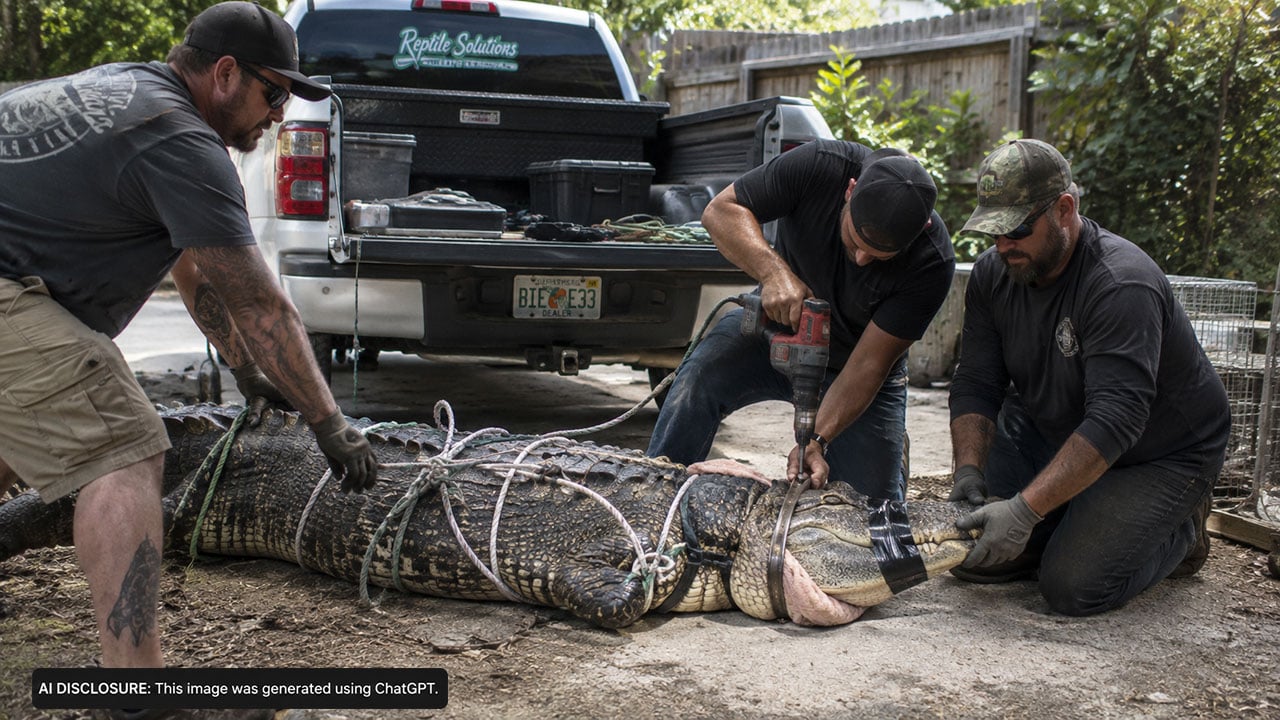
From there, investigators say Reder held the line while Lacz and Griffin used a snare and tape to secure the alligator. That’s the point where this stops sounding like a normal “handle a nuisance gator” call and starts sounding like a removal operation carried out with the wrong paperwork—or none at all.
Taking the animal home alive crossed a bright line
FWC investigators say the men didn’t dispatch the alligator on-site. Instead, the report alleges they took it alive to Lacz’s home, where it was killed using a power drill.
Rogers’ reaction in the report is about as plainspoken as it gets: “I would say that that sounds horrific and I would not condone the use of a power drill on any animal.” For folks who hunt, trap, and fish, the method matters—not because the wild is gentle, but because there’s a baseline expectation of humane, lawful dispatch. A power drill isn’t that.
It also raises the common-sense question landowners ask every time a wild animal gets “handled” off the books: if it was a legitimate nuisance removal, why would it need to be taken to someone’s house alive in the first place?
Charges, penalties, and why outdoorsmen pay attention to the paperwork
Here’s where the legal side gets interesting. The story notes that Florida state statutes show illegally killing an alligator is a level four violation—a third-degree felony. But the three men, Lacz, Reder, and Griffin, are reportedly facing a level two violation, which is a misdemeanor.
The incident report cited by WEAR says the alleged problem is that the gator was trapped and killed without a valid nuisance alligator permit. In other words: this isn’t being framed as a “gator attacked someone and was dealt with in the moment.” It’s being framed as an illegal take.
That distinction is a big deal to hunters and anglers, because wildlife law tends to treat planning and transport as aggravating factors. Tags, permits, seasons, and authorized methods aren’t just red tape—those are the lines that keep “legal harvest” separate from “poaching,” and Rogers used that exact word: “This is considered poaching by any stretch of the imagination.”
WEAR also reported that jail records show the men were not booked into jail. Their next scheduled court date is Sept. 1.
Community reaction zeroed in on cruelty and precedent
When a neighborhood names a gator, it usually means the animal has been part of the scenery long enough that people have figured out how to coexist with it. Rogers emphasized that point, saying the gator had no reason to leave and that it would be “extremely difficult” for an alligator of that size to climb the fence or dig under it.
And that’s the part that tends to rile up normal outdoorsmen, too—not the existence of a gator, but the idea that someone can show up, access a gated pond, remove a well-known animal, and kill it in a way that most folks would call cruel, then only face a misdemeanor. Rogers said she didn’t want to see “a precedent” set where illegal taking of native wildlife gets “passed over.”
Even in rural circles where people are practical about predators and nuisance animals, most folks still want the same two things: do it legally, and do it clean. Anything else makes all legitimate trappers and hunters look bad.
A separate event got pulled into the fallout
The report also notes that Lacz was originally scheduled to participate in a veterans service day hosted by the Boatwright Foundation. He was removed from the event, and the foundation issued a statement condemning acts of animal cruelty while emphasizing their focus on serving veterans.
According to WEAR, the organization later postponed the event “after credible threats were made,” and said it was working to secure a new date. That’s a hard left turn from “community service” into “community conflict,” and it shows how fast a wildlife case can spill into everything else when the facts are this graphic.
For Florida residents—especially anyone living around ponds, canals, and retention water—the practical takeaway is simple: if an alligator truly becomes a problem, there are lawful routes to deal with it. But if the state’s investigators believe you took a non-nuisance animal without the right permit and dispatched it in an inhumane way, you’re not just dealing with an angry neighborhood. You’re dealing with FWC, court dates, and a reputation hit that doesn’t wash off easy.
Like The Avid Outdoorsman’s content? Subscribe to our newsletter so you never miss an article.
Here’s more from us: