Photo credit: AI-generated image created using ChatGPT. Illustrative only
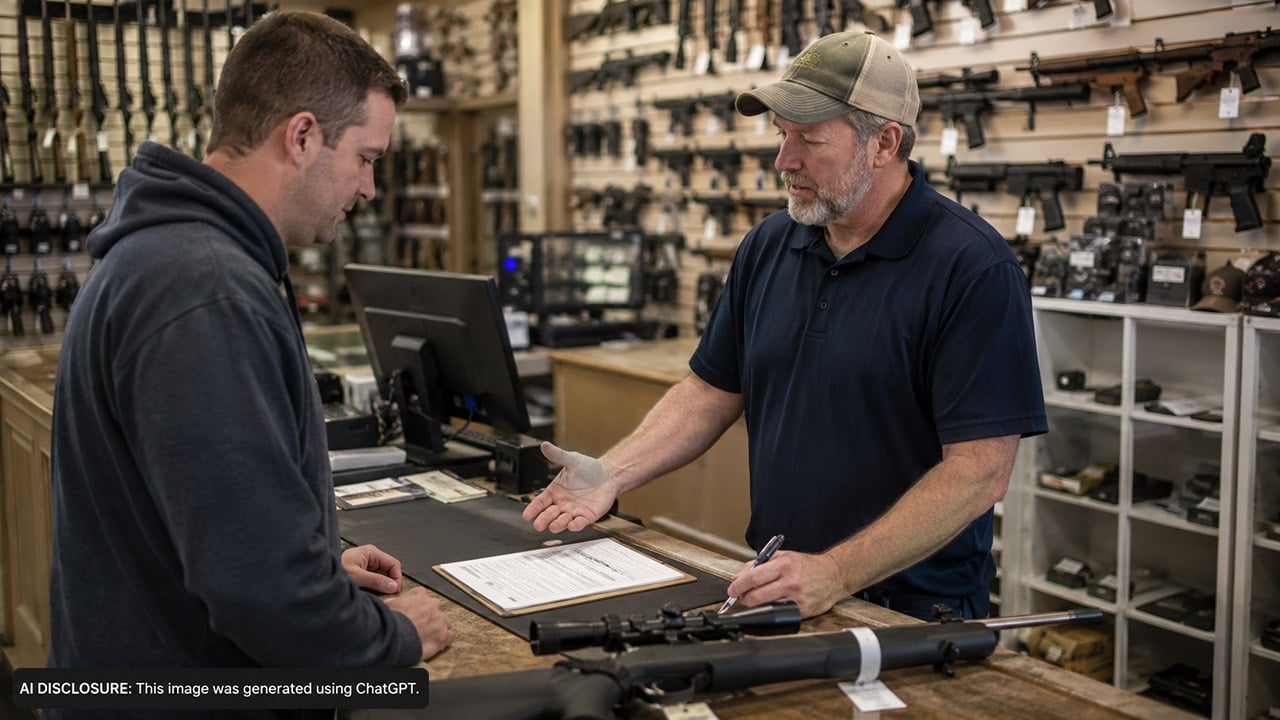
It was the kind of slow, ordinary stop at a local gun shop that most of us have made—killing a little time, looking over what’s in the racks, maybe handling something you don’t see every day. But one shopper watching the counter action says it turned into a reminder of how quickly a simple sale can go sideways when somebody doesn’t understand the basics, or worse, isn’t being straight about their past. The account was shared in the original post.
According to the witness, the customer spent a good while asking to see “over a dozen” .22 LR rifles and peppering the clerk with questions that didn’t quite add up. Eventually, the customer picked a Rossi .22 semi-auto and sat down to fill out the ATF Form 4473. That’s where things went from odd to over.
Strange questions raised eyebrows right away
Most gun shops are used to first-timers. Folks new to firearms ask about recoil, ammo cost, what’s “good for deer,” and whether a .22 will “kick.” That’s normal.
This customer, though, reportedly asked things like whether rifles already had a silencer on them, “how fast does it shoot,” and “how many shells does the clip hold.” None of those questions are automatically disqualifying, but when they’re stacked together—and repeated—it can make a person behind the counter pay closer attention.
A familiar rifle turned into a quick reality check
At one point, the customer asked to look at a Ruger 10/22 that the witness also owned. The witness mentioned it was light and a “tack driver,” meaning it shoots accurately. The customer didn’t know what that meant.
Then came another question about suppression—whether the rifle was already suppressed. The witness told him no, you’d have to buy one and attach it to the end of the barrel. Again, plenty of people are new and don’t know the lingo. But the overall vibe had the witness thinking this wasn’t just normal beginner confusion.
The clerk gave multiple chances before shutting it down
Once the customer settled on the Rossi, the clerk brought him over to the computer to complete the 4473. The witness said he had a gut feeling the buyer wasn’t going to pass whatever came next.
After the customer finished the form, the clerk looked it over and asked, “Now, did you fill this out to the best of your knowledge? Do you want to look over these questions again to make sure you like your answers?” The customer took a moment, reviewed it, and said everything looked okay.
The clerk asked again if he wanted to change anything. The customer said no. Only then did the clerk explain he couldn’t proceed with the sale based on the answers provided. The clerk also told him he was prohibited from pointing out which specific question caused the denial, but advised him to think back on anything in his past related to the form.
The customer reportedly couldn’t think of anything, didn’t argue, and left without making a scene.
The reason for the denial was simple—and surprising
After the customer left, the witness and the clerk shared that look every gun owner recognizes: the silent “What was that?” moment.
The clerk then explained what happened. The customer had checked the box indicating he had a prior felony conviction. That answer, by itself, stopped the sale cold. The witness noted how unusual that felt—most people with a felony record, even if they’re not sharp on gun details, understand they can’t just waltz into a shop and buy a rifle.
Whether it was confusion, carelessness, or something else, the end result was the same: no rifle went out the door.
Why some folks thought it might have been a “plant”
Here’s where the story took an interesting turn. The clerk suggested the possibility that the customer could have been a “plant” running a test—either connected to law enforcement making rounds or a private group trying to catch the shop slipping.
That idea will sound familiar to longtime gun counter guys. Shops are expected to follow the rules to the letter, and the fastest way to ruin a dealer is to “help” the wrong person along or ignore what’s right in front of you on paperwork. Whether this customer was a test or simply a clueless buyer who answered honestly, the clerk handled it the way you want a professional to handle it: by giving the customer a chance to review his own answers, then refusing the sale once the form said what it said.
There’s also a practical side to those extra chances the clerk gave. Sometimes a customer misreads a question, checks the wrong box, or gets tripped up by the wording. A calm “Look it over again” can prevent a mess—especially when the alternative is a denial, a delay, or paperwork headaches that don’t help anybody.
What gun owners can take from this at the counter
For the average hunter or plinker buying a .22 for varmints, squirrels, or range days, this story isn’t about politics. It’s about the reality that gun store transactions are paperwork-heavy, and little mistakes can end the sale just as surely as big ones.
A few common-sense takeaways are worth keeping in your back pocket:
First, slow down on the 4473. Read each question carefully and answer truthfully. The form is not the place to guess, joke, or try to “word it” into working out.
Second, don’t expect the clerk to “coach” you through it. In this case, the clerk did what a good clerk can do—ask if the customer wants to review answers—without telling him what to write. That line matters. The shop can’t complete your form for you, and they can’t ignore a disqualifying answer.
Third, understand that weird questions aren’t illegal, but they can change how closely people watch the transaction. Asking about “silencers,” rate of fire, and “clips” isn’t a crime. Still, it’s a fast way to signal you might be unfamiliar with the platform, the laws, or both. If you’re new, it’s better to just say you’re new and ask straightforward questions: “Is this threaded?” “Is it legal to use a suppressor here?” “What magazines does it take?” You’ll get better answers, and you won’t set off unnecessary alarm bells.
In the end, the shop did what it was supposed to do. The customer walked out empty-handed, nobody got heated, and a rifle didn’t land where it shouldn’t. That’s how it should go—quiet, professional, and by the book—because the alternative is the kind of trouble no small-town gun counter can afford.
Like The Avid Outdoorsman’s content? Be sure to follow us.
Here’s more from us: