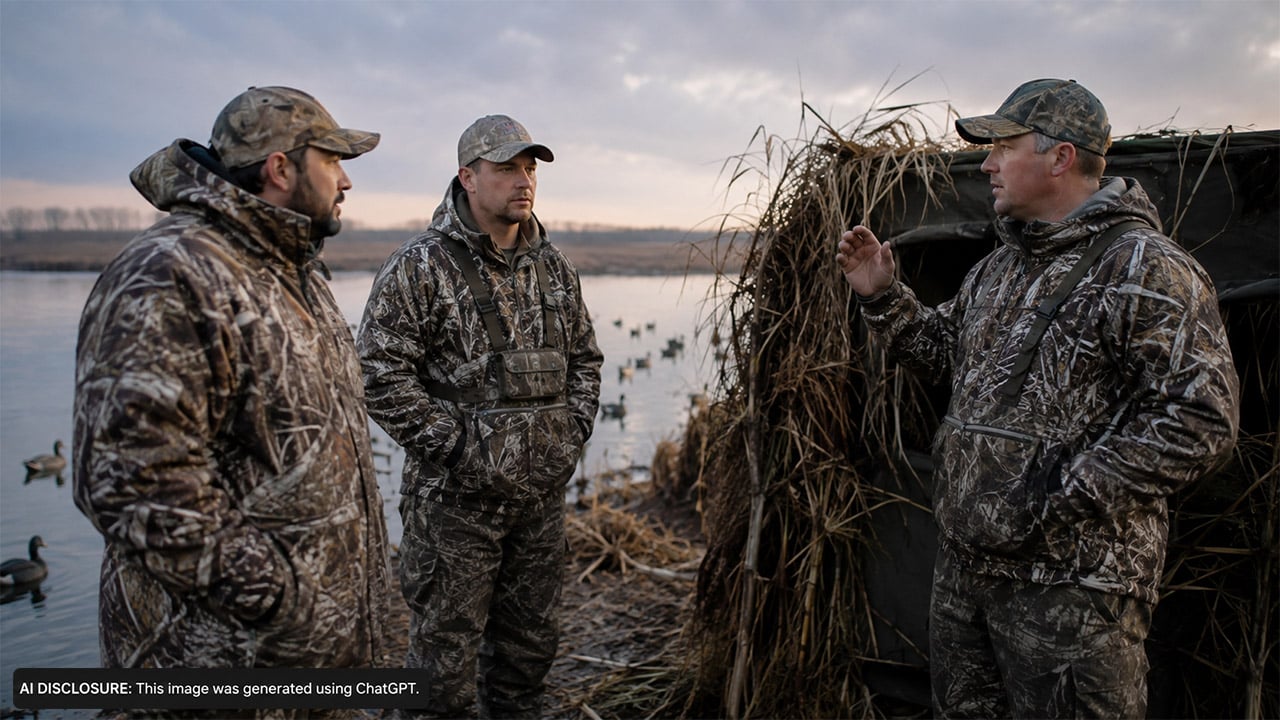
Photo credit: AI-generated image created using ChatGPT. Illustrative only
An Illinois family thought they were buying what most of us picture when we hear “half-day guided duck hunt”: meet before the action, get settled, hunt a solid block of time, and let the guide earn his money. Instead, they say the schedule kept sliding until they got about an hour of actual sit time before being told legal shooting light was done.
The details come from the source post, where the hunter laid out a timeline that would leave any paying client frustrated—especially when the bill was $800 and the advertising was “1/2 day hunt.”
A “6 a.m.” hunt turned into an afternoon shuffle
According to the account, the hunt was originally booked for 6 a.m. the next morning. The day before, the guide called and said the afternoon would be better, and the family agreed to reschedule for 1 p.m.
That part, by itself, isn’t unheard of. Weather shifts, bird movement changes, and some outfitters will steer you toward the best window. But when the guide is the one moving the goalposts, he also owns the responsibility to make sure the client understands exactly what they’re trading away—especially on ducks, where legal shooting light is the hard stop.
They met at 1 p.m., then were told to come back at 3
The family said they met the guide at 1 p.m. and were then told to return at 3 p.m. because the previous day’s “first shot was at 4:25.” So they left and came back.
That’s the moment most experienced waterfowl hunters start doing the math in their head. In Illinois in early winter, you don’t have the luxury of “we’ll see what happens” timing on afternoon hunts. Once you’re inside two hours of sunset, every delay matters—because ducks don’t care what you paid.
Legal shooting hours weren’t explained—and it cost them the hunt
The family said the guide didn’t tell them hunting stops at sunset, and they didn’t know it. When they returned at 3 p.m., they entered the blind at 3:20.
At 4:20, the guide reportedly told them hunting was over because the sun had set. If that’s how it went down, it’s a brutal lesson for a new waterfowler: you can have decoys out, a good hide, and birds moving—then the clock runs out and you’re done. A guide is supposed to prevent that kind of preventable mistake, not steer clients into it.
The $800 “half-day” price tag is what made it sting
Guided duck hunts aren’t cheap. By the time you factor in leases, blinds, decoys, dogs, boats, fuel, and scouting, outfitters have real overhead. But the family’s frustration centered on paying $800 for a “1/2 day hunt” and ending up with roughly one hour in the blind.
Plenty of hunts go sideways for reasons nobody controls—wind changes, pressure, birds not flying. That’s hunting. What people generally won’t accept is paying for time and access, then losing most of that time to scheduling delays that appear to be avoidable. If you advertise “half-day,” the reasonable expectation is that you’re hunting for a meaningful chunk of that half-day, not just catching the tail end of legal light.
Refund request denied, and the hunter worried it was personal
Afterward, the family emailed the guide and asked for a refund. The guide refused and, according to the post, implied it was the family’s fault.
The hunter also raised a concern a lot of folks quietly carry when they’re new to the sport or new to the country: they said they’re an immigrant with an accent and wondered if that’s why the guide felt comfortable brushing them off. They also noted that a native English-speaking friend booked a trip with the same guide the year before and didn’t get the same treatment.
That part is tough to prove from the outside, but it does highlight something every outfitter should understand: the easiest clients to shortchange are the ones least likely to push back. And that’s exactly why hunters should do a little homework before sending a deposit—because once the truck is unloaded and shooting light is gone, your leverage usually disappears with it.
What hunters can do when a guided hunt goes bad
When a paid hunt doesn’t match the advertising, there are a few practical steps that are worth considering. First is documentation: save the listing that says “1/2 day hunt,” keep texts/emails about meet times, and write down the exact timeline while it’s fresh. If you end up disputing a charge or filing a complaint, specifics matter.
Second is being clear on what you’re buying before you ever drive to the meet spot. A “half-day” can mean different things to different outfitters: some define it as morning or afternoon access with a rough start time, others sell a set number of hours in the blind, and some use it more like a package label than a time promise. A quick phone call asking, “What time do we meet, what time are we in the blind, and how long do we hunt?” shouldn’t offend a good guide.
Third is understanding legal shooting light. Waterfowl regs are strict, and the guide should know them cold, but clients should still have a basic handle on sunrise/sunset and how those rules work for the date and location. Even if you’re paying someone else, you’re still holding a shotgun and a license, and nobody wants their “learning experience” to turn into a ticket.
Finally, if you truly believe it was misrepresented, many hunters start with the payment method. If a service wasn’t delivered as advertised, a credit card dispute is sometimes an option, and it forces a paper trail. Beyond that, people commonly look at consumer protection routes and business complaints. That’s not about revenge; it’s about making sure the next family doesn’t pay premium money for leftover minutes.
Guided hunts can be worth every penny when the guide communicates, puts you in the right spot on time, and treats you like a client instead of an inconvenience. But this story is a reminder: ask blunt questions up front, confirm the schedule in writing, and don’t let anyone sell you a “half-day” that only exists on the website.
Like The Avid Outdoorsman’s content? Be sure to follow us.
Here’s more from us: