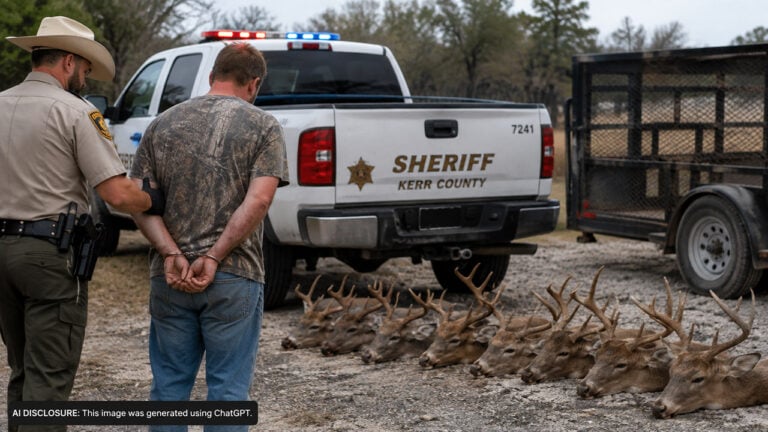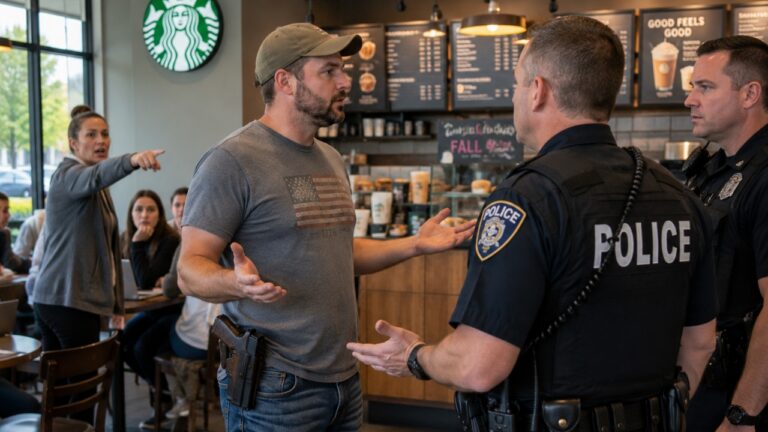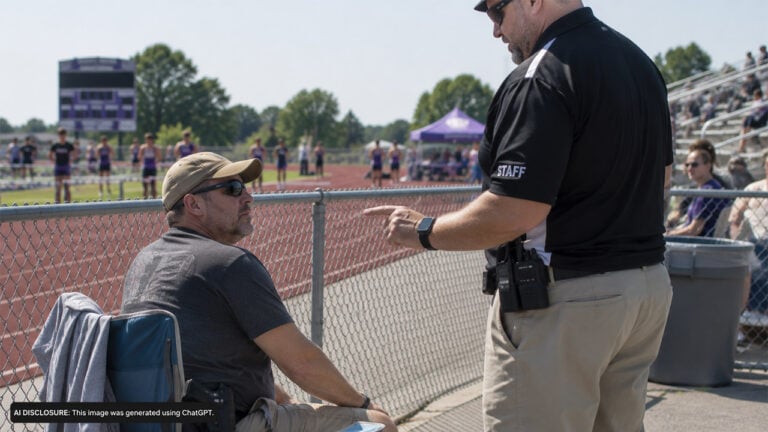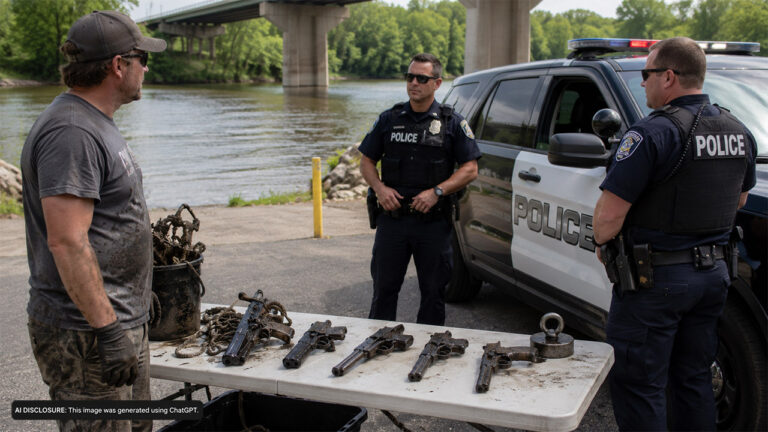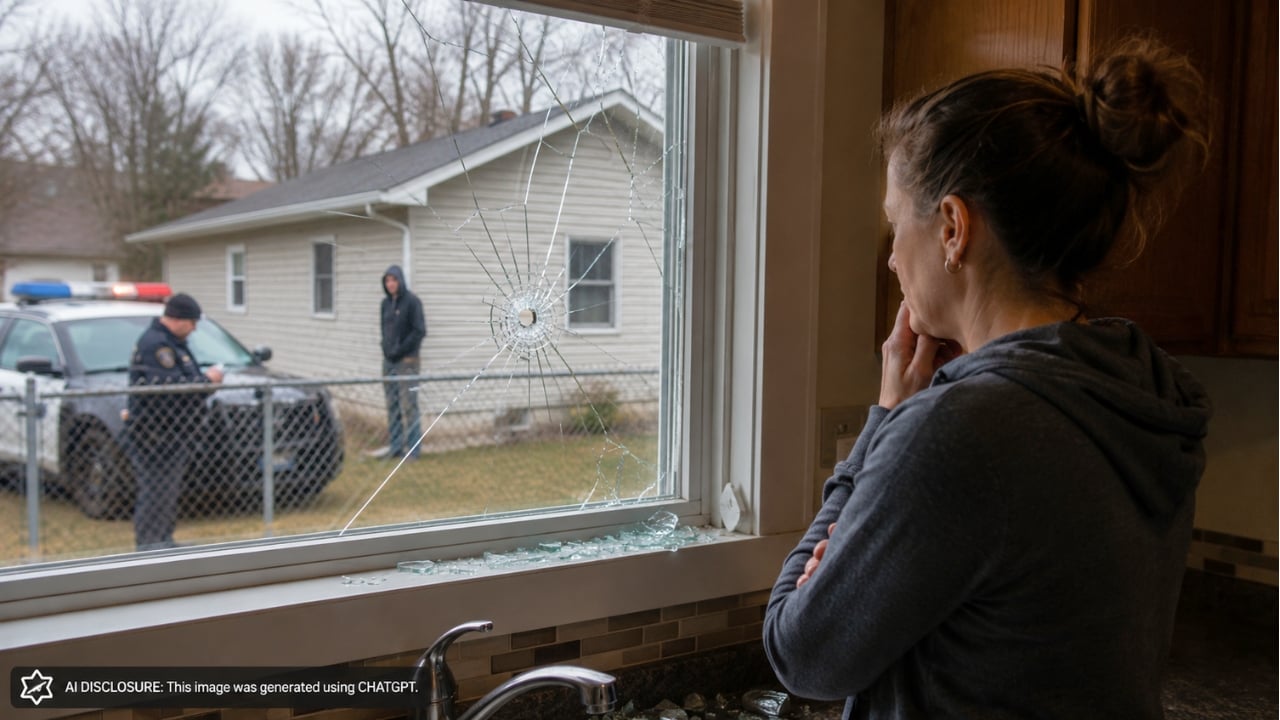
Photo credit: AI-generated image created using ChatGPT. Illustrative only
It starts as property damage, but it doesn’t stay there for long. One homeowner says their next-door neighbor has shot out two windows in just a few days with what they believe is a pellet gun—first a kitchen window, then a basement window along the side of the house that faces the neighbor’s property.
In the original post, the homeowner describes a frustrating response from police: officers would take a report, but said they couldn’t do more because nobody actually saw the neighbor pull the trigger. The homeowner says they have cameras up, but the neighbor is avoiding them and has also been shooting at the cameras.
Two shattered windows and a problem that’s getting closer
The first hit was the kitchen window. Not long after, a basement window was shot out—one that “abuts” the neighbor’s property. If you’ve lived long enough in the country or on the edge of town, you know how fast that kind of thing changes the way you feel in your own home.
A pellet gun might not sound like much to someone who’s never been around them, but they can break glass, chew up siding, and put an eye out in a hurry. And when shots are coming toward a home, it stops being about windows and starts being about where the next pellet lands.
Why “we can only write a report” doesn’t sit right with homeowners
The homeowner’s main complaint is simple: they feel like law enforcement is waiting for an eyewitness, and they’re not going to stand in front of a window while someone shoots at their house just to provide one. That’s common sense. Nobody should be expected to put themselves in the line of fire to help build a case.
At the same time, police often lean heavily on what they can prove cleanly—especially when it comes down to identifying a suspect and tying them to damage. If an officer didn’t see it happen and doesn’t have solid evidence pointing one way, they may default to documentation first. That doesn’t make it feel any safer for the person sweeping glass off their floor.
Cameras are good—until someone knows where they are
The homeowner says they have cameras “all over,” but the neighbor has managed to avoid them and has been shooting at the cameras as well. They even believe the kitchen window may have been struck when the neighbor was trying to hit a garage camera and missed.
That detail matters for two reasons. First, it suggests intent beyond random vandalism—if someone is actively trying to take out your cameras, they’re thinking about consequences. Second, it means the usual advice of “just put up a camera” may not be enough if the cameras are easy to spot, mounted low, or aimed in predictable ways.
From a practical standpoint, documenting damage is still useful: photos of the window from inside and outside, close-ups of impact points, and dates/times of each incident. Even if video is hard to capture, a pattern of reports and consistent documentation can help build a stronger case over time.
The safety issue is the part that should get everyone’s attention
Broken windows are expensive, but the bigger issue is that somebody is firing projectiles toward an occupied structure. Pellets can ricochet. They can come through thinner glass. And they don’t care who’s standing on the other side—kids, guests, or the homeowner themselves.
The homeowner also says the neighbor is a drug user, and they believe the behavior is escalating. Whether or not substances are involved, the pattern described—damage, repeated incidents, attempts to defeat cameras—reads like a situation that can tip into something worse if it’s not stopped.
This is also where the “don’t confront them” advice applies in the real world. Plenty of outdoorsmen are comfortable handling problems face-to-face, but when someone is already shooting at your home, walking over to argue in the yard isn’t a strong play. It’s safer to create distance, document, and keep pushing the issue through proper channels.
What options the homeowner was looking at when money and time are tight
The homeowner says they don’t have money for a lawyer, especially with windows needing to be replaced. That’s real life: repairs come out of the same wallet you’d use for legal help, and most people aren’t sitting on spare cash for either.
They asked about taking it “up the police chain of command,” and also mentioned their alderman not doing anything. In a lot of places, that’s exactly how you keep pressure on the problem without doing something reckless—continue making reports, ask for a supervisor, and keep a paper trail. It may feel slow, but a documented history of incidents can matter when someone finally does take a hard look at it.
They also sounded genuinely worried that the only way anyone will act is “if I get shot.” That’s the kind of sentence that tells you the homeowner doesn’t feel protected by the current response, and they’re looking for a way to get ahead of the next incident instead of reacting to it.
Where the situation leaves everyday landowners and homeowners
If you’ve ever dealt with a bad neighbor, you know the helpless feeling that comes with it. You can do everything right—lights, cameras, locked gates—and still end up being the one paying for damage while the person causing it slips back behind their own door.
The homeowner’s story is also a reminder that “non-lethal” doesn’t mean “not serious.” A pellet gun pointed at a house is still a weapon being used in a way that can hurt someone. And when the same person hits the same property twice in a short span, it’s not a one-off.
For folks who live a little more spread out, or who keep guns and hunting gear in the home, this is where discipline matters. Keep your head, don’t escalate it in the yard, and keep pushing the documentation and reporting angle until someone with authority takes a harder look. Because shattered glass is one thing—but letting shots at a home become normal is something else entirely.
Like The Avid Outdoorsman’s content? Be sure to follow us.
Here’s more from us: