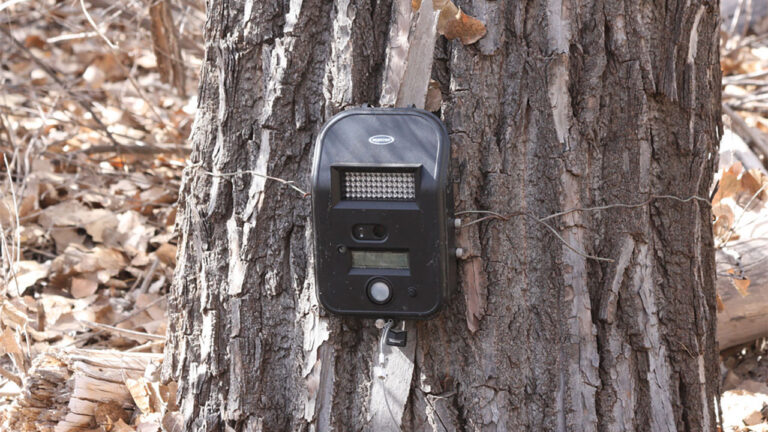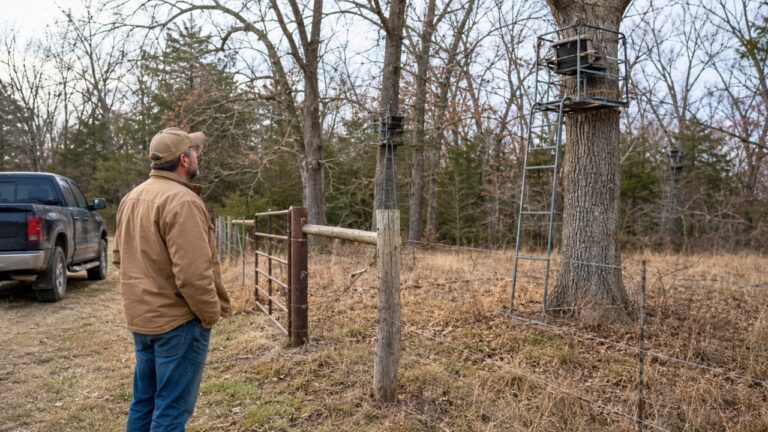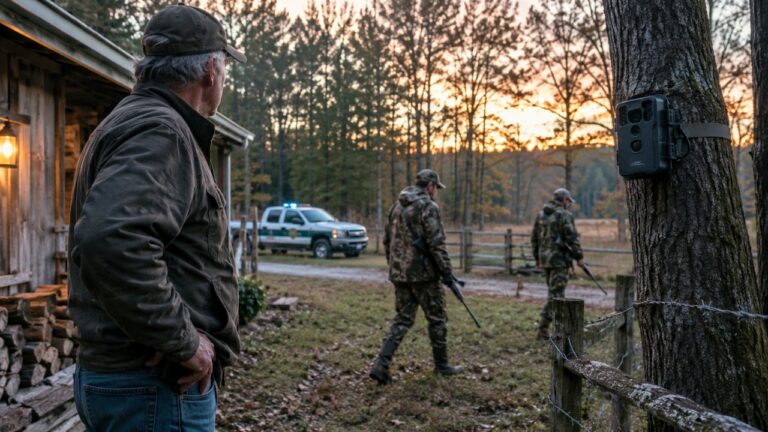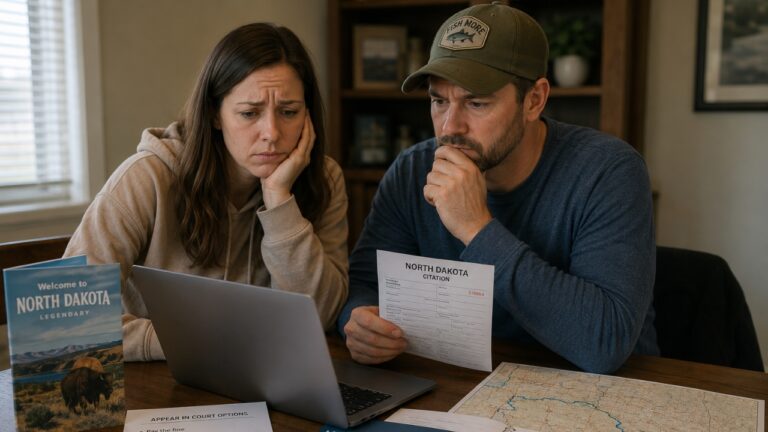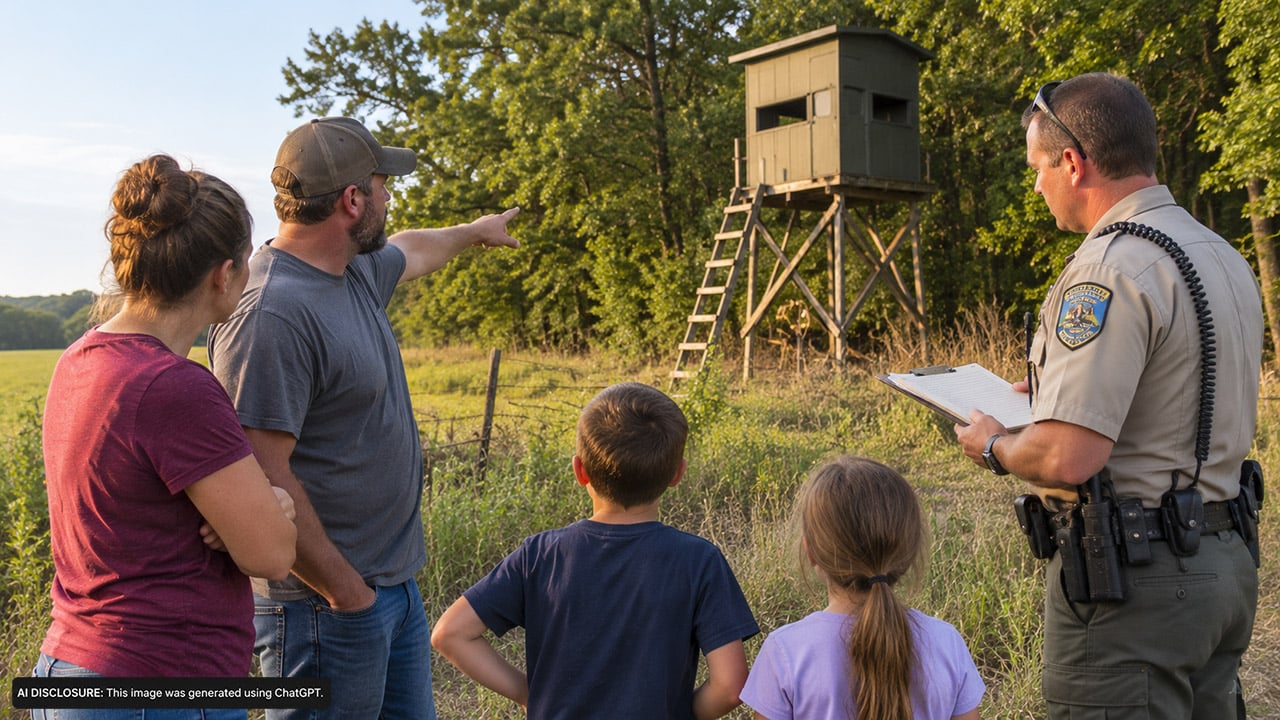
Photo credit: AI-generated image created using ChatGPT. Illustrative only
A Kansas hunter leasing family ground walked in and found something he didn’t put there: deer stands set up on the property he rents from his parents. It wasn’t the first time the family had dealt with stand drama near a line fence, but this time they say they know exactly who owns the new stands—and the situation has turned into a slow-motion standoff.
In the original post, the renter explained that when they’ve had problems before, it usually came down to honest confusion over property lines. Once everyone got on the same page, the stands came down and life went on. This time, though, they claim the neighbor either denies it or simply shifts the stands around, keeping them in play.
A familiar problem that used to end with a simple talk
If you’ve spent much time hunting the Midwest, you’ve seen how this happens. A fence row disappears into tall grass, an old corner post rots off, a creek jumps its bank, and suddenly a “close enough” setup ends up on the wrong side. Most decent folks fix it fast once they realize what they did.
That’s why this case is so aggravating. The renter said they’ve already lived through the “mistaken property lines” version of this story. Those situations got handled without fireworks. Now they’re dealing with stands they believe belong to a known neighbor, but the neighbor won’t own it—or won’t stop doing it.
When stands show up, it’s not just trespass—it’s a safety problem
To non-hunters, a deer stand can look like harmless gear left in the woods. To the folks who actually manage land and hunt it, an unknown stand means an unknown hunter, an unknown weapon, and unknown shot angles on a property you’re responsible for.
That’s where things get serious. A stand tucked into a timber edge can put someone watching a trail you and your family use. It can also create a bad situation during firearm season if two parties hunt the same draw or the same field entrance without knowing it. Even if nobody intends trouble, surprise human overlap is how accidents happen.
The renter called the game warden—and waited four weeks
The renter said they contacted the local game warden, expecting help because this is a hunting-related trespass issue. Instead, they described repeated delays and rescheduled visits. After four weeks, they still hadn’t gotten the in-person response they were waiting on.
They also reached out to the sheriff’s department, but were told it was a game warden issue. That’s a tough spot: you’re dealing with someone else’s hunting equipment on your leased ground, you’re not looking to get sideways with the law, and the agencies you’d expect to help are pointing in one direction while nothing actually changes on the ground.
The big question: can you take down stands on land you rent?
The renter’s main question was plain and practical: they believe they’re entitled to remove the stands, but they want to know what rights they have and what they’re supposed to do with any stands they take down.
That’s the part a lot of hunters and land renters run into. You’ve got control of the property day-to-day, but you may not be the titled owner. At the same time, leaving unauthorized stands up can feel like you’re allowing trespass to continue. It’s a real-world dilemma—especially when you’ve already tried the polite route and the official route is moving at a crawl.
Why “just take them down” can get messy in the real world
From a common-sense outdoorsman standpoint, it’s hard to argue with wanting an unauthorized stand off your place. But the moment you put hands on someone else’s property, you’ve got another layer of risk—arguments, accusations, and the possibility you end up being painted as the bad guy for “stealing” a stand that never should’ve been there.
The other reality is escalation. People who will sneak onto a neighbor’s ground to hang a stand aren’t always the people who calmly accept consequences. Removing it might solve the immediate problem, or it might lead to a confrontation at the gate, a note on the windshield, or a bigger headache when you’re trying to focus on the season.
That’s why many land managers lean on a boring playbook: document first, then act. Photos of the stand in place, dates and times, and any identifying marks can matter later. It’s not glamorous, but it helps separate “I think it’s theirs” from “Here’s exactly what was on my property and when.”
The practical options hunters usually lean on in stand-trespass disputes
Even with the limited details provided, the situation highlights a few moves that tend to work in the real world—especially when an officer’s response is slow. One is to get crystal clear on boundaries: corners marked, lines flagged, and maps squared away so there’s no “I didn’t know” excuse left. The renter noted that previous issues were tied to line confusion, so locking that down matters.
Another is tightening access. If you can control gates, posting, and obvious entry routes, you reduce the odds of repeat problems. It won’t stop a determined trespasser, but it does remove the “open invitation” look that some folks take advantage of.
And then there’s the relationship piece—handled carefully. If you do know who owns the stands, a direct, calm notice (and the landowner being involved, not just the renter) often carries more weight. Sometimes people brush off the renter and take the titled owner seriously. Sometimes they don’t. But involving the owner early can prevent the situation from turning into “he said, she said” about who had authority to demand anything.
Finally, keep pushing the official track without letting it turn into a circus. If one agency says it’s another agency’s issue, ask what exactly they can handle and what they can’t. Rural enforcement is often stretched thin, but persistence and clear documentation tend to get more traction than repeated emotional calls.
At the end of the day, unauthorized stands on leased family ground aren’t a minor annoyance—they’re a sign someone feels entitled to hunt where they shouldn’t, and that can create real safety and liability problems fast. If you’re in a similar spot, the goal is simple: keep it calm, keep it documented, keep it legal, and get control of your property back without letting a stand turn into a bigger conflict than it needs to be.
Like The Avid Outdoorsman’s content? Be sure to follow us.
Here’s more from us: