Photo credit: AI-generated image created using ChatGPT. Illustrative only
When a family member’s guns get handed off “just for storage,” most folks assume it’s a handshake deal that’ll be honored later. In one Indiana family’s case, that trust turned into months of dodged calls, a threat to involve a lawyer, and ultimately a recovery that revealed something even uglier than plain theft. The details were laid out in the original post, where the family explained how heirloom firearms tied to a late uncle nearly disappeared for good.
The good news: the guns were recovered. The bad news: they’d been traded off as payment to someone else, and the eventual “buyer” had also reportedly claimed insurance money after a supposed break-in—using those same guns in the claim. Prosecutors were said to be reviewing everything, and the family was left with a hard-earned lesson a lot of gun owners learn the painful way.
The guns were stored as a favor during a medical crisis
The situation started years earlier, when the poster’s uncle and grandpa were both seriously sick and ended up in a nursing home—one dealing with diabetes, the other recovering from a heart attack. Afterward, they moved into an income-based apartment where they reportedly weren’t allowed to keep their firearms.
So the family did what plenty of folks do in small towns: they leaned on a trusted connection. The poster’s mother asked a family friend—someone who had served on a volunteer fire department with the uncle and grandpa—to hold onto the uncle’s guns and store them.
A death in the family turned “storage” into an inheritance fight
In July, the uncle passed away due to extremely low blood sugar. The poster, 24 years old at the time, said his uncle had told him his whole life that those guns would be his when he died.
That kind of promise carries weight in hunting families. It’s not just steel and wood; it’s the rabbit gun, the deer gun, the one that rode behind the truck seat for a decade. But when it came time to actually get the firearms back, the family friend who had them wouldn’t respond.
Months of being ignored raised the stakes fast
The poster explained that his mom had tried to contact the man holding the guns for months and was ignored. The poster was away at college, which added delay and distance—two things that can turn a manageable problem into a mess.
Eventually, the mom posted on the man’s and his girlfriend’s Facebook pages about getting a lawyer involved. That finally triggered a response: a text saying to call the girlfriend the next day.
At that point, the family wasn’t just thinking about heirlooms anymore. They were thinking about where those guns might end up—sold quietly, traded at a show, or passed around until the serial numbers meant nothing to anyone who could help.
They started documenting and weighed bringing in law enforcement
Knowing emotions run hot when guns and family promises are involved, the poster looked for practical steps. Indiana is a one-party consent state for recording, and he set his mother up to record the phone call.
He also asked the key question most responsible gun owners ask once something feels off: is it safer and easier to have an officer present to retrieve the firearms? When you suspect a person is dodging you—or worse—you don’t want a driveway confrontation, and you definitely don’t want to walk into a house where you don’t know who’s angry or armed.
The mom also had text messages documenting the back-and-forth, which matters because gun disputes aren’t just about who “should” have them. They become about what you can prove, what the other party admits, and whether the guns are still where they’re claimed to be.
The recovery came with a twist: the guns had been traded off as payment
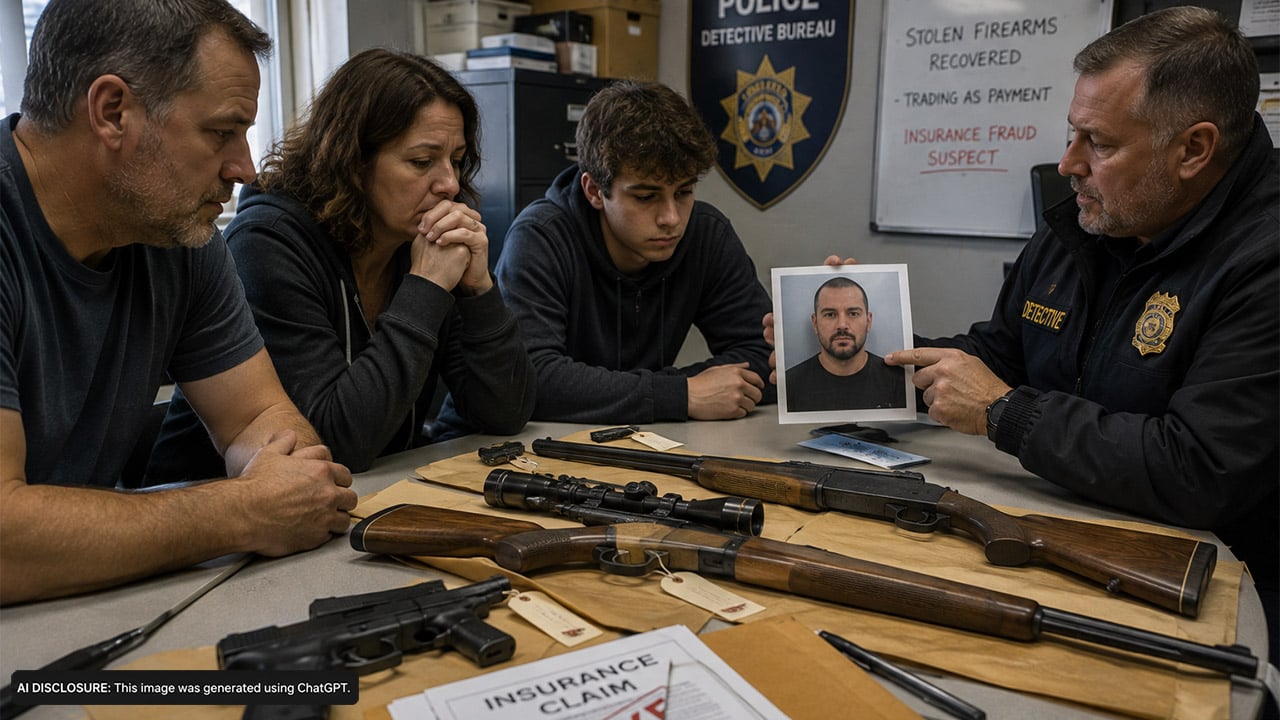
In an edit, the poster said the family recovered the guns and learned they’d been traded away as payment to someone else. That detail is important because it explains why the original holder may have been stalling—if the firearms were already gone, he couldn’t simply hand them over when asked.
From a real-world gun-owner perspective, that’s one of the worst outcomes: your firearms leave your control and start bouncing through hands that don’t care about your family, your paperwork, or your safety rules. Every trade increases the chance the guns get damaged, altered, or used in a way that drags your name into something you had nothing to do with.
The family said statements from their side were taken, and they were relieved the guns weren’t dumped on a casual online sale or moved through a show where tracking them becomes a nightmare.
Then police reportedly learned the “buyer” had claimed them on insurance
The story didn’t end at “guns returned.” The poster said the family also learned the guns had been claimed on insurance after people allegedly “broke into their house.” According to the account, that person was awarded insurance money.
If that’s accurate, it’s a whole different animal than a disagreement over storage. An insurance claim tied to firearms can involve documented serial numbers, sworn statements, and a paper trail that doesn’t play well with the truth. The poster noted it would “be a fun time,” but the tone was clear: relief first, and then the slow grind of accountability.
At the end of the update, the poster said everything was being looked over by the prosecutor’s office.
This is the kind of scenario that ought to make every gun owner pause. If you ever have to store guns outside your home—because of housing rules, illness, travel, or a family emergency—treat it like a formal handoff, not a casual favor. Get an inventory with serial numbers, make a written agreement, and keep your own records. And if the situation starts feeling slippery, don’t try to solve it with a tense face-to-face meeting; keep documenting, involve the right professionals, and let cooler heads do the talking.
Like The Avid Outdoorsman’s content? Be sure to follow us.
Here’s more from us: