Photo credit: AI-generated image created using ChatGPT. Illustrative only
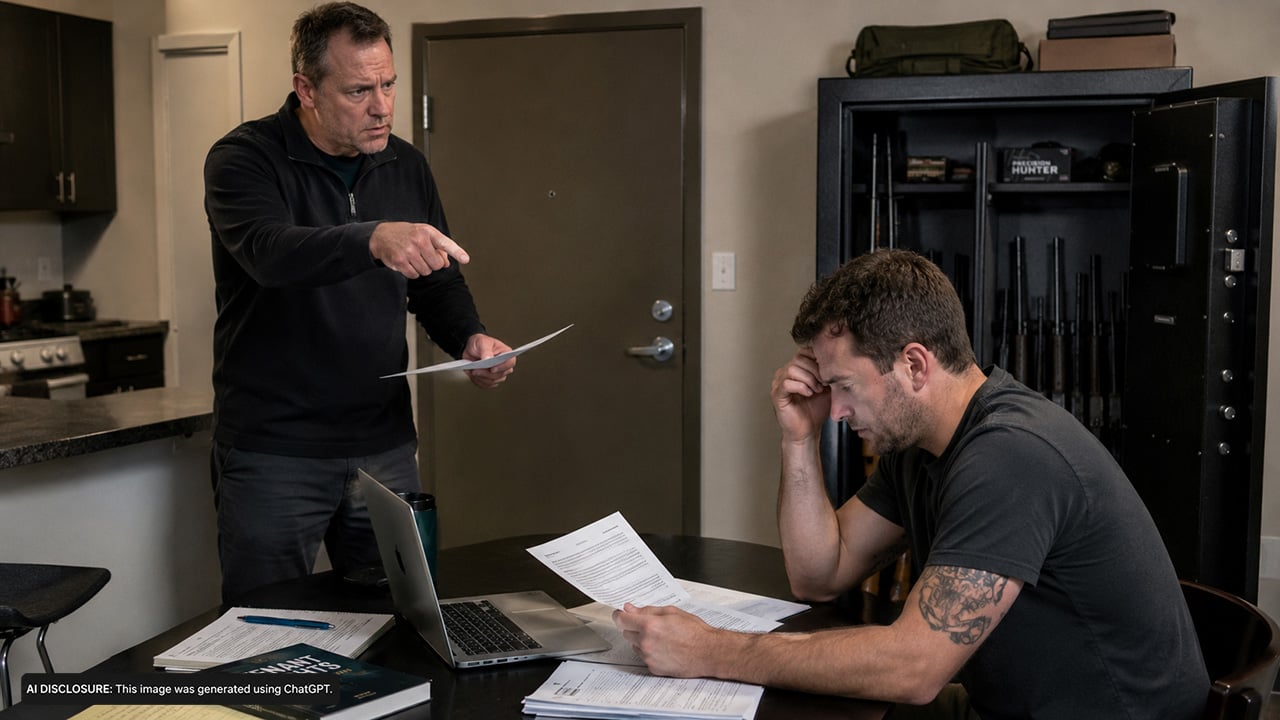
Most gun owners know how to keep their business quiet: hard case, locked up, in and out. But in an apartment complex, “quiet” can still turn into “everybody knows” fast. That’s the spot one San Diego tenant found himself in after his landlord emailed him saying a neighbor complained about him owning firearms.
In the original post, the tenant said he’d been in the unit about four months without issues. Then, out of nowhere, he was told he had 30 days to remove his guns from the apartment or face eviction—even though he checked his lease and said there was nothing in it banning firearms.
How the neighbor likely “found out”
The tenant wasn’t waving guns around the parking lot. He said he rarely took them out, and when he did, they were in a hard, locked case. Still, he suspected the neighbor saw him walking in or out with a rifle or shotgun case.
If you’ve carried a long gun case through a shared hallway, you already know the deal: it doesn’t take a detective to connect the dots. In this case, the tenant even mentioned the cases had CRPA and NRA logos on them, which can make the contents pretty obvious to anyone paying attention.
The landlord’s email turned it into a ticking clock
According to the tenant, the landlord said a neighbor complained and then refused to say how the neighbor knew about the guns. The tenant responded with what most responsible gun owners would: the firearms were legal, registered, and stored in a secure safe.
That didn’t cool anything down. The tenant said the landlord gave him a hard deadline—30 days to remove the guns or be evicted. In the real world, that’s not just a “policy disagreement.” That’s a potential scramble to find off-site storage, change routines, or start preparing for a legal fight while still trying to keep your job and your life moving.
The lease didn’t ban guns, which is where the argument starts
The key detail in the tenant’s story is simple: he checked the lease and found nothing about firearms being prohibited. In rental life, the lease is the rulebook. If it’s silent on a topic, a landlord can’t always invent new terms midstream just because a neighbor doesn’t like something.
That doesn’t mean a landlord can’t enforce behavior rules tied to safety—like reckless handling, discharging a firearm, threatening people, or storing firearms in a way that violates building policy if such policy is actually part of the agreement. But a blanket “no guns in your apartment” demand, dropped months into a lease with no supporting clause, is exactly the kind of thing that makes tenants start asking what’s enforceable and what’s just pressure.
Practical options he appeared to be weighing
The tenant asked what he could say to the landlord and how to handle it “the right way.” From a common-sense outdoorsman’s standpoint, the first move isn’t getting loud—it’s getting organized. The tenant already did one smart thing: he reviewed the lease for any firearms language.
The next practical steps in a situation like this typically revolve around documentation and clarity. Communicating in writing, keeping copies of emails, and asking the landlord to point to the exact lease clause being enforced can matter later if an eviction threat turns into formal paperwork. It also forces the conversation out of vague emotion—“a neighbor complained”—and into specifics.
He also seemed to be thinking through the reality of apartment life: even if you’re right, you still have to live there. The landlord has leverage with renewal decisions, and neighbors can be relentless with complaints. That’s why gun owners in close quarters often focus on being boringly responsible—locked storage, minimal visibility, no talk, no drama—because you’re not just managing safety, you’re managing perception.
Why safe storage and “registered and legal” still didn’t end it
One thing that stood out is the tenant’s belief that emphasizing “secure safe” storage and “legal and registered” guns would settle the issue. It should matter, at least from a safety standpoint. A locked safe is about as responsible as it gets in an apartment setting, especially if you’ve got other people living close on all sides.
But neighbor complaints aren’t always about actual risk. Sometimes they’re about discomfort, politics, or fear of the unknown. And once a landlord gets a complaint, some will try to eliminate the headache the quickest way they know how—by leaning on the tenant—whether or not the lease really supports that demand.
That’s also where those logo-covered cases come back into the picture. Nobody should have to hide lawful ownership, but in tight living arrangements, obvious branding can invite attention from the kind of person who reports first and asks questions later. Plain cases don’t change your rights, but they can change how often you get dragged into someone else’s panic.
The real-world stakes for hunters and gun owners in apartments
If you’re a hunter or a regular range guy living in an apartment, you already juggle enough: early departures, gear organization, and making sure you don’t spook the whole building when you’re loading up for a weekend. Add a landlord’s eviction threat, and it becomes a forced-choice problem—protect your housing stability or protect your ability to store your firearms where you live.
This tenant wasn’t talking about unsafe handling or anything irresponsible. He described locked transport and a secure safe inside the unit. The conflict came down to a neighbor complaint and a landlord trying to turn that complaint into a new rule with a 30-day countdown.
Whatever route he chose after asking for advice, the broader lesson is one most outdoorsmen learn the hard way: in shared housing, you can do everything right and still get targeted. The best defense is keeping your storage solid, your paperwork and lease terms squared away, and your communication calm and documented—because the moment “remove them or be evicted” shows up in your inbox, it’s no longer just about guns. It’s about protecting your home, too.
Like The Avid Outdoorsman’s content? Be sure to follow us.
Here’s more from us: