Photo credit: AI-generated image created using ChatGPT. Illustrative only
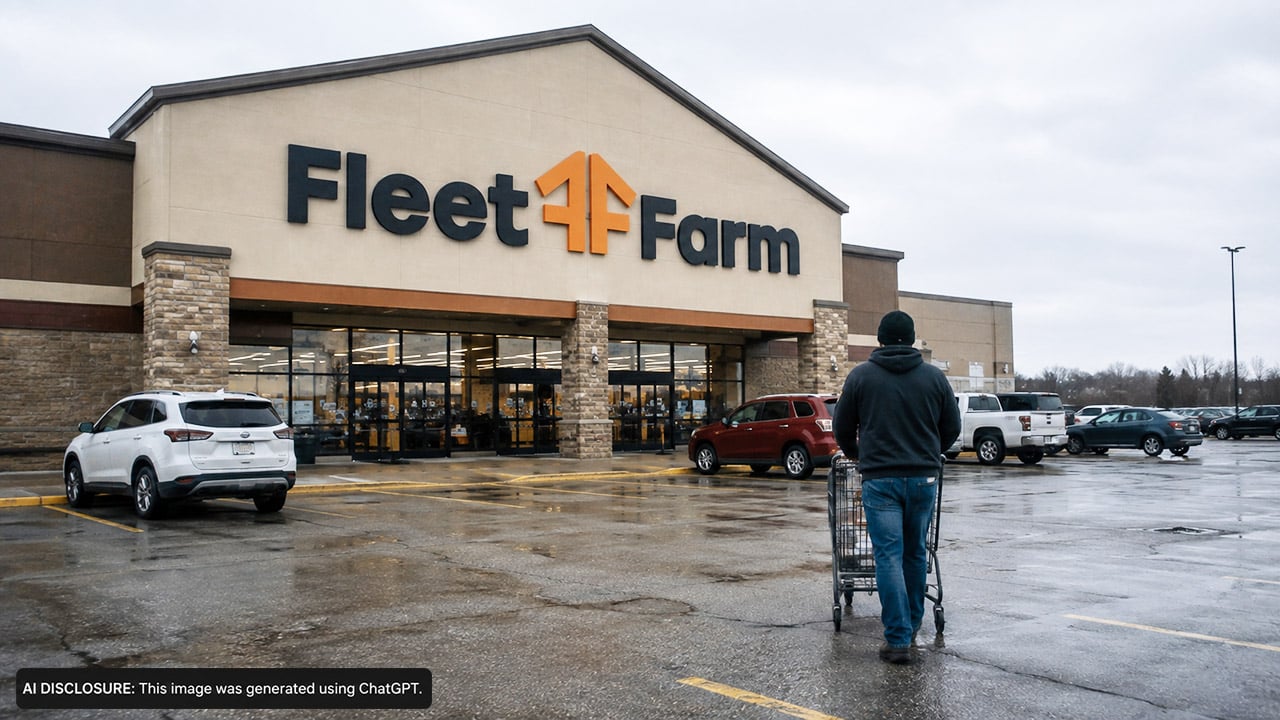
Most folks who buy guns for hunting season know the routine: paperwork, a quick conversation at the counter, and a gut-check from the clerk if something feels off. In Minnesota, newly released documents suggest that gut-check happened at Fleet Farm in 2021—and the warning didn’t get the attention it needed.
In the original post, MPR News reports that internal records tied to a settlement show Fleet Farm ignored employee alerts about suspected straw purchases. One of those flagged purchases was linked to a gun later used in a deadly shooting at a St. Paul bar.
A counter clerk saw something that didn’t sit right
Straw purchasing is simple in concept and ugly in outcome: someone who can pass the background check buys a firearm for someone who can’t—or doesn’t want their name attached to it. It’s illegal, and it’s one of those things retailers are supposed to watch for because it’s often the first step before a gun ends up on the street.
According to the documents described in the report, a Fleet Farm employee named Cory Klebs flagged a series of purchases as suspicious in July 2021. The buyer was Jerome Horton, and the purchases happened within about a week—exactly the kind of buying pattern that can raise eyebrows at a gun counter.
The warning email that went unanswered
The details that matter here aren’t complicated, but they’re hard to read if you’ve ever stood behind a gun counter or bought a firearm the right way. Klebs emailed Fleet Farm’s firearms compliance specialist, Michelle Granato, about the suspicious activity. The documents show that email never got an answer.
That’s the part that sticks in a lot of outdoorsmen’s craw. Big retailers love to talk about compliance, training, and process. But when an employee takes the time to flag a sale and send it up the chain, that warning has to land somewhere—especially in a business where “I had a bad feeling” can be the difference between a clean sale and a tragedy.
Three months later, a gun from those sales was used in a fatal shooting
Three months after those July purchases, one of the guns Fleet Farm sold to Horton was used in a shootout at Truck Park in St. Paul, the report states. Marquisha Wiley, 27, was killed, and 14 other people were injured.
At a Wednesday press conference, Eric Maloney—an employee in the Minnesota Attorney General’s office—said it was possible the shooting might not have happened if Fleet Farm had stopped the July 31 sale to Horton, and that Wiley might still be alive. That’s not a courtroom certainty, but it’s the kind of “what if” that’s hard to shake when the timeline is that tight.
ATF later told Fleet Farm the buyer was a straw purchaser
After the shooting, the Minnesota Bureau of Alcohol, Tobacco, Firearms and Explosives (ATF) informed Fleet Farm that Horton was a straw buyer, according to the report. In a deposition, Granato said she had never heard anyone had suspicions about Horton’s purchases before ATF warned the company.
That point matters because it shows how these cases often break down in the real world. The clerk sees it. The clerk flags it. But if the internal pipeline doesn’t work—or if nobody wants to be the person who slows sales—then the “official” record becomes, “We didn’t know.” The documents released in this case appear to challenge that.
The state sued, settled, and is now putting the documents out in public
Minnesota Attorney General Keith Ellison’s office sued Fleet Farm in 2022, alleging the retailer negligently sold firearms to straw buyers. The lawsuit pointed to 37 firearms purchased by two straw buyers over 16 months. Fleet Farm later settled for $1 million in February, the report states.
Now the Attorney General’s office is releasing 694 documents related to that litigation. They’ll be hosted in the University of California, San Francisco’s Industry Documents Library—a collection that also archives documents from other heavily scrutinized industries. The stated goal is transparency, and the practical effect is this: the public gets to see how the business handled warnings, not just what the company says after the fact.
What gun owners and hunters should take from it
If you’re a hunter who buys a rifle for deer camp or a shotgun for waterfowl, it’s easy to look at a story like this and think it’s only about “crime guns” and big-city problems. But straw purchasing drags everybody into the mess. It adds scrutiny to normal buyers, pushes more rules onto retailers, and makes every lawful gun owner’s life a little more complicated when something goes wrong.
There’s also a down-to-earth lesson here about paying attention to your own lane. If you sell firearms—at a store, at a shop, even handling transfers—take staff concerns seriously and document them. If you’re buying, don’t play cute games like “I’m buying this for my buddy” or letting someone else pick the gun while you pay. Even if your intentions are clean, those are the exact behaviors that look like straw purchasing and can put you in a bad spot fast.
The settlement included a requirement that Fleet Farm implement new monitoring and employee training to prevent and flag straw purchases. That’s a start, but the real test is whether the next “this looks wrong” email gets answered before it becomes a police report.
Like The Avid Outdoorsman’s content? Subscribe to our newsletter so you never miss an article.
Here’s more from us: