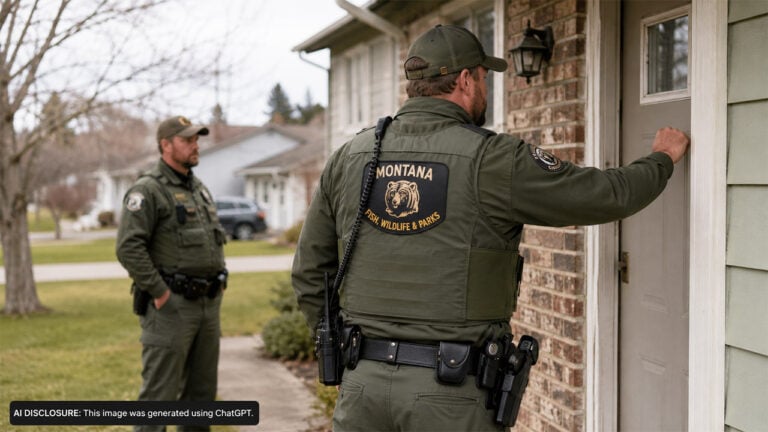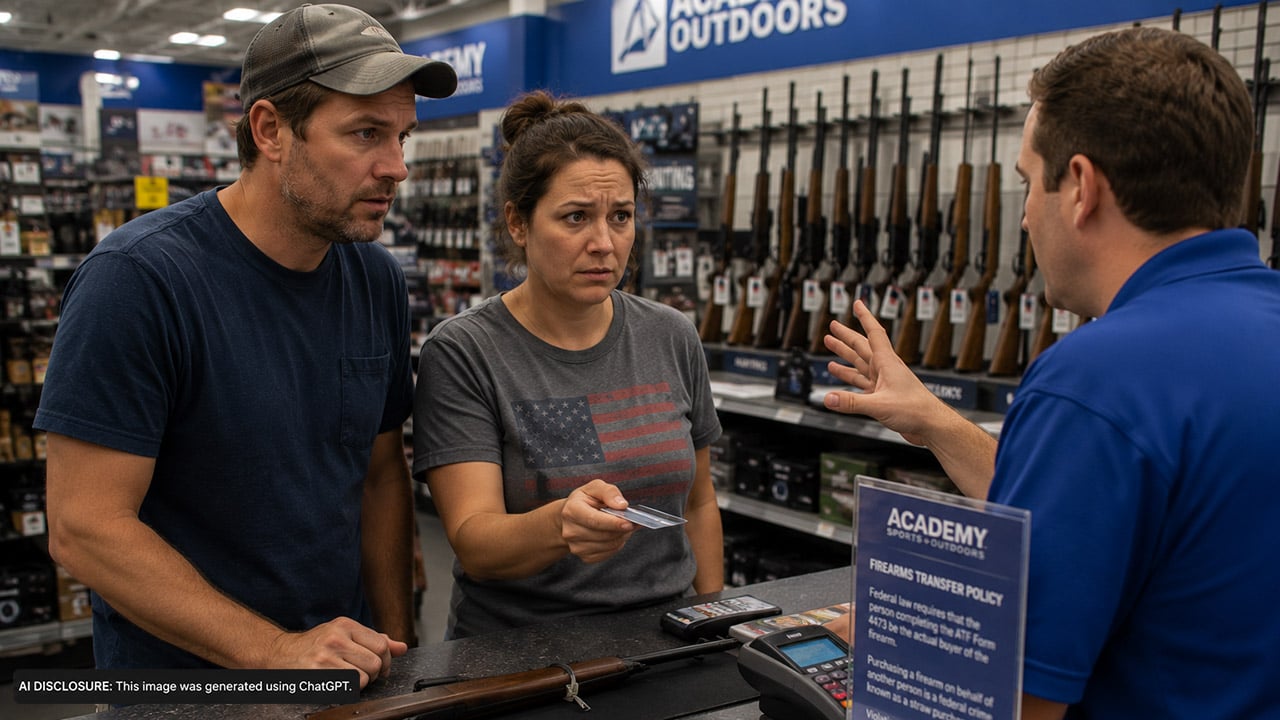
Photo credit: AI-generated image created using ChatGPT. Illustrative only
Buying yourself a simple .22 rifle ought to be one of the easiest errands on a weeknight. Fill out the paperwork, pass the background check, pay, and head home thinking about tin cans and squirrels.
But one Alabama couple found out how fast a routine gun counter purchase can go sideways when a payment method changed hands at the last second. The details came from the original post, where the husband explained that his birthday .22 purchase turned into a “straw purchase” accusation and a 30-day store flag that followed them to a second location.
A normal birthday buy turned into a hard stop at the register
According to the account, the husband and wife went to Academy Sports to buy a .22 rifle as a birthday gift. He handled the actual firearm purchase process—filling out the forms and signing everything—without any issues.
The trouble didn’t show up until the very end, when the employee asked how they were paying. The plan was for the wife to pay with her debit card. The moment the clerk saw the card name didn’t match the buyer completing the paperwork, they stopped the sale and told them it was considered a straw purchase.
Trying a second Academy didn’t reset anything
After leaving the first store, the couple drove down the road to another Academy with a new plan: if the wife was going to pay with her card anyway, they’d just put the firearm in her name and let her be the purchaser from the start.
At the second location, the wife filled out the paperwork “no problems,” but then an employee asked if she was his wife and if they lived at the same address. After that, they were told the sale couldn’t happen because she had been flagged for a straw purchase and couldn’t buy a firearm for 30 days. From their perspective, it felt like the first store’s decision had followed them in the chain’s system.
Why mixed signals at the counter raise red flags for employees
Most outdoorsmen have heard “don’t do a straw purchase” a thousand times, but the tricky part is that the term gets used loosely in everyday conversation. In plain terms, stores are watching for situations where one person completes the legal purchase while another person is actually the intended owner—especially if that other person might not be able to pass the background check.
In this case, the husband was the one doing the purchasing steps, then the wife’s card came out at the end. From a clerk’s viewpoint, that can look like a handoff: one person on the paperwork, another person providing the money at the moment of sale. Even if it’s a simple birthday gift between spouses, big-box stores often train employees to shut it down rather than try to “interpret” intent on the fly.
It’s also worth remembering that counter staff don’t get to treat every situation like a neighborly handshake deal. They’re working under store policy, compliance pressure, and the reality that a mistake can cost them their job—or the store bigger headaches. That doesn’t make the outcome less frustrating, but it explains why the register moment mattered so much.
The question everyone asks: is that “flag” just the store, or something bigger?
After getting turned away twice, the husband asked the practical question most gun buyers would ask: were they only flagged in Academy’s system, or would that 30-day wait apply at other gun stores too?
The update answered that in the most real-world way possible. The next day they went to Bass Pro and bought the same gun with no issues. This time, the wife simply shopped around while the husband handled everything at the counter. Bass Pro cost a little more, but he said it was worth it to avoid the headache.
That outcome strongly suggests the “30 days” was a store-level policy or internal flag, not some statewide freeze on legal gun purchases. The buyer didn’t describe any law enforcement contact, paperwork seizure, or anything like that—just a retailer refusing the sale and then another retailer completing it normally.
Practical lessons for couples buying guns together
This situation is a good reminder that the smoothest gun purchase is the one that looks clean and consistent from start to finish. If one person is going to be the buyer on the forms, it helps if that same person is also the one paying at the counter—especially at big-box retailers that lean hard on bright-line rules.
If it’s truly meant as a gift, the simplest route is often to buy a gift card for the store ahead of time, or let the recipient run their own card and you cover dinner afterward. Some folks prefer using the store’s gift certificate or gift card process specifically to avoid the “who’s paying?” moment turning into a misunderstanding.
And if the plan is for the spouse to be the legal purchaser, then make that the plan from the start—have that person select the firearm, do the paperwork, and pay. The less switching around at the last minute, the less likely an employee is to think they’re watching a transaction they can’t legally defend.
In the end, this was about a .22 rifle—one of the most common, practical firearms in the country—and it still got tangled up because of a debit card name. The good news is the couple didn’t force the issue or argue their way into a bigger mess. They changed course, went somewhere else, and got the birthday rifle the straightforward way.
Like The Avid Outdoorsman’s content? Subscribe to our newsletter so you never miss an article.
Here’s more from us: