Photo credit: AI-generated image created using ChatGPT. Illustrative only
Sending a rifle off for custom work is one of those leap-of-faith moves most of us only make after we’ve talked to the smith, checked references, and gotten comfortable. But when that pipeline breaks down, you’re not just missing a range toy—you’re missing a serialized firearm that’s tied to you and worth real money.
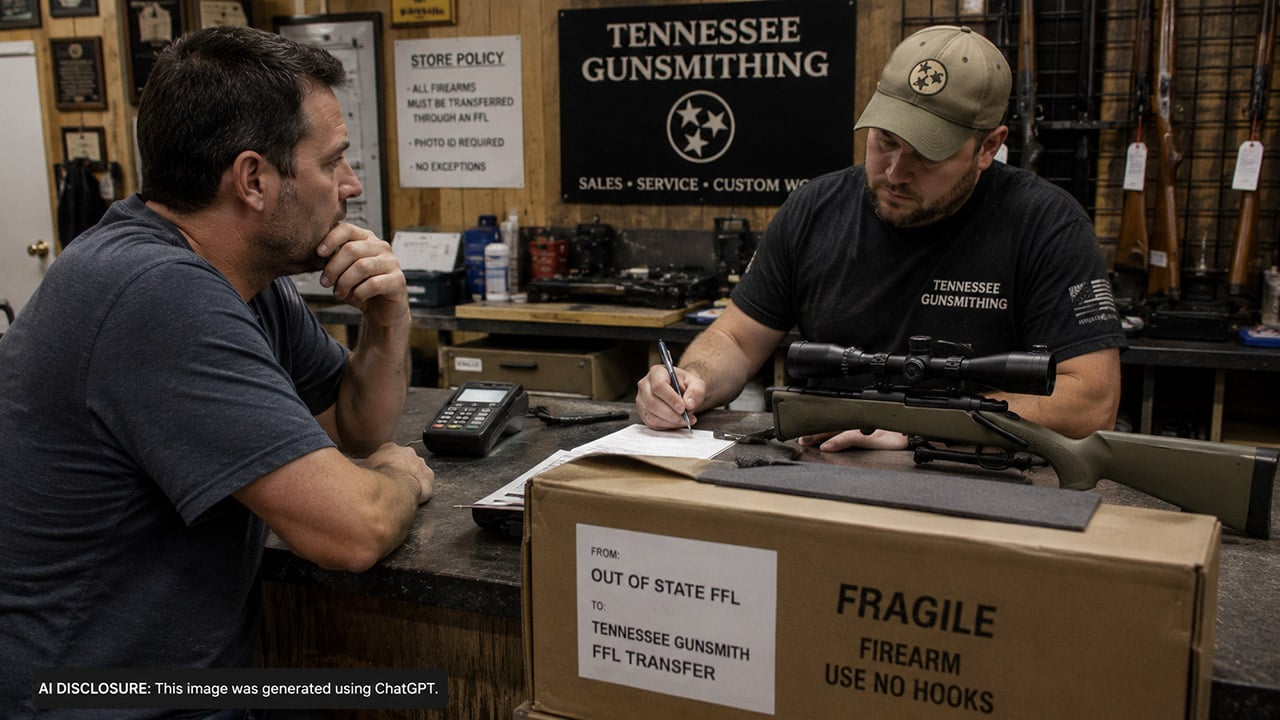
In the original post, one gun owner described how a rifle he sent from California to a Tennessee gunsmith—through the FFL the smith worked under—turned into a three-year waiting game that appears to have ended with the gunsmith going silent after taking more money for parts and return shipping.
A “no hurry” project turned into a long-distance headache
According to the gun owner, the arrangement sounded straightforward at first. The gunsmith agreed to do the work for the cost of parts, and the rifle was shipped to the Federal Firearms Licensee the gunsmith worked under. There was also an understanding up front that there was “no hurry,” and the owner was willing to give the smith plenty of time.
That “take your time” understanding is pretty common in the custom world. Good smiths are busy, and hunters will often wait for the right work. The trouble is, that same patience can get used against you if communication dries up and deadlines never exist in writing.
Periodic updates, a photo, and a value estimate
For a while, things didn’t sound unusual. The owner said they communicated every three to six months. At some point, the gunsmith told him the rifle was almost finished and even provided a picture.
They also discussed shipping and insurance, and the gunsmith put the rifle’s value in the $2,500 to $4,000 range. Whether that number reflected upgrades, rarity, sentimental value, or just the market, it set the stakes: this wasn’t a bargain-bin beater getting a simple trigger job.
Money sent for parts and shipping—then the silence
The owner said the gunsmith told him what parts were needed, and the owner mailed a check for $450 so the smith could acquire them. Later, when it came time to send the rifle back, the owner sent another $140 for shipping and insurance.
That last payment was about four months before the post was written. Since then, the owner said he hadn’t heard from the gunsmith at all. That’s the moment most gun folks recognize—the point where “busy shop” starts looking a lot more like “missing person,” and you begin wondering whether your rifle is sitting in a safe, sitting in a pawn shop, or already gone.
The FFL holder was contacted, but the rifle still didn’t move
The owner didn’t just sit on his hands. He said he called and spoke with the FFL a few times. The first time, the FFL told him he thought the gunsmith was finished with the project and said he would “light a fire under his ass” to get him to hurry and finish it.
After that, each time the owner called, the FFL reportedly said he was trying to keep the gunsmith on track. From a practical standpoint, that’s a frustrating place to be: you’ve got an FFL acknowledging a delay, but you still don’t have your firearm in hand, and the person who did the work won’t answer.
Where gun owners tend to focus in situations like this
When a firearm is involved, most experienced folks immediately separate two issues: the business dispute and the gun itself. If you’re arguing about workmanship or turnaround time, that’s one thing. But when a serialized rifle is being held and the responsible party disappears, it starts to look less like “slow service” and more like potential theft or unlawful retention.
The owner’s questions zeroed in on the same points most of us would: Do I have a case against the gunsmith? Is the FFL liable since the gun was shipped to the licensee he worked under? And what’s the smartest next move when the other side won’t communicate?
Even without getting into legal weeds, the practical takeaway is clear. In any long-distance gunsmith job, the moment communication stops—especially after you’ve paid for return shipping and insurance—you need to shift from “being patient” to “documenting and escalating.” Not angrily. Not with threats. Just with steady, written requests and a paper trail.
Practical lessons for anyone shipping a rifle out for work
This is the part hunters and shooters can use, even if they never deal with this particular shop. First, treat every shipment like it might be the one you have to prove later. Keep copies of emails, texts, invoices, checks, tracking numbers, photos, and any messages about turnaround time and pricing.
Second, make return shipping part of the original agreement whenever you can, and tie payments to milestones. Paying for parts up front can be normal, but it’s worth asking for a parts list, estimated timeline, and confirmation when parts are ordered and received.
Third, understand why the FFL angle matters. When your firearm is logged into an FFL’s books, it’s not the same as dropping a lawnmower off at a small-engine shop. The licensee has regulated responsibilities tied to acquisition, disposition, and storage. That doesn’t automatically answer “who pays” if something goes wrong, but it does mean you should be communicating with the licensee in a way that’s clear and traceable.
Finally, don’t let “no hurry” become “no accountability.” There’s nothing wrong with telling a smith to take his time. There is something wrong with letting a high-dollar firearm sit in limbo for years with only occasional check-ins and no firm plan for completion and return.
In the end, the hard part of this story isn’t just the money—though $450 for parts and $140 for shipping adds up quick. It’s the fact that a valuable rifle was sent through the proper channel, updates trickled in just enough to keep hope alive, and then the line went dead. If you ship guns out for work, the safest move you can make is to stay organized, stay documented, and push for clear communication before the calendar gets away from you.
Like The Avid Outdoorsman’s content? Subscribe to our newsletter so you never miss an article.
Here’s more from us: