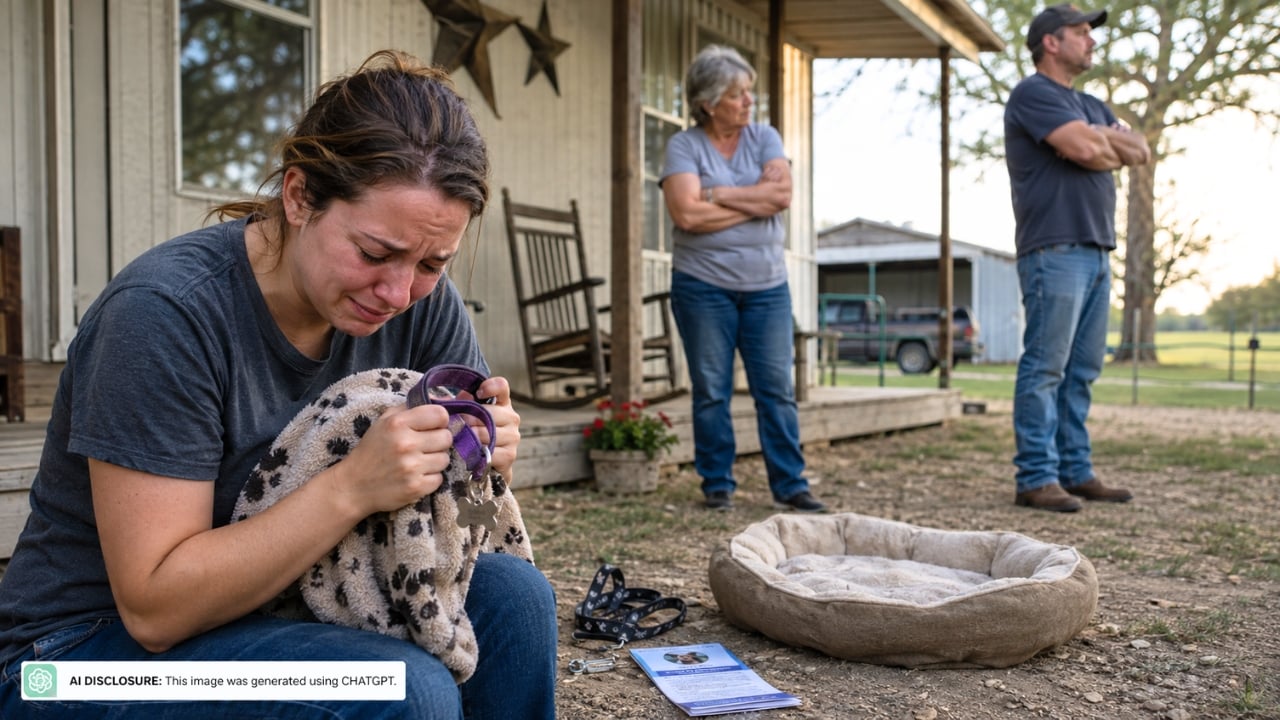
Photo credit: AI-generated image created using ChatGPT. Illustrative only
Most folks who’ve put years on a good dog know the last act of care is rarely easy. You’re weighing quality of life, money, time, and the simple fact that the animal can’t tell you how bad it hurts. In one Texas family’s case, they thought they were making the hard-but-humane call—only to learn the dog’s end came in a way they never agreed to.
In the original post, the dog’s owner said their 17-year-old mini French poodle was blind and deaf, and the family had been planning to schedule euthanasia because the dog was “just suffering and not living properly.” With the family tied up caring for sick and unstable grandparents, an aunt offered to take the dog and “look over him.” A week or two later, the family says they found out the aunt had her son shoot the dog instead of taking him to a veterinarian.
A hard decision was already made—just not carried out yet
The family’s description will sound familiar to anyone who’s managed an elderly pet while juggling other life emergencies. The dog had been around a long time—adopted 15 years earlier when the owner was 11—and had spent most of that time with the owner’s grandparents, where the dog and grandpa were “inseparable.”
But time catches up. The owner said grandpa was now sick, grandma wasn’t mentally stable, and the dog had reached the point where he needed more attention than the grandparents could provide. The plan, as described, wasn’t to “get rid of” the dog—it was to euthanize him properly because he was suffering.
The aunt’s “help” turned into a choice the family says they never approved
With the family stretched thin, the aunt volunteered to take the dog and look after him. That kind of handoff happens a lot in rural families, especially when there are hospital visits, caregiving duties, and a full plate on the home front. You trust your people to do right by an animal that’s been part of the family for years.
According to the owner, that’s not what happened. The family says they later learned the aunt had her son shoot the dog, and that the reason given was the dog was suffering and they “didn’t want to pay to euthanize him.” The owner emphasized the family was willing to pay—estimating around $500—and also wanted the dog’s ashes, but had been delayed by the ongoing situation with the grandparents.
A recorded confession changed the situation from “family dispute” to something more serious
After hearing what happened, the owner said they called their cousin and obtained a recorded confession that he shot the dog. That detail matters because it’s not just an argument over what someone “heard” or “assumed.” It suggests the owner believes they have direct documentation tying a specific person to the act.
At the same time, the owner said they didn’t want to call the police because they wanted to avoid drama and separate themselves from “those miserable people.” That’s another real-world piece of it: in tight families and small communities, folks often hesitate to turn a mess into an official case, even when they feel wronged.
For gun owners and rural families, this hits a nerve: legality and ethics aren’t the same thing
Out in the country, putting an animal down can be a reality—especially with livestock and suffering wildlife. But there’s a world of difference between a controlled, humane euthanasia and what sounds like a financially motivated shortcut done without the owner’s consent.
Even where shooting an animal can be legal under certain circumstances, it can still be the wrong call if it wasn’t your animal, wasn’t your decision to make, and wasn’t handled in a humane, safe way. The owner’s point about wanting to be present and wanting the ashes also matters. For a lot of folks, that last day is part of how you honor the dog’s place in the family.
There’s also a practical safety angle that doesn’t get talked about enough: discharging a firearm to kill a domestic animal can create risk to people, property, and neighbors depending on where it happened and how it was done. The source material doesn’t say where the shooting took place or what the surroundings were, so there’s no claim to make there—but it’s exactly why most people lean on a vet when they can.
What options the owner appeared to be weighing
The owner asked what legal grounds they might have and whether involving law enforcement would be a dead end. Based strictly on what they described, they were weighing two competing priorities: justice for the dog versus the stress, conflict, and time involved in pursuing it.
They also seemed to be considering what proof matters. The recorded confession is the one concrete piece they mention. Beyond that, the family’s willingness to pay for euthanasia and their plan to do it soon is part of their narrative—important for explaining intent and why they feel betrayed.
From a common-sense standpoint, if someone is considering any formal action in a situation like this, the basics usually come down to documentation and clarity: what was agreed to when the dog was handed over, what exactly was done, who did it, and what evidence exists (texts, calls, vet appointment attempts, and that recording). None of that requires stirring up a confrontation in the driveway—it’s just the unglamorous work of keeping facts straight.
The real takeaway: when it’s time, make the plan specific—and keep control of it
The rough part here is the family had already done the emotional math and decided euthanasia was the humane route. They just hadn’t gotten the appointment handled before life piled on. That gap—between intention and execution—is where things went sideways.
For anyone else staring down that same decision, the practical lesson is to keep the chain of custody tight. If you’re asking a relative for help, be explicit: “Take him to this clinic,” “Do not do anything without calling me,” and “I want the remains back.” When you can, make the appointment yourself and hand over written instructions with the vet’s number. It won’t fix every family problem, but it can prevent a final decision from being made by the one person who shouldn’t have been making it.
Like The Avid Outdoorsman’s content? Subscribe to our newsletter so you never miss an article.
Here’s more from us: