Photo credit: AI-generated image created using ChatGPT. Illustrative only
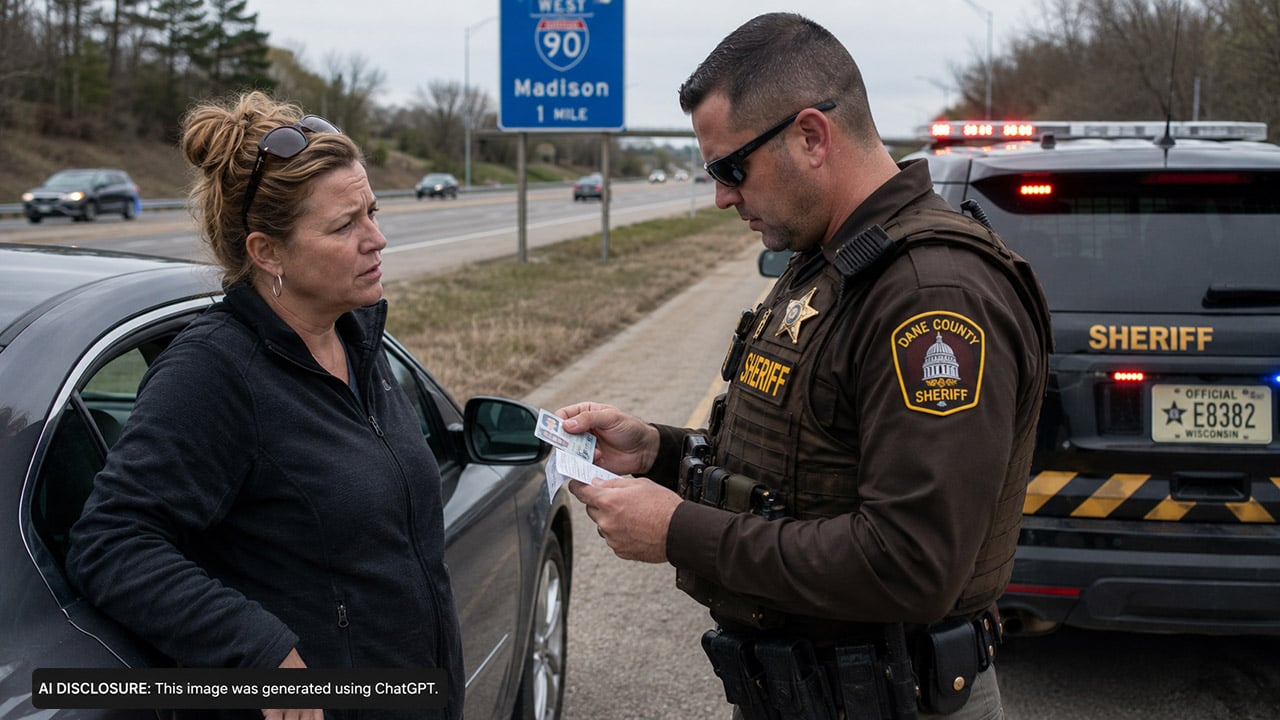
A routine drive up I-90 toward Madison turned into one of those “everything stacks up at once” traffic stops—speeding, the odor of marijuana, a vehicle search, and then a handgun in the mix. The situation was laid out in the original post, where a husband described what happened to his wife during her commute through Dane County.
She wasn’t arrested and was allowed to continue on to work, but deputies reportedly confiscated both the cannabis and her concealed-carry firearm. The bigger gut-punch, according to the account, was that her concealed carry paperwork had been effectively dead in the water for years—after a prior marijuana-related incident led to her losing her concealed carry card, and they never followed through on getting it reinstated.
The stop started as plain old speeding
By the husband’s telling, his wife was pulled over on I-90 northbound for speeding on her way to Madison. That’s a common enough start to a bad morning, especially for anyone who lives on the interstate and knows how quickly “keeping up with traffic” can turn into flashing lights in the mirror.
But the moment the officer approached the vehicle, the tone changed. The officer reportedly said he smelled marijuana, which often becomes the pivot point from traffic enforcement to an impairment investigation and a search.
The odor of marijuana changed the entire playbook
Once the officer claimed he smelled marijuana, she was removed from the vehicle and given a field sobriety test. She passed it, according to the account, but the search still happened—“they still searched everything,” as the husband wrote.
That’s the real-world part a lot of folks miss: passing a sobriety test doesn’t automatically rewind the clock back to “just a speeding ticket,” especially if law enforcement believes there’s marijuana present. In this case, the search reportedly turned up “some joints in the center console,” which put possession front and center.
Then the gun came into the story—and so did old paperwork problems
The search also turned up her concealed-carry handgun. The husband said she had previously lost her concealed carry card because of a different marijuana incident and was told she could get it back, but that was about five years ago and they never went back to get a new card.
In other words, she was carrying as if she were still covered, but the permit situation had long since lapsed. That kind of gap—where someone’s intentions may be defensive and practical, but the paperwork isn’t current—can be the difference between an inconvenience and a serious legal mess, especially when you combine it with a controlled substance in the same vehicle.
Deputies reportedly confiscated the firearm and the cannabis, issued multiple citations, and let her continue to work. The husband also wrote that the officer said they could retrieve the firearm, though he assumed there would be some kind of class or process involved to get the concealed carry status straightened out.
“Damage control” becomes the priority fast
The husband’s main question wasn’t about trying to “win” the situation. He openly admitted they knew she was in the wrong and said they were looking for overall damage control—especially because she’d had a speeding ticket within the last year and he worried about a possible license suspension.
That’s a practical concern outdoorsmen understand. Lose your license and you don’t just miss a few errands—you can lose a job, you can’t get to the lease, and you can’t do the day-to-day things that keep a household running. For someone commuting into Madison for overnight work, transportation isn’t a luxury; it’s the whole deal.
He also noted he wasn’t as concerned about the firearm from a safety standpoint, saying she carried responsibly and strictly for self-defense because she works overnight shifts in the city, sometimes alone or with one other female coworker. That’s the tightrope a lot of responsible gun owners walk: carrying for the right reasons, but still needing to keep the legal side locked down as tight as the holster.
What outdoorsmen can learn from this kind of stop
This is the kind of scenario that should make any hunter, angler, or everyday concealed carrier stop and do a quick mental inventory. Not because it’s fun to lecture people, but because traffic stops are where the “I’ll deal with it later” stuff shows up all at once.
First, if you carry, treat your permit like you treat your driver’s license—current, in your wallet, and not “somewhere in the house.” If something happened that caused you to lose it or have it revoked, don’t assume you’re good because time passed. “We never went back to get her another card” is the kind of sentence that can get expensive fast.
Second, mixing cannabis and firearms in the same vehicle is a risky combination even if you feel stone-cold sober. Whether it’s legal where you are or not, it’s the sort of thing that tends to tighten the screws when an officer decides to dig deeper. The smell alone, as described here, was enough to turn a speeding stop into a search, a confiscation, and multiple citations.
Third, don’t underestimate how quickly “just driving to work” becomes a full-blown legal situation. A lot of us keep gear in our rigs—knife, shotgun case after a range day, sidearm, maybe a few leftover shells from chasing roosters. That’s fine when everything is squared away. It’s a problem when any one piece is out of compliance.
The next move is usually professional help, not internet bravery
In the post, the husband asked what kind of lawyer they needed. While the details of the citations weren’t provided, the overall picture points to needing an attorney who routinely handles criminal defense and traffic matters in the county where the stop happened—someone familiar with both the driving-side consequences and the weapons/possession side.
Even when someone isn’t trying to “fight” a case, a good local attorney can help sort out what’s truly at stake: what needs to happen to protect driving privileges, whether any citations can be reduced, how property retrieval works, and what steps are required to get concealed carry status back in good standing. That’s not about dodging responsibility—it’s about making sure one bad stop doesn’t snowball into long-term damage.
Outdoorsmen tend to be planners by nature. We check maps, wind, access routes, and season dates. This is the same mindset applied to carry and driving: keep permits current, keep the vehicle clean of anything that complicates a stop, and don’t leave “we’ll fix it later” hanging for five years. The sidearm might be for protection, but the paperwork and choices around it are what keep it from becoming a liability.
Like The Avid Outdoorsman’s content? Subscribe to our newsletter so you never miss an article.
Here’s more from us: