Photo credit: AI-generated image created using ChatGPT. Illustrative only
Out in the country, dogs getting loose is a headache nobody wants. But when someone decides to “handle it” with a gun, it stops being a neighborhood problem and turns into a criminal case in a hurry.
That’s where things are sitting now in Olmsted County, Minnesota, after a Chatfield man was charged in the shooting deaths of two neighbor dogs—an incident that later got a hard look once investigators reviewed trail camera images near a deer carcass pile. Details are laid out in the original post.
Two missing dogs, a late-night search, and a blood trail
According to the criminal complaint, the dog owner reported that his two dogs went missing the evening of January 5, 2026. The dogs—a white Great Pyrenees named Bertha and a Goldendoodle named Sadie—left the property around 7:30 p.m. and didn’t come back.
When the owner contacted a neighbor to help look, that search reportedly led them to a blood trail near a deer carcass pile on Craig Allen Reichel’s property. Following the trail, they found Bertha dead from a gunshot. Sadie was still missing at that point.
The man told deputies the dogs were chasing deer
Investigators contacted Reichel by phone, and the complaint says he admitted shooting both dogs at about 8 p.m. He told authorities he believed the dogs were chasing deer and threatening his own dogs.
But the complaint also notes he later clarified that his dogs were not outside when the shooting happened. That detail matters, because “protecting my own animals” is a very different situation when those animals aren’t actually in the yard at the time.
A creek disposal claim and a missing sweater
After the first dog was located, investigators continued working the case and later met with Reichel in person. The complaint states he showed law enforcement a creek on his property where he said he dragged and disposed of Sadie’s body.
He also told investigators the Goldendoodle had been wearing a sweater, and that it came off while he was moving the dog. He claimed he discarded it, but officers were unable to locate the garment. Whether that sweater turns up or not, that kind of detail is the sort of thing that tends to get scrutinized when a case goes from “shooting nuisance animals” to felony-level allegations.
The trail camera images changed the story
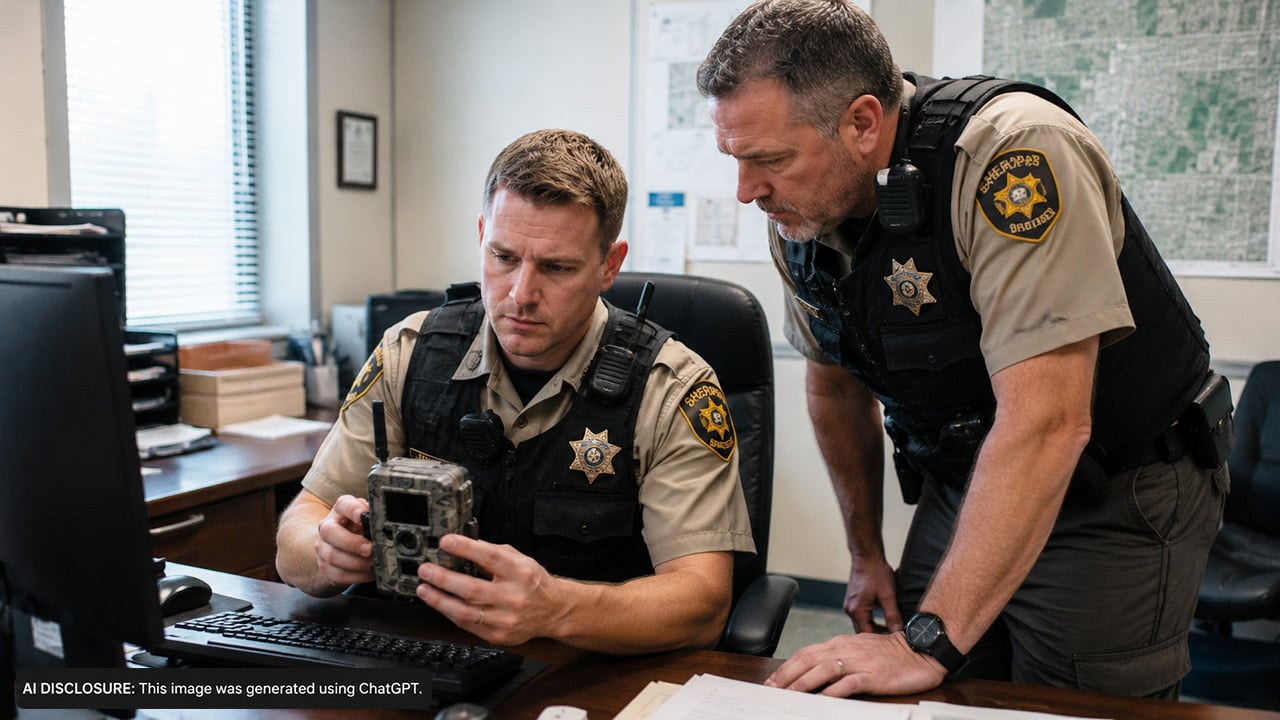
This is the part that should make every landowner and hunter nod, because it’s exactly why cameras are so valuable. Authorities reviewed images from a trail camera positioned near that carcass pile, and the complaint states the photos showed the dogs standing near the site.
Just as important, the complaint says the images did not show the dogs chasing deer or behaving aggressively. When you’ve got a claim on one side (“they were chasing deer”) and a timestamped camera record on the other, the camera tends to win.
Why this kind of situation goes sideways fast in rural country
Most folks who live outside town have dealt with roaming dogs at some point—sometimes it’s the neighbor’s farm dog, sometimes it’s dumped strays, sometimes it’s a pet that got curious and pushed past a gate. And yes, loose dogs can cause real damage, especially around livestock or when they start running deer in winter.
But a lot of outdoorsmen also understand there’s a big difference between seeing dogs “near deer sign” or around gut piles, versus seeing an active attack or an immediate threat to people, pets, or stock. In this case, the complaint includes another detail that cuts against the idea of a hot pursuit: the dog owner told investigators Bertha had ongoing hip problems and wouldn’t have been able to run for more than a short distance.
The owner also stated Reichel was familiar with the dogs because they were frequently outside and visible near his property. That doesn’t prove anything by itself, but it does paint a picture that these weren’t unknown animals popping up for the first time in the dark.
The charges and what’s next in court
Reichel, 67, is charged with two felony counts of mistreatment of animals resulting in death and two gross misdemeanor counts of third-degree property damage. The property damage counts are tied to the dogs’ value, with the complaint stating each dog had a value of more than $500.
Court records indicate he’s been summoned for a first appearance hearing on April 1, 2026, at the Olmsted County Government Center in Rochester. The case also had a judge reassignment early on; a separate filing says the originally assigned judge recused herself, and future hearings will be scheduled before a different judge.
For folks reading this who live the rural life, the practical takeaway is pretty plain: when a shooting happens over animals on or near property lines, it’s not just about what someone “thought” was happening in the moment. Physical evidence—photos, tracks, carcass locations, timelines—can take over the entire narrative.
Trail cameras, phone calls made (or not made), and the choices made after the fact—like moving an animal’s body—can all become central facts. And once that line is crossed, you’re no longer dealing with neighbor talk at the mailbox. You’re dealing with investigators, charges, court dates, and consequences that don’t go away when the snow melts.
Like The Avid Outdoorsman’s content? Subscribe to our newsletter so you never miss an article.
Here’s more from us: