Photo credit: AI-generated image created using ChatGPT. Illustrative only
Every landowner who’s rented a place long enough has found something a tenant forgot. Most of it is junk. But every so often it’s something that makes you stop, think, and handle it a whole lot more carefully.
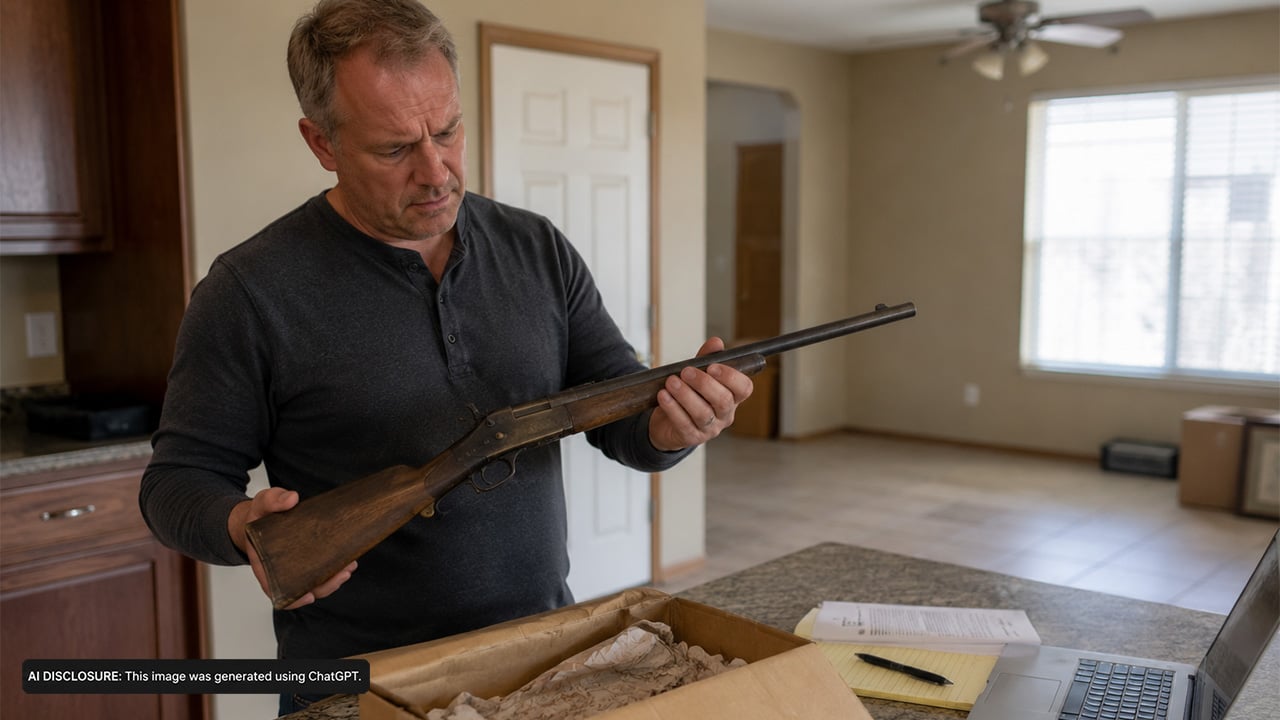
That’s where one Nevada property owner found himself after a former tenant moved out and left behind an antique .22—specifically an old .22 short model 1890—without any way to get back in touch. In the original post, the owner said the little rifle was “a neat little gun” and asked the practical question most gun folks would ask: can he keep it, and if so, how do you get it “in my name,” or is turning it into local law enforcement the only clean option?
A forgotten rimfire isn’t like a forgotten coffee table
A left-behind firearm changes the normal “abandoned property” routine. You can box up tools, toss clothes, and haul furniture to the dump without worrying about the kind of liability that comes with a gun. Even if you’re a responsible owner, the moment you take possession you need to think about safety, storage, and whether you’re inadvertently stepping into a legal mess.
The details here are simple: a tenant left, the owner can’t track them down, and the item is an old .22 short model 1890. No threats, no crime mentioned—just an abandoned firearm with sentimental and collector appeal. That’s exactly the sort of situation that feels harmless until you’re the guy trying to explain to an officer, insurer, or attorney why you kept it.
First things first: make it safe and make it boring
If a gun turns up in a rental, the smartest move is to slow down and treat it like it’s loaded, even if it looks like Grandpa’s squirrel rifle. Secure it where nobody else can access it—especially if there are kids, workers, or new tenants involved. This isn’t the time for “it’ll be fine on the closet shelf.”
With older .22s in particular, you can’t assume the condition is good or that it hasn’t been sitting with a round in the chamber for years. The safest mindset is: handle as little as possible, store it locked up, and don’t start trying to “test it out” just because it’s small caliber and looks quaint.
Nevada angle: “In my name” isn’t usually how long guns work
The owner’s question about getting it “in my name” is common, but in most places, long guns aren’t titled property the way a vehicle is. Nevada doesn’t generally run a statewide registration system for ordinary rifles and shotguns like some states do, so there often isn’t a simple DMV-style transfer that turns an abandoned gun into “officially yours” with a form and a fee.
That doesn’t mean “finders keepers,” either. Property law and firearm law are two different trails that cross in a muddy spot. Even if a state doesn’t register most guns, you still want a clean chain of possession—something that shows you didn’t steal it, didn’t buy it under the table, and didn’t keep it knowing it belonged to someone else who could claim it later.
And because the gun mentioned is an “old .22 short model 1890,” it may fall into the category of an antique firearm under federal definitions depending on the exact make, model, and year. Antiques can be treated differently in some legal contexts, but that’s not a free pass to ignore how it came into your hands. If you’re unsure what it is, treat it like a modern firearm until proven otherwise.
The two practical paths: document your effort or hand it over
When you can’t contact a prior tenant, you’re basically left with two responsible routes. The first is to document a good-faith attempt to return the property and follow whatever abandoned-property process applies to rentals where you live. That may mean written notice to the tenant’s last known address, keeping records, and waiting a required period before disposing of or claiming property.
The second route is the simplest from a liability standpoint: turn it in to local law enforcement and get a receipt or case number showing you relinquished it. That doesn’t guarantee you’ll ever see the gun again, and departments vary on how they handle surrendered firearms. But it’s the cleanest way to ensure you’re not holding onto something that later turns out to be stolen or connected to a prohibited person.
The owner in the post floated that exact choice—either getting it transferred somehow or bringing it to local PD. That’s the right fork in the road to be looking at. The wrong fork is quietly keeping it with no paper trail and hoping the question never comes up.
Why this gets complicated fast: stolen guns, estates, and prohibited possessors
A .22 short rifle from the 1890 era sounds like a harmless heirloom, and it might be. But landlords don’t get the backstory automatically. A tenant could have inherited it, found it, bought it, or taken it. If it was reported stolen at any point—even decades ago—you don’t want to be the last guy in possession when it pops up.
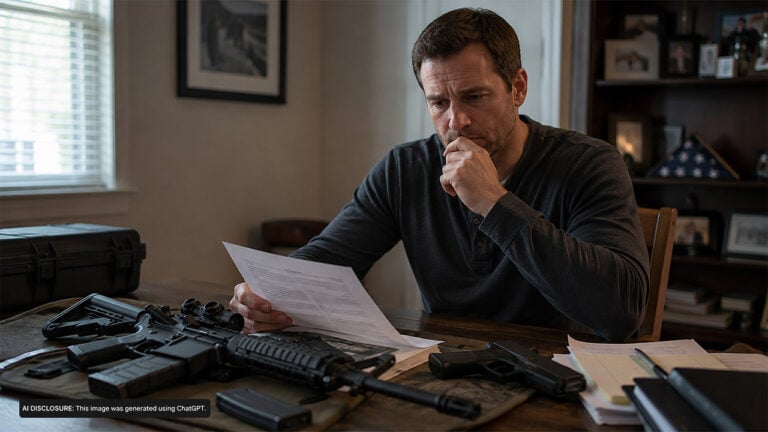
There’s also the possibility the tenant wasn’t legally allowed to have it in the first place. If someone prohibited left a firearm behind, you don’t want to look like you were “storing it for them,” even if your intentions were innocent. These aren’t the most likely outcomes, but they’re the ones that can turn a neat little .22 into a real headache.
And then there’s the practical reality: if you do keep it without clear ownership, you may have trouble later if you try to sell it, insure it as a collectible, or even explain where it came from after a burglary or house fire. Clean paperwork isn’t just for the government—it’s for you.
The common-sense outdoor takeaway: treat it like a liability until it’s clearly yours
Most outdoorsmen love an old rimfire. A .22 short from that era has real charm, and it’s easy to see why the owner wanted to keep it around as a piece of history. But when a firearm comes to you through a tenant move-out and the person can’t be contacted, the smart play is to prioritize safety and documentation over sentiment.
If you’re in that situation, secure it immediately, don’t start using it, and pick the path that leaves you with the cleanest record—either by following the abandoned-property process in your area or by surrendering it to law enforcement with proof. A neat little gun is still a gun, and it’s not worth gambling your name and your rights on a “probably fine” assumption.
Like The Avid Outdoorsman’s content? Be sure to follow us.
Here’s more from us: