Photo credit: The Avid Outdoorsman
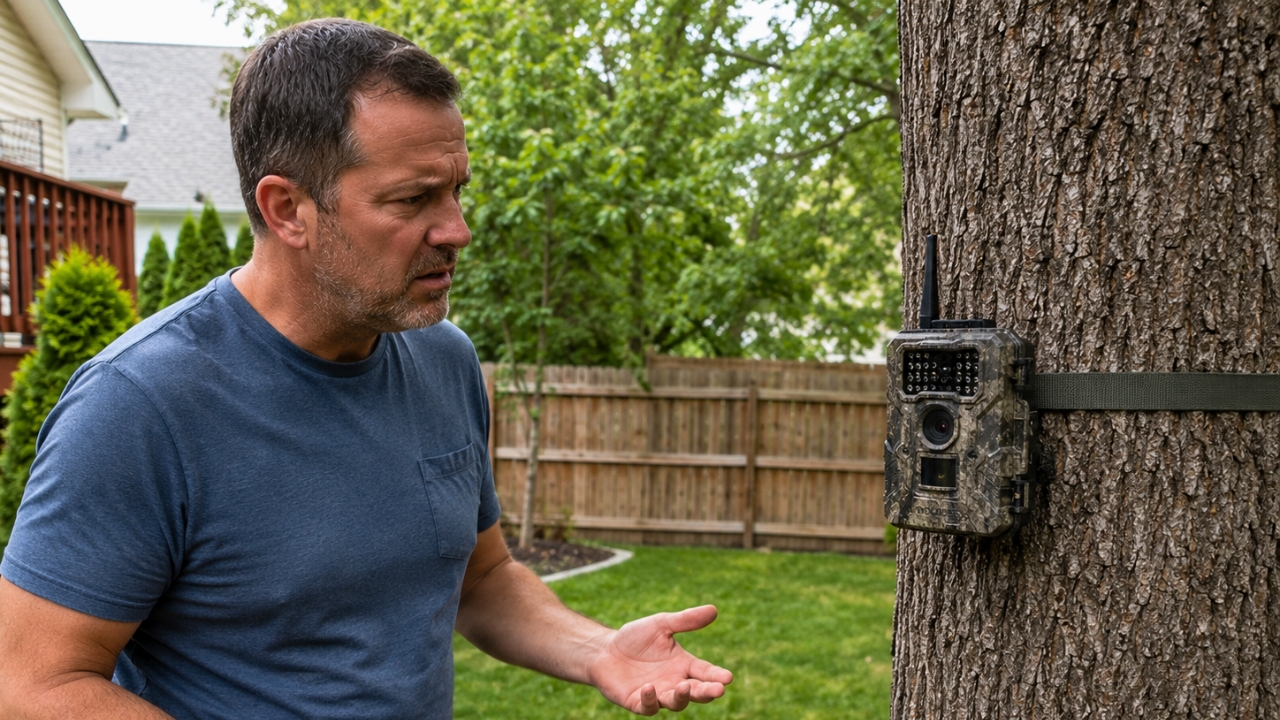
A homeowner said a neighbor’s trail camera crossed a line when it ended up tied to a tree in his own backyard.
According to the Reddit post, the camera was not simply pointed across a property line from the neighbor’s side. It was allegedly placed on the homeowner’s property. When the homeowner found it, the explanation was that the camera was there to track deer.
That may sound harmless to someone who uses trail cameras for wildlife. But for the person who finds one in the backyard, it feels a lot different.
The homeowner explained the situation in a Reddit thread and asked what he could do about a neighbor placing a trail camera on his property: https://www.reddit.com/r/legaladvice/comments/oh73c1/mineighbor_placed_a_trail_camera_in_my_backyard/
The location was the biggest issue
A camera pointed from one property toward another can already feel uncomfortable.
But a camera physically placed in someone else’s backyard is a much clearer problem. The person who installed it had to enter the property, pick a tree, attach the device, and leave it there.
That is hard to explain as a simple camera-angle disagreement.
Even if the neighbor really was watching deer, the homeowner had every reason to be bothered. Wildlife scouting does not give someone permission to walk onto another person’s land and mount equipment there.
The camera may have been small, but the message was not. Someone treated the backyard like shared ground.
The deer explanation did not fix it
Trail cameras are commonly used to monitor deer movement, especially in rural or wooded areas.
That does not make the placement acceptable.
Commenters generally understand that hunters and landowners use cameras for normal reasons. But normal use usually means putting the camera on your own land or on land where you have permission.
The neighbor’s explanation may have reduced the creepy factor slightly, but it did not erase the trespass concern.
A person can have an innocent reason for wanting deer photos and still be wrong for placing the device on someone else’s property.
The homeowner wondered what to do with the camera
The obvious temptation would be to remove it.
If it is tied to a tree in your own backyard, most people would feel like they should be able to take it down immediately. But commenters were careful about that point.
Even when property is placed where it does not belong, destroying it or keeping it can sometimes create a separate argument.
The safer approach was to document the camera first. Take photos of where it was found, how it was attached, which direction it was facing, and how far onto the property it was.
Then the homeowner could decide whether to remove it, return it, call police, or use the incident as part of a larger trespassing complaint.
Documentation mattered more than anger
The homeowner needed proof.
A photo of the camera tied to the tree would be useful. So would photos showing the tree’s location relative to the property line. If there were fences, stakes, survey markers, or obvious boundary features, those mattered too.
That documentation would help if the neighbor later denied placing the camera there or claimed it was not on the homeowner’s land.
It would also help if the situation escalated. One misplaced camera could be brushed off as a misunderstanding. A documented pattern of trespass, cameras, stands, bait, or hunting activity is harder to ignore.
The homeowner could tell the neighbor once
If the relationship was not hostile, one calm conversation might have been enough.
The homeowner could tell the neighbor that the camera was found in the backyard, that no permission was given, and that no equipment should be placed on the property again.
That is a clear boundary without turning it into a fight immediately.
But the conversation should be followed up in writing if possible. A text, email, or certified letter creates a record that the neighbor was told not to come onto the property or install gear there.
That way, if it happens again, the neighbor cannot easily claim confusion.
Police or a trespass report could make sense
Some commenters would likely suggest calling the non-emergency police line, especially if the homeowner did not want to deal with the neighbor directly.
A trail camera in the backyard may not lead to a dramatic police response, but a report creates a record. That record matters if the neighbor keeps coming back, escalates the dispute, or starts placing other gear.
If hunting is involved, a game warden could also be relevant depending on the location and season.
A neighbor using someone else’s property to scout or hunt deer without permission is not just rude. It can become a hunting access problem, a trespass issue, or both.
Property lines needed to be clear
One practical question was whether the property line was obvious.
If the neighbor could claim the camera was accidentally placed on the wrong side, a survey or marked boundary would make the homeowner’s position stronger. Fences, pins, posted signs, and maintained lines all help.
That does not mean the homeowner has to tolerate the camera if the line is unclear. It means that clear boundaries make future enforcement easier.
If the backyard is wooded or the lots are irregular, the homeowner may want to confirm the line before making the strongest accusations.
But if the camera was plainly in the backyard, the neighbor’s deer excuse becomes harder to take seriously.
The camera’s angle mattered too
Where the camera was pointed could change how the homeowner felt about it.
A trail camera aimed toward a deer trail deep in the woods is one thing. A camera pointed toward the house, deck, driveway, windows, kids’ play area, or back door is much more concerning.
The homeowner should document the direction of the lens before moving it.
That detail helps separate a careless deer-camera placement from something that feels like surveillance.
Even if the neighbor says it was for wildlife, the homeowner does not have to accept a camera pointed at private family activity.
Returning it carefully might avoid a bigger fight
One practical option was to remove the camera without damaging it and return it to the neighbor, along with a clear warning not to place anything on the property again.
That approach avoids creating a dispute over destroyed property while still making the boundary clear.
Another option would be to hold it and tell the neighbor they can retrieve it by contacting the homeowner. That may be useful if the homeowner wants a written admission that the camera belonged to the neighbor.
The worst option would be smashing it in anger. That might feel satisfying for about ten seconds, but it could hand the neighbor a complaint of his own.
The issue was really about permission
This story was not anti-hunting and not anti-trail-camera.
The issue was permission.
A neighbor does not get to decide that someone else’s backyard is a good place to scout deer. A camera, stand, feeder, bait pile, or blind does not become acceptable just because it is used for wildlife.
The practical advice was simple: photograph the camera, document where it was, avoid damaging it, clearly tell the neighbor not to enter or place equipment again, consider a police report if needed, and mark the property line if there is any room for confusion.
Because once someone ties a trail camera to a tree in your backyard, the problem is not the deer. It is the neighbor acting like the yard is theirs to use.
Like The Avid Outdoorsman’s content? Subscribe to our newsletter so you never miss an article.
Here’s more from us: