Photo credit: AI-generated image created using ChatGPT. Illustrative only
Most folks expect a little mystery when they buy an older house—maybe a forgotten toolbox in a crawlspace or a coffee can of rusty nails in the rafters. One new homeowner found something a whole lot heavier while tracing wiring through a basement ceiling: a hidden handgun, tucked out of sight until his hands landed on it.
In the original post, the homeowner said he isn’t a gun owner, but he handled the discovery with the right attitude—treating it with “utmost respect” and looking for practical guidance instead of doing something impulsive. What stopped him cold, though, was the stamping: markings that appeared to include a swastika.
A basement find that went from “old gun” to “serious history”
The pistol wasn’t sitting in a dresser drawer. It was “well hidden,” and the homeowner only found it because he was following wiring through the ceiling. That’s an important detail, because it means the gun could’ve stayed there for years without anyone realizing it existed—until a contractor, a curious kid, or a homeowner doing DIY work stumbled onto it.
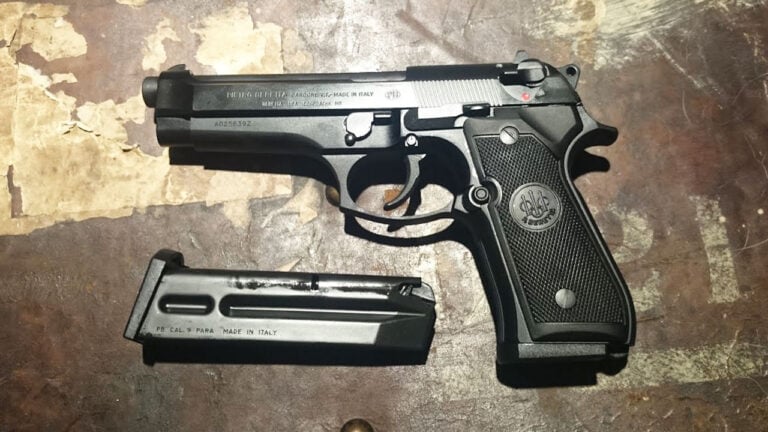
From his quick research, he believed the handgun was a Browning Hi-Power. The photos he shared showed multiple stamps, including what he described as a swastika. He also mentioned knowing enough about the prior owner to connect some dots: the previous homeowner had been in the military and died some years earlier, and the widow lived there until recently. His assumption was straightforward—this may have been a wartime “souvenir” brought home and then forgotten, stashed, or intentionally hidden.
What the homeowner got right immediately: respect, not curiosity
When someone who doesn’t own guns finds one unexpectedly, the worst thing they can do is treat it like a trinket. The homeowner didn’t. He understood that even an old pistol can be loaded, and even an unloaded pistol deserves the same careful handling until proven safe.
That mindset matters, especially in a basement setting—tight spaces, odd angles, and questionable lighting. A hidden gun found while climbing around joists and wires is exactly the kind of scenario where complacency bites people. Whether it’s a collectible piece, a family heirloom, or something with a dark past, it’s still a firearm first.
The real-world problem: legality and what to do when you don’t want it
The homeowner’s main concern wasn’t the gun’s value or even the story behind it. It was the practical question: “How do I deal with it?” He said he’d rather not keep it around, and he wanted to know whether it would be legal to sell it somehow or whether he needed to turn it in.
He later clarified that he was in the suburbs of Chicago, but not in Cook County. That’s a big clue to why he was thinking hard about legality. Illinois has its own rules around firearm ownership and transfers, and local requirements can change the options fast. His hesitation wasn’t anti-gun; it was a homeowner trying not to step on a legal landmine while standing in a basement holding a pistol he didn’t buy.
He didn’t want to involve police—and he started looking toward family
As the discussion went on, he added two key updates. First, he said he would not hand it over to police and emphasized that his concern was simply the legality of possessing it. Second, he explained the family situation: the widow was deceased, and there were children, but they were scattered around the country.
That shifted the most sensible path forward. Instead of treating it like an unwanted object to dispose of, he planned to track down the children and see if they wanted it back. In the real world, that’s often the cleanest ethical answer with old “found” firearms—especially ones tied to military service and personal history, even when the markings are uncomfortable.
A practical storage move bought him time
One of the smartest updates came in his second edit: his brother-in-law had a FOID card and would be holding onto the pistol for the time being. For anyone outside Illinois, that may sound like a small footnote, but it shows the homeowner was thinking about lawful possession and safe custody, not just getting the gun out of his sight.
And from a purely practical standpoint, it also buys time. When you find a firearm in a home you just moved into, you’re already juggling a hundred tasks—locks, utilities, repairs, boxes everywhere. Having the gun secured by someone who is already set up to possess it legally is a reasonable “pause button” while you figure out the next step.
What people latched onto: history, value, and not rushing a decision
While the homeowner asked for advice, he also had people reaching out privately about buying it. He shut that down, saying he had no interest in going that route “at this point.” That tells you he understood something a lot of folks forget: when you find a firearm with potentially significant markings and history, rushing to sell it is a good way to create regret—or complications.
Instead, his stated goal was to return it to the owner’s children if they wanted it. That approach respects the possibility that the pistol is a family keepsake, even if it carries symbols that today are universally recognized as hateful. History isn’t always clean, but families still deserve the chance to decide what to do with items connected to their own.
There’s also a practical angle here for gun folks: old pistols with wartime stamps can draw collector interest, but those same markings can bring scrutiny and misunderstanding. That doesn’t mean someone did anything wrong by possessing it decades ago, but it does mean a person should move carefully and document their steps when handling transfers or storage.
Finding a hidden handgun in a ceiling isn’t an everyday homeowner problem, but it’s a good reminder for anybody buying an older place: do a slow walk-through, check the odd spaces, and if you ever do turn up a firearm, treat it like it’s loaded until you know otherwise. This homeowner kept his head, secured the pistol through a FOID-holding family member, and aimed for the most decent outcome—getting it back to the previous owner’s kids if they want it—rather than turning a strange discovery into a bigger mess.
Like The Avid Outdoorsman’s content? Subscribe to our newsletter so you never miss an article.
Here’s more from us: