Photo credit: AI-generated image created using ChatGPT. Illustrative only
A gated lake community in Pennsylvania thought it understood the rules: members pay dues, the HOA stocks and maintains the water, and families fish it like they’ve done for decades. Then, over a busy July 4 weekend, a uniformed officer walked out of the tall grass, started checking licenses, and told them the lake wasn’t as “private” as they believed.
The account comes from the original post written by a 30-year-old who says his family has owned a lake house there since the 1970s. What began as a simple “show me your license” moment turned into a bigger question that a lot of outdoorsmen run into eventually: who decides whether a body of water is public or private, and what do you give up if you push the state to officially label it one way or the other?
A holiday weekend fishing trip turned into a license check
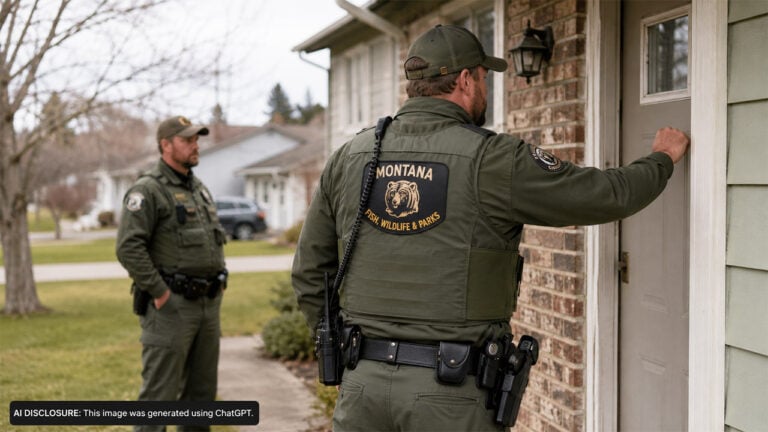
The writer says he brought close friends to the lake house for fireworks with family, and the group decided to fish Saturday afternoon. About 30 minutes in, he noticed someone yelling at people in a boat, then watched an officer—described as a “ranger”—walk toward them through tall grass.
At first, it sounded like a normal field contact: “nice day,” “caught anything.” Then the tone shifted to “can I see your fishing license and drivers licenses.” The poster says he immediately told the officer they were on private property and that no one needed a license there—though he notes he personally had a Pennsylvania license anyway because he fishes other waters.
The argument came down to “Class A” vs. “Class B” and what the state recognizes
In the poster’s telling, the officer’s main point was that the lake didn’t fall under “Class A” status, so it was treated like public water—meaning licenses would be required. The homeowner’s pushback was simple: the community is gated, entry is restricted to members, and residents pay to stock and maintain the lake through dues.
That’s where a lot of lake communities get sideways with the law. A place can feel private in every practical sense—controlled access, HOA fees, and posted rules—but still not match how the state classifies it for fishing regulations and enforcement. The poster also mentions he found a state PDF list of Class A lakes and didn’t see their lake on it, which only added to the confusion.
The situation escalated into a citation—and then a quick reversal
The contact didn’t end with a warning. The officer reportedly claimed he saw one friend fishing from a distance, even though the group said the friend was restringing a rod. After what the poster described as about 40 minutes of being hassled, the officer issued a $210 citation to that friend for fishing without a license.
Then, after more back-and-forth, the homeowner says the officer admitted he couldn’t identify which person he’d actually seen casting and “just picked a person to give a ticket to.” The group showed that the cited friend’s rod had a broken line and “was not useable.” At that point, the officer took the ticket back, saying he had to recant it and that his supervisor “wasn’t going to like this,” and then told them to be on their way.
Regardless of how anyone feels about the officer’s approach, that’s the kind of encounter that leaves people rattled: a long stop, a ticket written, and then an abrupt undoing when the facts don’t line up.
When the homeowner asked for clarity, the answer sounded like a warning
After the weekend, the poster says he called and spoke to “the head deputy at the boat and water, game and wildlife commission” to get a straight answer. According to the update, the deputy told him there was “no way no how” the lake could be listed as a Class A lake, and that he couldn’t request it.
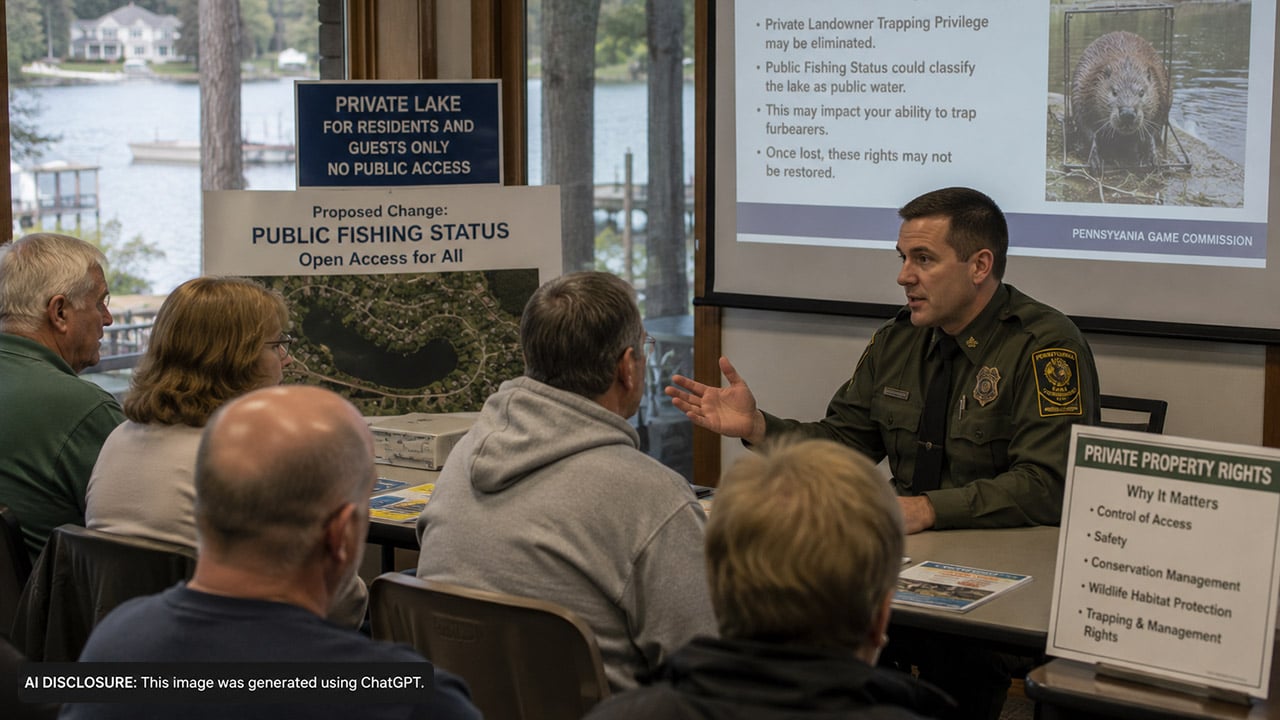
The deputy also reportedly explained it in blunt terms: if the lake were Class A, enforcement would change, and because the community itself isn’t listed as eligible to be inside with a Class A lake, it would force a choice—either the lake becomes Class A and the community becomes “public,” or the lake stays Class B and the HOA remains private.
Then came the part that matters to anyone who lives in the woods and deals with problem animals. The deputy told him that petitioning for Class A status would forfeit the community’s ability to contact game and wildlife when residents have bear or coyote problems. And since the area is “non hunting/trapping land,” the deputy warned that residents could be arrested for trapping bear or transporting them because it would be illegal there.
Read that again and you can see why it hit a nerve. The homeowner wasn’t just trying to figure out fishing licenses—he was being told that chasing “public” fishing status could cost the community its ability to address nuisance wildlife in the ways they’re accustomed to.
What this looks like from the ground: access control, enforcement lines, and rural reality
The homeowner’s big question is one plenty of us have asked in different forms: how can an enforcement officer come into a gated community and start checking anglers as if it’s public water? From a boots-on-the-ground perspective, a gate feels like the end of the conversation. But agencies often work off classifications, maps, and lists, not HOA bylaws or local tradition.
He also relayed the officer’s explanation that Pennsylvania has separate divisions—water pollution patrol versus game/wildlife—and that fishing enforcement fell under the water side. Whether that was stated perfectly or not, the practical takeaway is real: you can wind up talking to an officer who doesn’t care what the residents “have always done,” because he’s working off the state’s interpretation of where his authority applies.
And in rural lake communities, there’s another layer: nuisance animals don’t follow property lines. If folks are used to calling for help with bears or coyotes, or handling certain issues themselves, any change that tightens the rules can feel like trading one problem for another.
The hard lesson for HOA lake communities: pushing the state can change more than fishing
The most telling detail in the update is that the homeowner felt like he was getting a memorized speech. That’s usually a sign this kind of dispute happens a lot—private waters, unclear listings, and residents who assume “we stock it” means “we control it,” only to find out the state sees it differently.
There’s also a practical warning here for any HOA board thinking about going to the state for a designation change, a new listing, or a formal status that sounds beneficial on paper. If the deputy’s explanation is accurate, that one move could ripple into public access questions and wildlife enforcement in ways the community isn’t prepared for.
For outdoorsmen, the best approach in situations like this is rarely an argument on the bank. It’s documentation and clarity: know what classification the state recognizes, know whether the water appears on official lists, and understand what rights and restrictions attach to that label—especially if you live where bear and coyotes are part of the normal year.
In this case, the lake community wanted one thing—clear “private” recognition for fishing without hassles. What they heard back was that changing status could invite a bigger set of problems, including losing certain options when wildlife starts causing trouble close to home.
Like The Avid Outdoorsman’s content? Subscribe to our newsletter so you never miss an article.
Here’s more from us: