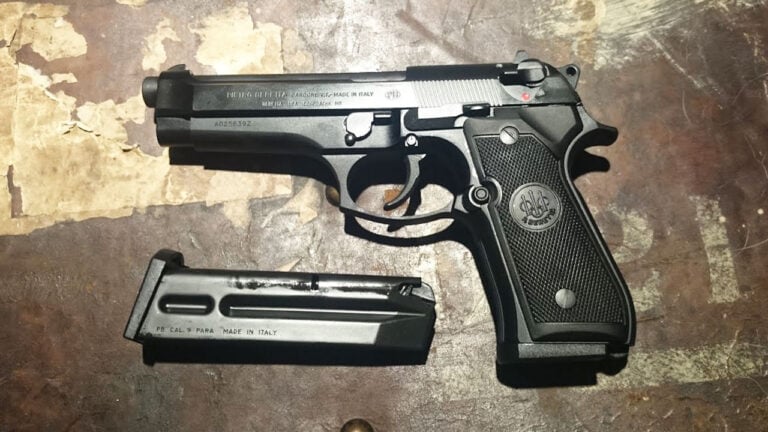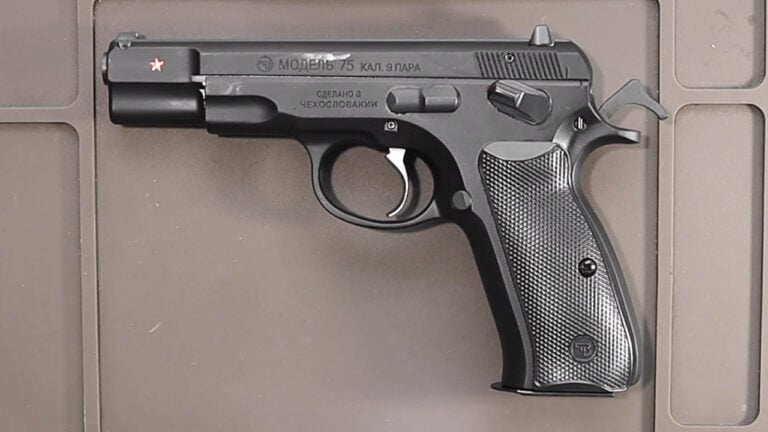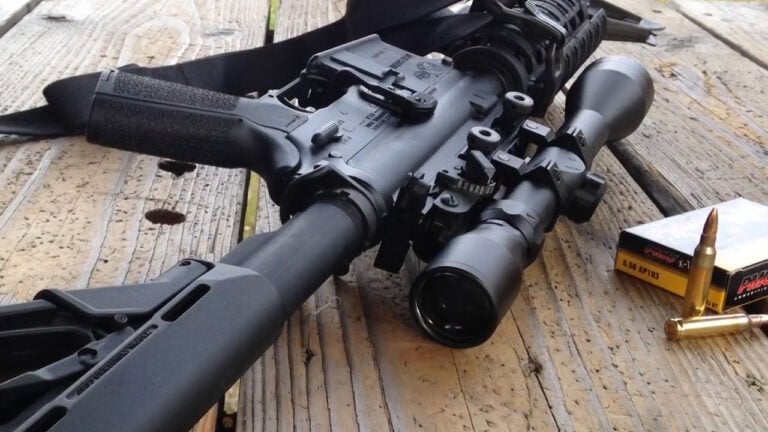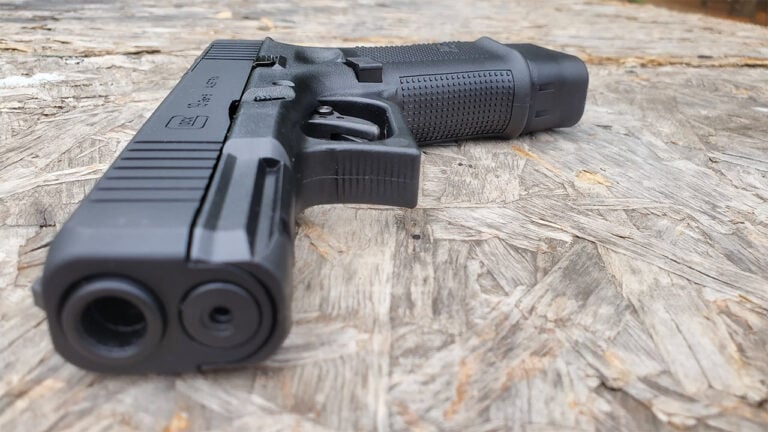
Photo credit: AI-generated image created using ChatGPT. Illustrative only
Getting a stolen gun back ought to feel like closing a bad chapter. But sometimes the “recovery” comes with a whole new set of questions—especially when the firearm doesn’t come home in the same shape it left.
That’s what one gun owner described in the original post, after police returned his father’s Smith & Wesson M&P22 about a year after it was taken in a burglary. The pistol was back in hand, but it had been altered: the slide had been polished to a shine, and a long, rounded slot—roughly 1.5 inches by 0.5 inches—had been cut into the top of the slide near the front sight.
A recovered pistol with someone else’s “custom work”
The owner described himself as a casual gun user, not a deep tinkerer, which is why the modifications jumped out immediately. A polished slide is one thing—plenty of folks like bright metal for looks, and some do it thinking it’ll smooth function. But a big, oval-shaped opening cut into the slide isn’t a normal “garage gunsmith” touch you see every day, especially on a .22 pistol that’s already easy to shoot.
And location matters. This wasn’t a little window hidden under an optic plate or a cosmetic engraving. The opening was cut right up top near the front sight—exactly where you want strength, consistent cycling, and a stable sight picture. When someone takes a tool to that part of the gun, the first question isn’t “why?” It’s “is it safe and will it run?”
Why a hole in the slide raises real-world concerns
On a semi-auto pistol, the slide isn’t just a cover. It’s a moving part that controls feeding, extraction, and ejection, and it takes repeated stress every time the gun cycles. Changing the slide’s weight or stiffness can change how the gun behaves, and sometimes not in a way you’ll notice until it starts choking on ammo or throwing malfunctions at the worst possible time.
There’s also the plain, practical problem: openings invite debris. A .22 pistol already runs dirty compared to many centerfire handguns, and rimfire ammo tends to leave a lot of fouling. A big slot up top can let in grit, unburnt powder, and whatever else is floating around—especially if this is a pistol that gets tossed in a range bag, used on a farm, or stored where dust is a fact of life.
Possible reasons someone would cut a slot near the front sight
The post didn’t include a definitive answer for the purpose of the cut, and without seeing the exact workmanship in person, nobody can responsibly “diagnose” it from a distance. But in the real world, there are a few common motivations that lead people to start cutting on slides.
Some folks chase the look of “ported” or “windowed” slides they see on competition guns. Others are trying to reduce slide weight, change cycling behavior, or create a crude viewing window. The problem is that those kinds of modifications—when done correctly—are usually planned around the pistol’s design, done with proper machining, and paired with testing. A random slot cut close to the front sight on a rimfire pistol doesn’t scream “purpose-built upgrade.” It screams “somebody got creative.”
What the shine says about how it may have been treated
The other change mentioned was the slide being polished until it shined. That can happen a few ways. Sometimes it’s intentional—someone likes the bright look, or they’re trying to imitate stainless. Sometimes it’s the byproduct of aggressive cleaning, sanding, or buffing to remove finish wear, rust, or evidence marks.
Either way, a high-polish surface doesn’t tell you the important stuff: whether critical edges were rounded off, whether the finish was removed in places that now invite corrosion, or whether the slide-to-frame fit was altered. A shiny slide can look “better” in a photo while actually being worse where it counts.
The smart next steps before anyone loads a magazine
When a stolen gun comes back altered, the safest move is to treat it like an unknown firearm—even if it used to be familiar. That means a careful inspection and function check before it ever goes to the range. If the slide has been cut, you want eyes on recoil spring condition, slide integrity, and any cracking around corners of the cut. Sharp internal corners and rough tool marks can become stress points over time.
It’s also worth considering whether it’s even worth trying to “make it work” as-is. A defensive firearm—yes, even a .22 used for training or trail use—needs to be boringly reliable. If the pistol is going to stay in the lineup, a factory-correct slide or a trip back to the manufacturer (or a qualified gunsmith) is the kind of boring solution that keeps you out of trouble later. There’s no shame in deciding a recovered gun is now a project gun, a range-only piece, or something that gets restored with proper parts.
What other gun owners tend to fixate on in situations like this
Even with the limited details provided, the biggest point that usually grabs experienced shooters is the “why” behind the modification. Not because curiosity is the point, but because motive often hints at abuse. A clean, professionally machined window with smooth edges suggests someone trying to imitate a competition style. A rough cut, especially near a sight, suggests somebody experimenting, trying to change the gun’s behavior, or simply not caring what they ruined because it wasn’t theirs.
The other focus is liability and trust. A stolen firearm that’s been modified by an unknown person is a question mark. If it ever had to be used in a serious situation, you don’t want to explain mysterious alterations or deal with a malfunction that traces back to someone else’s bad idea from a year ago.
Getting property back after a burglary is a win. But when that property is a firearm—and it comes back with metal removed from a critical moving part—you’re right to slow down, look it over like a skeptic, and decide whether restoring it to factory condition is the safest way to really close the book on the whole mess.
Like The Avid Outdoorsman’s content? Subscribe to our newsletter so you never miss an article.
Here’s more from us: