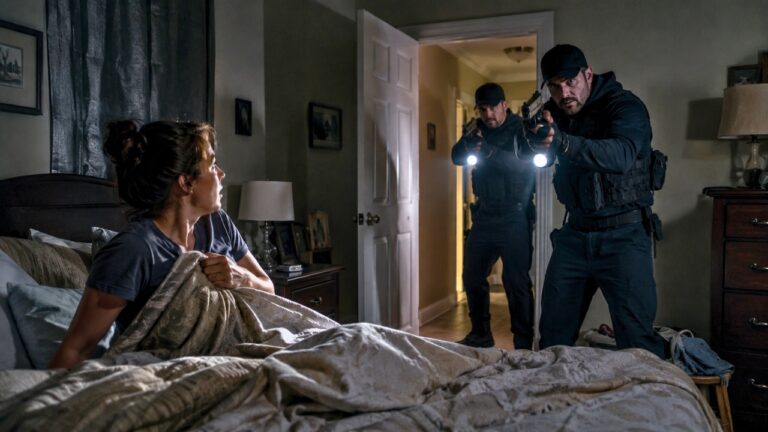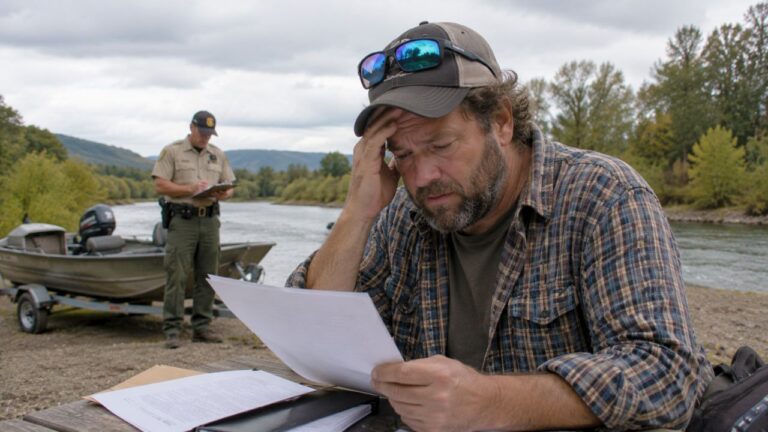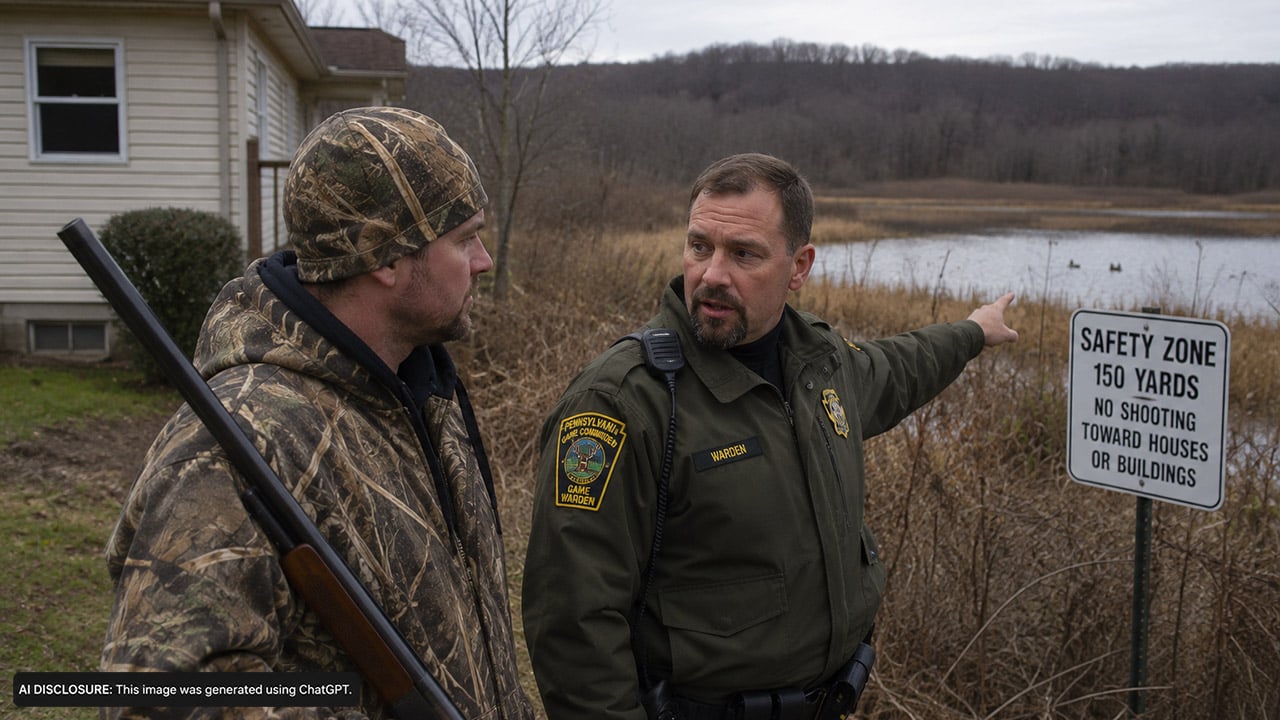
Photo credit: AI-generated image created using ChatGPT. Illustrative only
A rural Pennsylvania homeowner says a duck hunter floated down a narrow creek that borders private property, then touched off a shot roughly 75 yards from a house. That’s close enough that the two men could argue without raising their voices—close enough to make anybody on the porch feel like they’re part of the hunt whether they want to be or not.
In the original post, the homeowner explains that a game warden responded and confirmed the hunter had discharged inside Pennsylvania’s hunting safety zone, which the poster describes as 150 yards from a habitable building or farm structure. The warden also reportedly confirmed other realities about hunting a tight corridor of water bordered by private land—realities that can turn a morning on the creek into a legal and safety mess in a hurry.
A 20- to 30-foot creek can feel awfully small when guns come out
The waterway in question isn’t some wide river system with big sandbars and room to set up safely. The homeowner describes a 20–30 foot wide creek/river that forms part of the property boundary, with houses “dotted” along it and trees that can hide those homes from a boater’s view.
That’s a recipe for mistakes if somebody isn’t careful. In tight timbered creek bottoms, sound travels, distances are hard to judge, and it’s easy for a shooter to convince himself he’s far enough away—right up until a warden is standing there explaining the safety zone rules.
The game warden confirmed a safety-zone violation
The key fact here is simple: the homeowner says the game warden came out and confirmed the hunter broke the law by firing within the safety zone. The poster also recounts the warden’s blunt assessment of the hunter’s “rights” talk, saying, “No, he didn’t know his rights, because he fired in a safety zone.”
From a hunter’s perspective, this is the kind of violation that makes everyone look bad. Waterfowl hunting already comes with enough public pressure in populated areas. When somebody fires too close to a house, it doesn’t just risk a citation—it risks losing access, creating new local restrictions, and turning neighbors into lifelong opponents of hunting.
Why this creek sounds like a legal minefield for waterfowl hunters
The homeowner’s argument is that the combination of private land on both sides and the 150-yard safety zone makes lawful duck hunting “effectively impossible” on this stretch. He lays out several points: the creek is narrow, houses are common along the banks, and hunters can’t just step out to retrieve a bird if it lands on private ground without permission.
He also claims the warden confirmed that hunters aren’t allowed to fire toward private property on either side, and that safety zones don’t have to be marked—meaning the burden is on the hunter to know where buildings are, even if they’re tucked back in the trees. Put all that together and you can see why a landowner would feel like boats with shotguns floating past the house is a problem waiting to repeat itself.
Now, none of that means duck hunting can’t ever be done legally on a small creek. But it does mean the hunter has to be unusually disciplined: know the exact layout, know where homes sit back off the water, and be willing to pass on shots that would be fine in a wide-open marsh.
The retrieval problem: “Stay in your boat” or don’t retrieve at all
The homeowner’s frustration isn’t only about the shooting. He’s thinking through what happens after the shot. If a duck falls onto private property, and the hunter doesn’t have permission, stepping out to pick it up can become trespass.
The poster says the warden confirmed that as well: hunters can float the water, but they can’t leave their boats to retrieve anything they kill because the land under and beside the boat is private property. And the homeowner makes it clear he doesn’t feel obligated to grant access. That’s not an uncommon rural conflict—one side sees it as ethical recovery, the other side sees it as strangers wandering around their place with firearms.
For hunters, this is where planning matters. If you can’t legally retrieve a bird, you shouldn’t be shooting in a way that makes that outcome likely. That’s not just about obeying trespass laws—it’s about respect for the game and not wasting it.
Enforcement reality: catching a moving hunter on a creek is tough
The warden’s response, as described, highlights a hard truth: even when a violation happens, making a case can be difficult if the hunter is already gone downriver. The poster says the warden told him the only way they “really could have caught the guy” would have been if the hunter gave up where he launched, and then the homeowner would have needed to go there and document the vehicle—like getting a license plate number.
That’s a big ask. Most folks don’t want to play river detective before daylight, and they definitely don’t want to be waiting at a put-in to confront a stranger with a shotgun. The homeowner’s point was that he wants prevention, not a plan for the next time it happens.
But in the real world, documentation is usually what moves the needle. If a warden has a name, a truck, and a place and time, the odds of holding someone accountable go way up. Without that, it can turn into “a guy in a boat” who’s long gone.
The homeowner wanted a ban; the warden wouldn’t go there
The tension really spikes when the homeowner tries to turn one bad incident into a broader solution: he wanted duck hunting banned from that waterway. He believed the restrictions—safety zones, firing direction, trespass limitations—add up to hunting not being legally possible there.
According to the post, the warden wouldn’t “comment to the veracity” of that claim and didn’t offer a clear path for getting a ban in place. The homeowner took that as the warden protecting hunters’ interests, and he was plainly frustrated, saying he wanted to be “free of them” around his house and that hunters should “hunt somewhere else.”
From the outside looking in, it reads like two separate issues that got mashed together. One is straightforward: a hunter allegedly broke a safety rule and got called on it. The other is policy: whether a creek should be treated as a no-hunting zone because safe, legal shooting is difficult along that corridor. Game wardens enforce laws; they typically don’t create them on the spot, and they’re careful about endorsing blanket bans without a formal process.
In places like this, the cleanest path usually isn’t arguing creek-wide theory with an officer at the scene. It’s continuing to report unsafe discharges, documenting what can be documented from a safe distance, and pushing concerns through whatever official channels actually set seasons, access rules, or special regulations. Either way, the underlying lesson stands: if you’re hunting moving water tight to homes, you’d better know the safety zones cold—because one shot in the wrong place can put you on the wrong side of the law and put the whole area under a microscope.
Like The Avid Outdoorsman’s content? Be sure to follow us.
Here’s more from us: