Photo credit: AvidOutdoorsman
Dropping that kind of money on a bull elk hunt is supposed to buy you peace of mind. You’re paying for a plan, a vetted area, someone who knows the herds, and a guide who can keep you safe when the weather turns and the mountain starts testing you. What one hunter got instead was a long walk into a clear-cut, a quick handoff at daylight, and the sinking feeling that he’d been left to “figure it out” while the outfitter held tight to a huge deposit.
How the hunt was sold: big price, big promises
The package looked like what a lot of guys are shopping for these days: a trophy-focused bull elk hunt with lodging, meals, a guide, and access to private timber ground. The price tag was steep—around $18,000—so the expectation was a true guided experience, not a map and a pat on the back.
According to people familiar with the situation, the hunter was told the area had good numbers and the operation had a track record. It wasn’t pitched as a “drop camp.” It was pitched as hands-on help: calling setups, glassing plans, and a guide who’d stay close enough to make decisions in real time.
The handoff in the clear-cut
The hunt started normal enough. Truck ride before daylight, rough roads, headlamps, and that quiet anticipation you only get right before the timber wakes up. Then the tone changed.
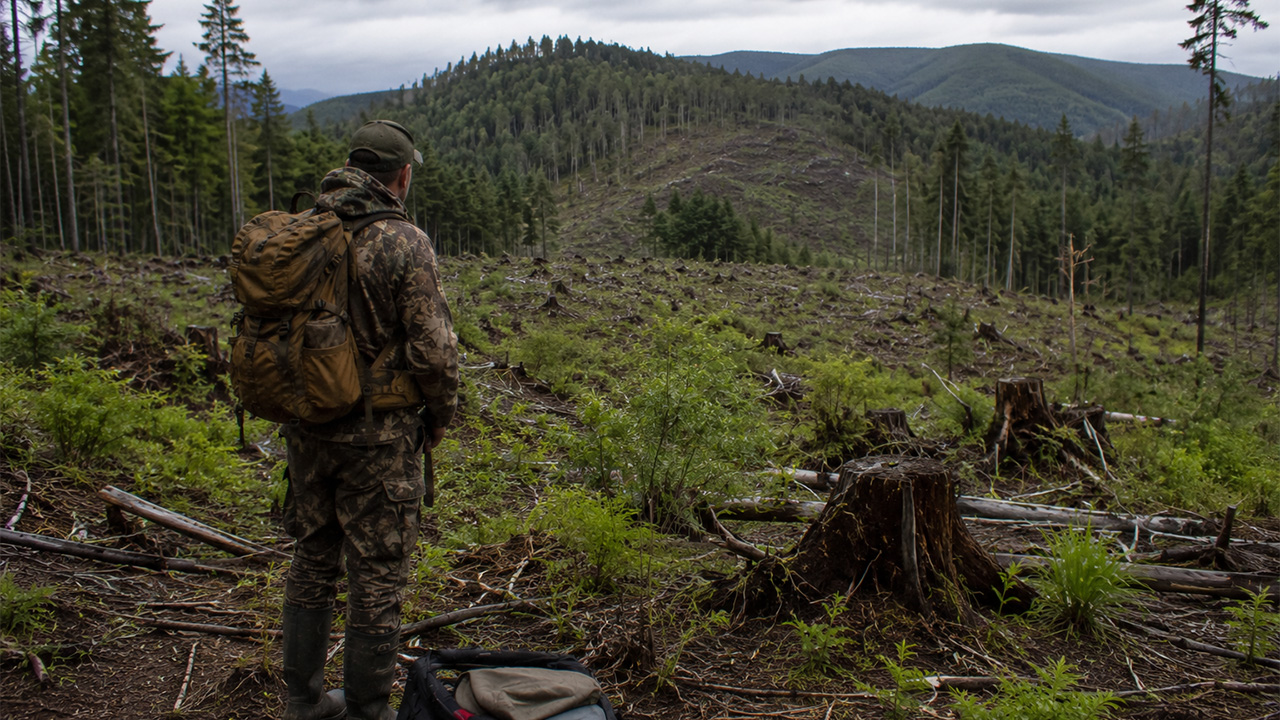
Instead of moving like a team, the hunter says he was parked on the edge of a fresh clear-cut and told to sit tight. The guide and outfitter crew didn’t settle in nearby, didn’t run a calling sequence, didn’t work ridges. They left. Not “circle around and meet you in an hour,” but gone-gone, leaving him alone with daylight coming fast and no clear plan for the morning.
Clear-cuts can be great for elk at first and last light. They can also make you feel exposed and out of place if you don’t know the travel routes, where the bedding timber starts, and how the wind typically behaves in that bowl. A guy can burn half a day just guessing, and on a guided hunt that’s the one thing you’re paying not to do.
When “guided” starts looking like “abandoned”
By mid-morning, the practical problems pile up. You’re alone, you don’t know the area, and you’re trying to hunt without stepping into the kinds of mistakes that can end a hunt quick—crossing a boundary you can’t see, pushing into a closed road, or setting up where you’ve got no safe shooting lane.
The hunter reportedly tried getting the guide on the phone and didn’t get the kind of response you’d expect. Anyone who’s been in elk country knows service can be spotty, but that’s why legitimate outfits run radios, check-in times, and backup plans. When none of that happens, the safety concern becomes just as big as the money concern.
Even if you’re a competent backcountry hunter, there’s a big difference between choosing to hunt solo and being left solo on an expensive hunt you didn’t book as a solo hunt. If you twist a knee climbing slash piles, if weather blows in, if you get turned around in the timber after a long track—there’s nobody there to help, and the people you paid are somewhere else.
The deposit fight and the fine print that matters
Once the hunter realized the “service” wasn’t showing up, the money question came next. That’s where these situations usually get ugly, because outfitters often structure payments so a big deposit becomes “non-refundable” for almost any reason.
In this case, the hunter says he asked to end the hunt early and get some of his money back, arguing that he didn’t receive what was promised. The outfitter refused, pointing to deposit language and claiming the hunt was still being provided—access to the property, a general plan, and the opportunity to hunt.
This is the part a lot of guys don’t want to hear: many contracts are written to protect the outfitter, not the hunter. “Guided” can be loosely defined. “Effort” can be vague. And unless the agreement spells out what a day looks like—hours with a guide, hunting style, number of hunters per guide—you can wind up arguing opinions instead of terms.
It’s not just about refunds, either. If you leave mid-hunt, you can get boxed into a corner where the outfitter claims you “chose not to participate,” which gets used to justify keeping the money. Meanwhile, the hunter feels like he paid for a service that never showed.
What other hunters zeroed in on: radios, boundaries, and documentation
When hunters talk about situations like this around the camp stove or online, they tend to focus on the same handful of things: proof, safety, and paperwork. A lot of folks immediately ask whether there were texts, emails, or a written itinerary showing what “guided” meant in plain language.
Others focused on the clear-cut drop itself and what that can lead to. If you’re sitting on industrial timber ground, you may be one ridge away from a boundary line you can’t see. If the outfitter didn’t walk you through exact access rules or provide a map with hard edges, you’re the one at risk if you wander into the wrong place. The outfitter isn’t the one explaining it later.
And then there’s the radio issue. In real guided hunts, there’s usually a plan: check-ins at set times, an emergency channel, and a “if you haven’t heard from us by X, do Y” procedure. Commenters were blunt about that. They didn’t see leaving a client without reliable comms as a minor oversight.
The practical options a hunter actually has in a mess like this
Once you’re on the ground and things go sideways, options are limited. You can try to salvage the hunt by pushing for a different guide, demanding a clear daily plan, and documenting every missed meetup and every “we’ll be there later” that never happens. That’s not being petty. That’s protecting yourself when money gets involved.
You can also leave—especially if you feel unsafe—but leaving often means you’re walking away from the best leverage you have, which is being physically present and demanding the service you paid for. If you do leave, it helps to do it in a calm, businesslike way: written notice, what terms you believe were breached, and a request for itemized charges and a refund amount.
Beyond that, guys start looking at credit card disputes (if any part was paid by card), insurance or trip protection (rare in hunting, but not unheard of), mediation, or civil action. None of those are fun. All of them cost time. And the worst part is you can’t get your elk season back when the calendar flips.
This is one of those stories that ought to make every hunter slow down before wiring a deposit. If “guided” isn’t defined, define it. If there’s no comms plan, demand one. If the outfitter won’t put expectations in writing, that’s your sign. An elk hunt is hard enough when everything is running right—nobody should have to spend a premium just to sit alone in a cut and wonder where the guide went.
Like The Avid Outdoorsman’s content? Be sure to follow us.
Here’s more from us: