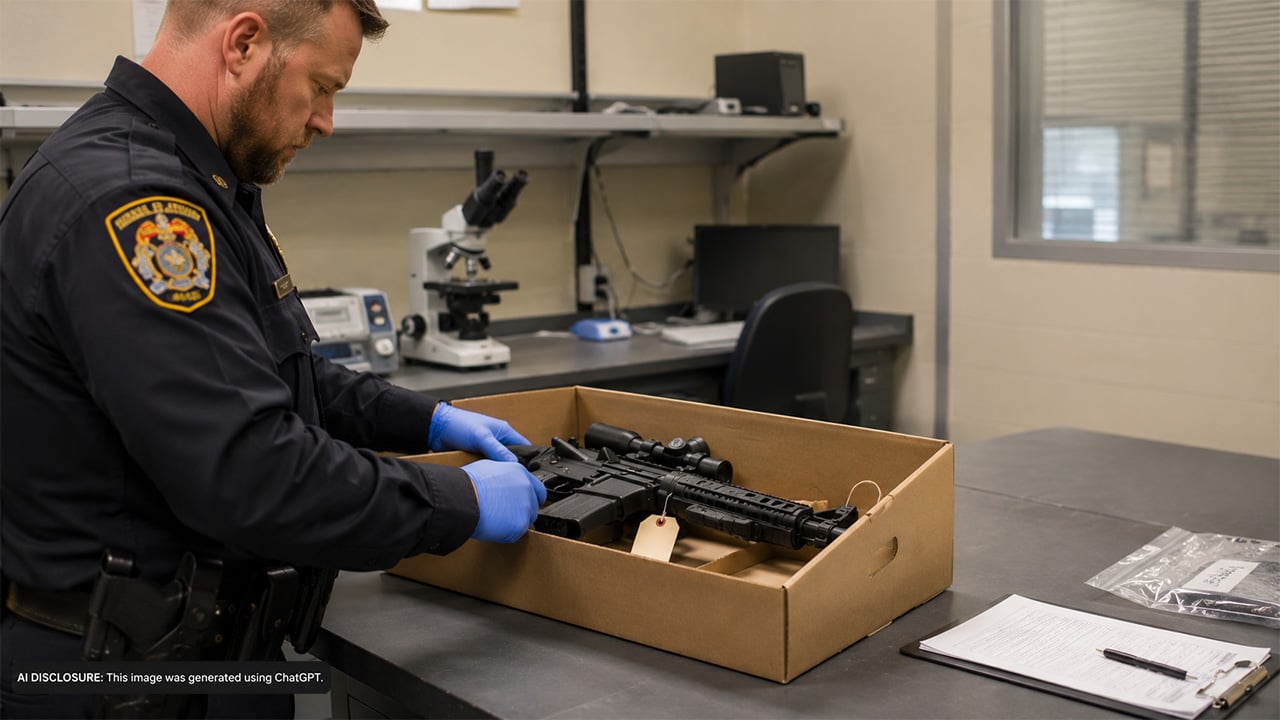
Photo credit: AI-generated image created using ChatGPT. Illustrative only
Range days in Pennsylvania usually end with a hot barrel, a dirty rifle case, and a stop for gas on the way home. For one shooter, it reportedly ended with a patrol car pulling up because someone called in a complaint about how fast his AR was running—and the rifle leaving with the officer.
In the original post, the gun owner said the rifle allegedly had an “FRT style” trigger installed. After the officer arrived due to the reported rate of fire, the officer took the gun, saying it was an SBR, and later told the owner it was being sent to the Pennsylvania State Police gun lab to examine the trigger and “see if it’s legal.”
A fast-sounding AR brought unwanted attention
Based on the shooter’s account, the issue started with sound and speed. Someone nearby apparently heard the rifle running fast enough to raise eyebrows and make a phone call. That’s not hard to imagine—rapid strings stand out, even on a busy range, and they stand out even more if you’re shooting on private ground with neighbors within earshot.
Whether the caller believed it was full-auto or just didn’t like the noise, the result was the same: law enforcement showed up because of the “rate of fire.” That’s a reminder a lot of folks learn the hard way—your setup doesn’t just have to be safe and accurate; it has to pass the “looks and sounds normal” test when somebody else is listening.
The officer’s stated reason: SBR concerns
The owner said the officer’s main reason for confiscating the rifle was that he claimed it was a short-barreled rifle. In plain terms, that’s the kind of situation where barrel length and overall configuration matter a whole lot, and where confusion can spiral fast if the rifle “looks” short.
The shooter also noted his belief that an officer can’t enforce certain federal paperwork issues or demand to see a tax stamp unless it’s the ATF. He further stated that the only SBR charge he was aware of related to manufacturing rather than possession. Those are common talking points gun owners bring up in these situations, but what matters on the side of the road is often simpler: if the officer thinks the gun may be unlawfully configured, the gun may get taken while it gets sorted out.
From “pick it up next week” to “it’s going to be awhile”
According to the post, the officer initially told the owner the weapon would be available for pickup within a week. That’s the kind of timeline that calms people down—nobody wants their rifle sitting in an evidence locker, but a quick turnaround feels manageable.
Then the tone changed. When the owner asked about getting it back, the officer reportedly said it was going to take longer because he was sending it to the PSP gun lab to examine the trigger and determine whether it was legal. That escalation is what turns a bad afternoon into a drawn-out headache: once a firearm is being evaluated by a lab, you’re not on a simple “come grab your property” schedule anymore.
Why the trigger became the real focus
The trigger described—an “FRT style” trigger—is exactly the kind of part that can put a spotlight on your rifle even if everything else is squared away. When a rifle is firing quickly, outsiders don’t break it down into mechanical details. They just hear “fast” and assume “machine gun,” and that assumption drives calls, stops, and seizures.
The owner’s account suggests the lab exam is meant to settle that “rate of fire” question in a formal way. Whether the rifle is ultimately deemed lawful or not, the practical reality is this: any component that makes your semi-auto feel or sound like something else can become a magnet for scrutiny. And scrutiny tends to be expensive, even when you’re right.
The practical consequences gun owners worry about
This kind of story hits a nerve with everyday shooters because it’s not about a crime scene or a violent incident—it’s about a range day turning into a property and paperwork problem. Once a rifle is seized, you’re dealing with storage conditions you don’t control, potential evidence tags through the receiver or case, and the possibility that small parts go missing during handling.
There’s also the downtime. Hunting season, training plans, even just weekend range time—none of that cares that your gun is sitting in a lab queue. If you only own one AR, you’re now without it. If you built the rifle carefully and know every spring and pin, you’re going to feel that loss twice.
And then there’s the bigger lesson rural shooters know well: neighbors and bystanders can be the deciding factor. You can be safe, backstopped, and on your own property, and still get a visit if somebody doesn’t like what they’re hearing. Rapid fire draws attention faster than just about anything.
What the shooter questioned about authority and charges
The owner raised a couple of points that pop up often when gun owners talk about SBRs and enforcement. One was the idea that only federal agents can demand to see NFA paperwork. Another was the belief that the relevant issue is “manufacturing” rather than possession.
Even without getting deep into legal weeds, the on-the-ground takeaway is pretty straightforward: if you’re running anything close to the NFA line—barrel length, stocks/braces, overall length, or a trigger that invites “machine gun” accusations—you want your configuration to be unquestionably compliant and your documentation organized. Because the person making the first call in the moment may not be a firearms specialist, and the process of “sorting it out later” can take far longer than anyone wants.
None of that means you should argue on the spot. If an officer decides the rifle is coming with him, the smart move is to stay calm, keep your hands and attitude under control, and handle disputes through the proper channels afterward.
For outdoorsmen who run ARs alongside deer rifles and shotguns, this is another reminder that the gear you choose has consequences outside the firing line. A setup that sounds like trouble can become trouble—at least long enough for a lab to decide what it is and isn’t.
Like The Avid Outdoorsman’s content? Be sure to follow us.
Here’s more from us: