Photo credit: AI-generated image created using ChatGPT. Illustrative only
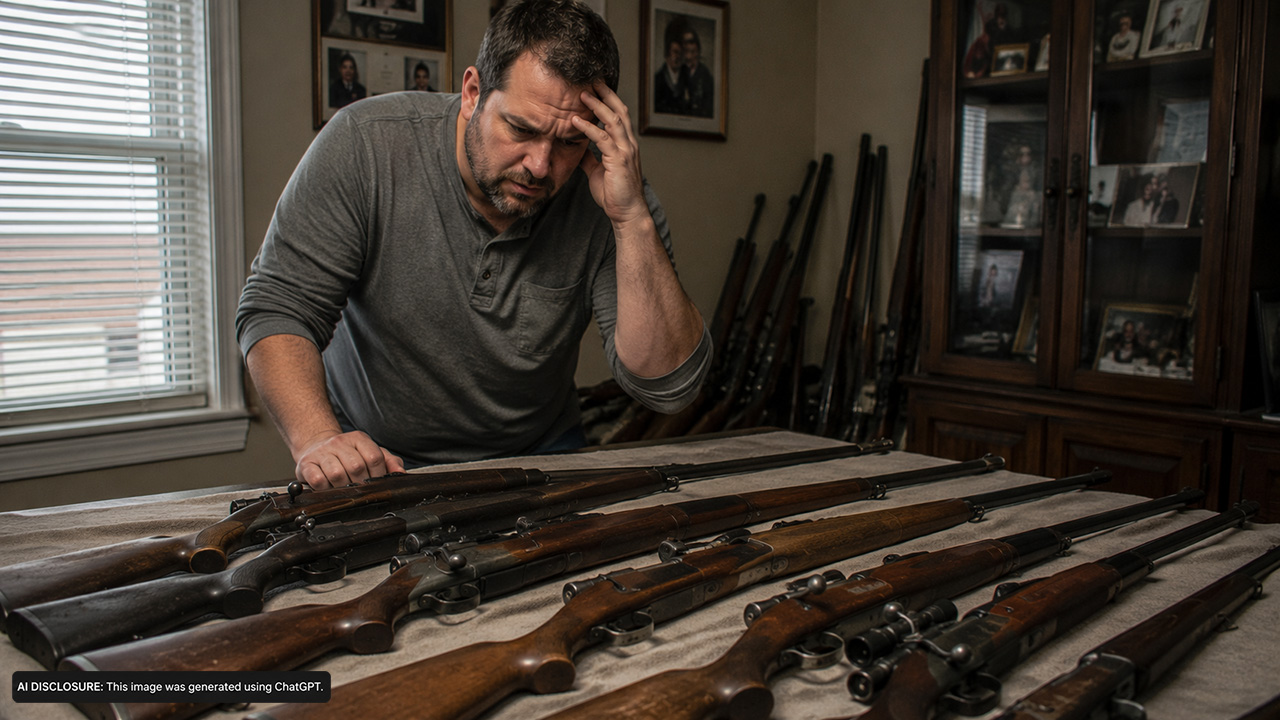
A lot of us have daydreamed about it: Grandpa’s old rifles with the worn bluing, the walnut that’s seen a few seasons, maybe a shotgun that’s been in the family longer than the truck in the driveway. It feels simple—family passes down guns, you keep them running, and you remember the stories.
But for one California gun owner, that “someday” inheritance started raising hard questions fast. His grandfather lives in Utah, and he lives in California. The guns are older, he believes none are “assault weapons,” and he says he has no disqualifying convictions or mental health issues. What he doesn’t have is a clear path to make the transfer clean on paper—and in California, “clean on paper” is where a lot of good intentions go to die.
In the original post, he asked the practical question most outdoorsmen would ask: when the time comes, how do you legally take possession of firearms crossing state lines into California?
A family hand-me-down turns into an interstate transfer
If both parties live in the same state, the “how” can still be a hassle, but at least you’re playing in one rulebook. This situation isn’t that. The grandfather is in Utah, the recipient is in California, and that state line matters.
Federal law generally treats interstate firearm transfers as a big deal. In plain terms: when a gun is coming from one state to a resident of another, you usually end up going through a federally licensed dealer in the recipient’s state. That’s where the background check, the paperwork, and the state compliance pieces get bolted on.
That detail trips up a lot of families because it doesn’t feel like a “sale.” It’s not. But the law cares more about where the people live than whether money changed hands.
“No assault weapons” isn’t the same as “California legal”
The poster’s assumption—older guns, not “assault weapons”—is a common one. It’s also where plenty of folks get blindsided, especially in California.
California’s restrictions don’t stop at the label most non-gun people use. A firearm can be “just a normal rifle” to your grandpa and still be a problem once it hits California soil, depending on features, configuration, magazine setup, and model-specific rules. The same goes for handguns: age doesn’t automatically equal legality, and “collector-looking” doesn’t mean exempt.
And then there’s the part that makes people sweat: some firearms can be legal to own in one place but difficult—or impossible—to bring into California without getting on the wrong side of the rules. That’s how an inheritance can accidentally turn into possession of something the state treats as contraband.
Paperwork problems start long before the funeral
He also mentioned something a lot of families deal with: there isn’t a neat folder of documentation sitting next to the gun safe. Maybe Grandpa bought them decades ago. Maybe some were traded. Maybe some were gifted. Maybe records were never kept.
In many states, that casual history doesn’t raise eyebrows. In California, it’s a different story, because there are reporting requirements and registration-style systems tied to certain transfers and firearm types. Even when you can lawfully acquire something, you may have to document it properly within specific timelines.
The other piece is emotional, and it’s real: nobody wants to pester an aging family member with “Hey, can we inventory your guns and serial numbers?” But that’s exactly the kind of grown-up conversation that prevents a mess later—especially when the executor is trying to settle an estate and the heirs are spread across multiple states.
Why the guns could be “illegal” before they ever change hands
The most uncomfortable possibility in a situation like this is that the inheritance itself isn’t the first legal issue. It’s that the firearms may already be fine in Utah, but effectively prohibited for the California heir to receive—meaning the moment they’re transferred, transported, or imported into California, the recipient could be in violation.
That can happen even when nobody’s trying to do anything shady. The family thinks they’re doing a respectful thing—keeping Grandpa’s hunting rifle in the family—only to learn California treats that particular configuration as a regulated or banned item. Or a handgun that was never on the state’s roster system becomes a headache if it doesn’t qualify for an exemption pathway.
None of that means the grandfather did anything wrong where he lives. It just means the recipient has to plan like a pessimist: assume at least one gun in the collection is going to trigger a California-specific rule, and start sorting out which ones can come in and which ones can’t.
What people fixate on in these cases: the “right way” to receive them
When gun folks talk about inheritance transfers, the conversation usually narrows down to a few practical checkpoints: keep the guns where they are until you know the rules, don’t try to “just drive them home,” and don’t assume a family relationship overrides the interstate transfer requirements.
That’s because the cleanest path is typically the least exciting one. It involves a legitimate dealer, the correct forms, and sometimes the unpleasant answer that a particular firearm should be sold in the original state rather than brought into California at all.
And if the poster ends up inheriting multiple firearms, the “process” isn’t just one process. A bolt-action hunting rifle, a pump shotgun, and a couple older handguns can each bring their own compliance quirks once California is involved. The family may need to think in terms of sorting the collection into: “safe to transfer,” “transferable with extra steps,” and “do not import.”
The smartest move is to do the legwork while Grandpa can still answer questions
The best time to iron this stuff out is when the grandfather is still alive and can clarify what he owns, how it’s configured, and whether anything has been modified over the years. That’s also when the family can make decisions that keep everyone out of trouble—like leaving certain guns with a Utah heir, selling certain items locally, or arranging a lawful dealer transfer for the pieces that can come to California.
There’s also a safety and responsibility angle here that gets overlooked: when families don’t plan, guns can end up bouncing around during an already stressful time—moved by well-meaning relatives, stored in the wrong place, or handled by someone who doesn’t understand what they’re dealing with. A little planning now keeps both the legal side and the safe-storage side squared away.
If you’re the guy who’s supposed to inherit firearms across state lines, treat it like any other serious outdoor job: measure twice, cut once. Make the calls, learn what your state allows you to receive, and be willing to hear “not that one.” That’s how you honor your grandfather’s collection without turning a family keepsake into a legal problem.
Like The Avid Outdoorsman’s content? Subscribe to our newsletter so you never miss an article.
Here’s more from us: