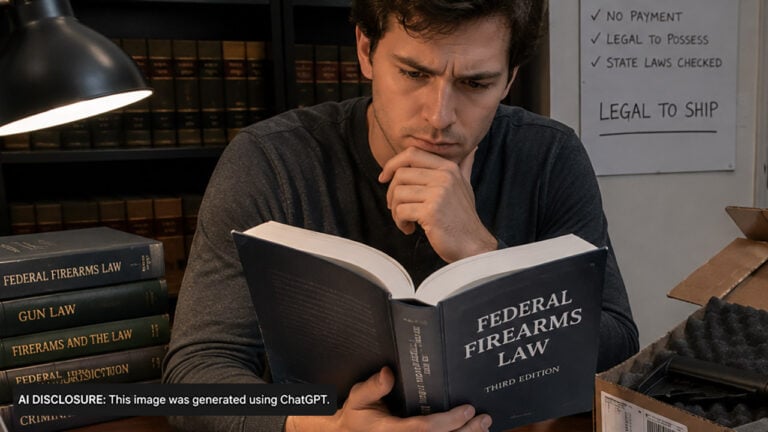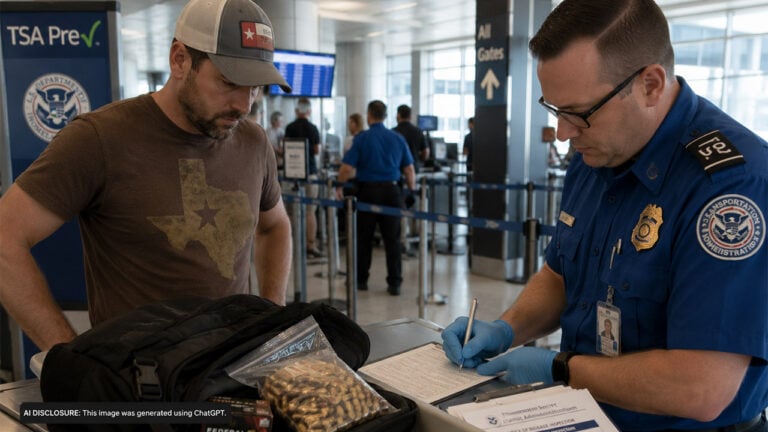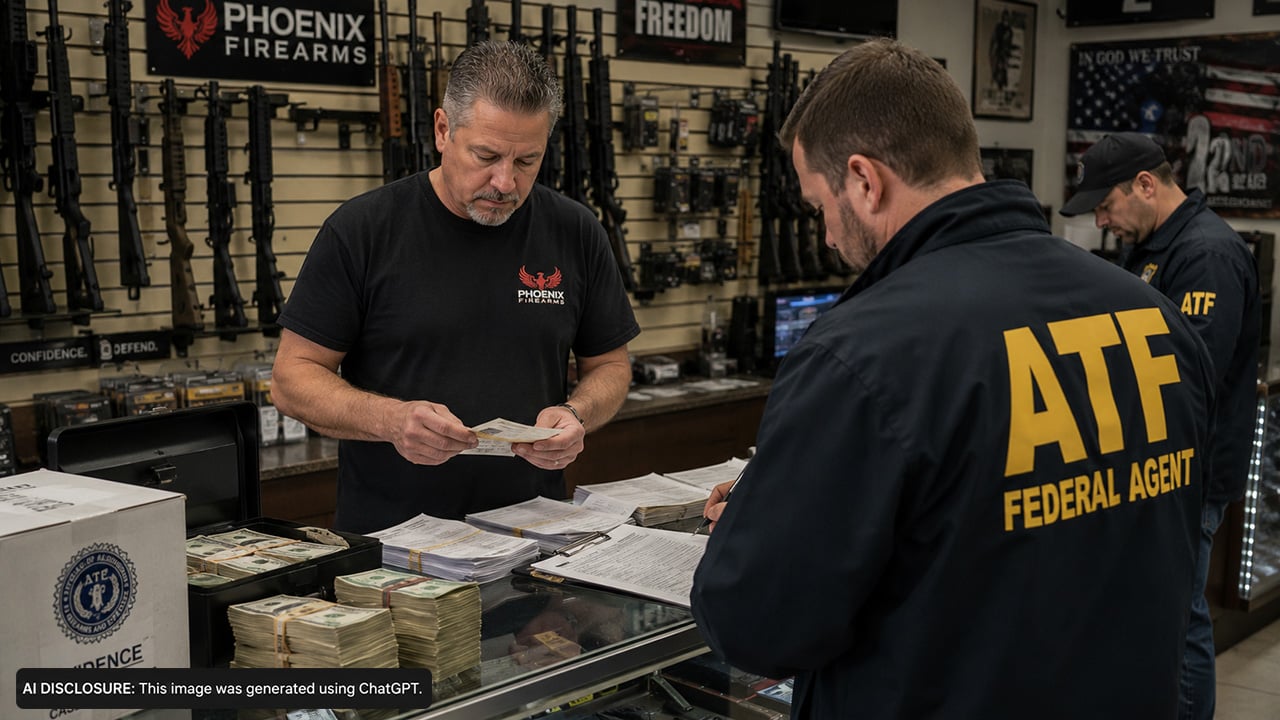
Photo credit: AI-generated image created using ChatGPT. Illustrative only
Most folks who walk into a local gun shop are doing it the right way—picking up a hunting rifle before season, grabbing a box of shells, or finally buying that first carry pistol. That’s why it hits different when the guy behind the counter is the one steering things off the rails.
Federal prosecutors in Arizona say a Phoenix-area gun store owner admitted to helping straw purchases and failing to report large cash transactions—two problems that can put firearms in the wrong hands and put legitimate gun owners under a harsher spotlight. The details are laid out in the source post from the U.S. Attorney’s Office for the District of Arizona.
A federally licensed shop, and a responsibility that comes with it
The case centers on Alejandro Montemayor, 33, of Chandler, Arizona. Prosecutors say he operated and ran AV AZ Firearms, a Federal Firearms Licensee in Phoenix, between Jan. 6, 2022 and May 29, 2024.
That “FFL” part matters. A lot of us roll our eyes at paperwork, but the federal process exists for a reason: it creates a chain of accountability. When the license holder treats that like a game, it’s not just his business on the line—he’s poking the entire shooting community in the eye.
How straw purchases actually happen at the counter
Montemayor pleaded guilty to Aiding and Abetting a False Statement During the Purchase of a Firearm. In plain language, the government says he helped a buyer lie on the forms required for a firearm purchase.
One example in the filing describes what allegedly happened on May 22, 2024. Prosecutors say Montemayor “allowed and encouraged” an individual to commit the crime of making a false statement during the purchase by showing them how to fill out the required forms. He then directed that person to attest he was the true purchaser even though Montemayor knew that wasn’t true, and the firearm was ultimately handed to a third individual.
That’s the whole danger of a straw buy. The person filling out the paperwork is acting like the “clean” face on the transaction, while the gun is really intended for someone else. If you’re a hunter who has ever bought a rifle as a gift the legal way, you already know the difference: buying a firearm for yourself and later gifting it is one thing; buying it on behalf of somebody else who is the real intended owner is another. This case, as described by prosecutors, is the second scenario—and it’s the one that gets people hurt and gets doors kicked in.
Seventy-two firearms moved through straw buys, prosecutors say
According to the plea, Montemayor admitted that during the time he ran the shop, he facilitated the straw purchase of firearms and later transferred at least 72 of those firearms to other individuals.
Even without a list of makes and models, 72 guns is a lot of iron leaving a single counter under suspicious circumstances. For anyone who’s spent time around a range or a dove field, you know how quickly one bad actor can change the tone for everybody. Cases like this become the talking point when new restrictions get floated, and the folks who obey the law end up carrying the burden.
It also raises a basic, practical point: when an FFL is willing to ignore the “actual buyer” question, it undermines the paper trail that helps law enforcement trace crime guns. Whether you like tracing or not, it’s part of how the system works, and breaking it on purpose has consequences.
The cash side: $258,000 in sales not reported in 15 transactions
The second guilty plea charge is Failure to File a Report Related to Currency. Prosecutors say Montemayor failed to file reports with the Financial Crimes Enforcement Network for sales greater than $10,000.
In total, he admitted he failed to file 15 such reports between Feb. 23, 2024 and May 14, 2024, accounting for over $258,000 in proceeds. That’s not forgetting one form in a busy week—that’s a pattern over a short window of time.
Most outdoorsmen understand cash. Cash is still king at plenty of gun shows, feed stores, and small-town shops. But once you’re running a licensed business, especially one moving firearms, the rules around large cash transactions aren’t optional. When someone hides big-dollar sales, it doesn’t just look bad—it looks like they’re trying to stay invisible on purpose.
What he pleaded guilty to, and what the penalties look like
Montemayor pleaded guilty earlier this month to two counts: Aiding and Abetting a False Statement During the Purchase of a Firearm, and Failure to File a Report Related to Currency. Sentencing is scheduled for Aug. 17, 2026, before United States District Judge Susan M. Brnovich.
Prosecutors laid out the maximum penalties tied to the statutes. A conviction for False Statement During the Purchase of a Firearm carries up to 5 years in prison, a fine up to $250,000, or both. A conviction for Failure to File Forms 8300 relating to cash received in trade or business carries up to 10 years in prison, a fine up to $500,000, or both.
The Bureau of Alcohol, Tobacco, Firearms and Explosives conducted the investigation. The prosecution is being handled by Assistant U.S. Attorneys Ben Goldberg and Sheila Phillips in the District of Arizona. The case number listed is 26-CR-00501-PHX-SMB.
What this changes for everyday gun owners and honest gun shops
When a gun store owner gets caught doing something like this, the ripple effect goes way past that one storefront. Honest FFLs end up dealing with more scrutiny, more audits, and more time spent proving they’re doing things right—time they’d rather spend helping a customer pick a safe deer rifle or a reliable home-defense setup.
For buyers, it’s a reminder to stay in your lane. Don’t “help” a buddy by filling out paperwork for him. Don’t take cash to be the paperwork guy. And if a shop employee is coaching someone through the “actual buyer” question in a way that sounds shady, that’s your sign to leave. A good shop will be clear, even blunt, about what’s legal and what isn’t.
There’s also a bigger, quieter point here: the gun community leans heavily on the idea of personal responsibility. That has to apply at the register too. If the person running the books and approving the transfers won’t act like an adult, the rest of us end up paying for it in reputation, regulation, and hassle.
Montemayor’s sentencing is set for August 2026. Until then, the details in the plea paint a simple picture: prosecutors say a licensed dealer didn’t just look the other way—he actively helped the wrong kind of transaction happen and kept large cash sales out of required reporting. For hunters and gun owners trying to keep things lawful and normal, that’s exactly the kind of behavior that makes our world harder than it needs to be.
Like The Avid Outdoorsman’s content? Subscribe to our newsletter so you never miss an article.
Here’s more from us: