Photo credit: AvidOutdoorsman
The first hint something was off was a fresh set of boot tracks cutting across the frosty edge of a cut bean field. The landowner had been watching that corner all week, mostly because it was where people liked to “accidentally” drift when the wind was right and the deer started moving.
He also knew what he’d put up along that line: bright, new postings stapled to treated posts and a couple of tacks on big trees that sat right on the boundary. When he walked it that morning, several were gone. Not blown down. Not faded. Just removed, clean as if somebody took their time.
The missing postings weren’t just annoying—they were a warning sign
Most rural folks don’t get worked up over a single sign. Wind, cows, kids, and time will take their toll. But when a handful disappear all at once, especially in a straight run along a boundary, it feels like someone is sending a message: “I don’t care what you posted.”
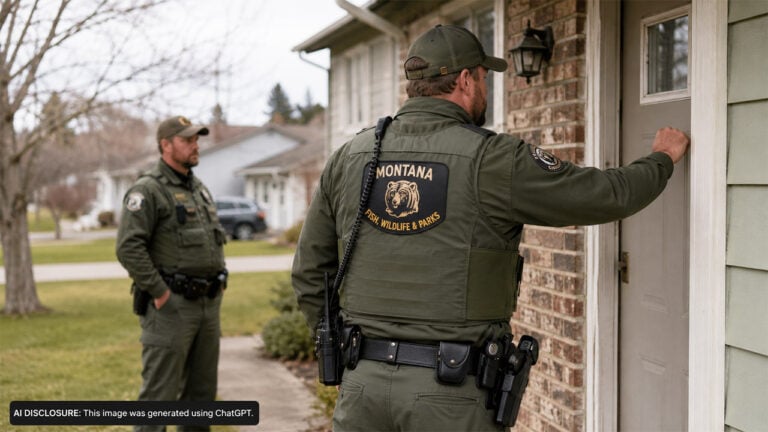
The landowner did what a lot of us would do first. He checked his gates and tire tracks, then walked to a spot where he could see into the timber without stepping onto the neighbor’s side. Through the brush he caught movement and the shape of blaze orange. That’s when he backed out and called police.
When the hunter showed up, the line between “mistake” and “trespass” got thin
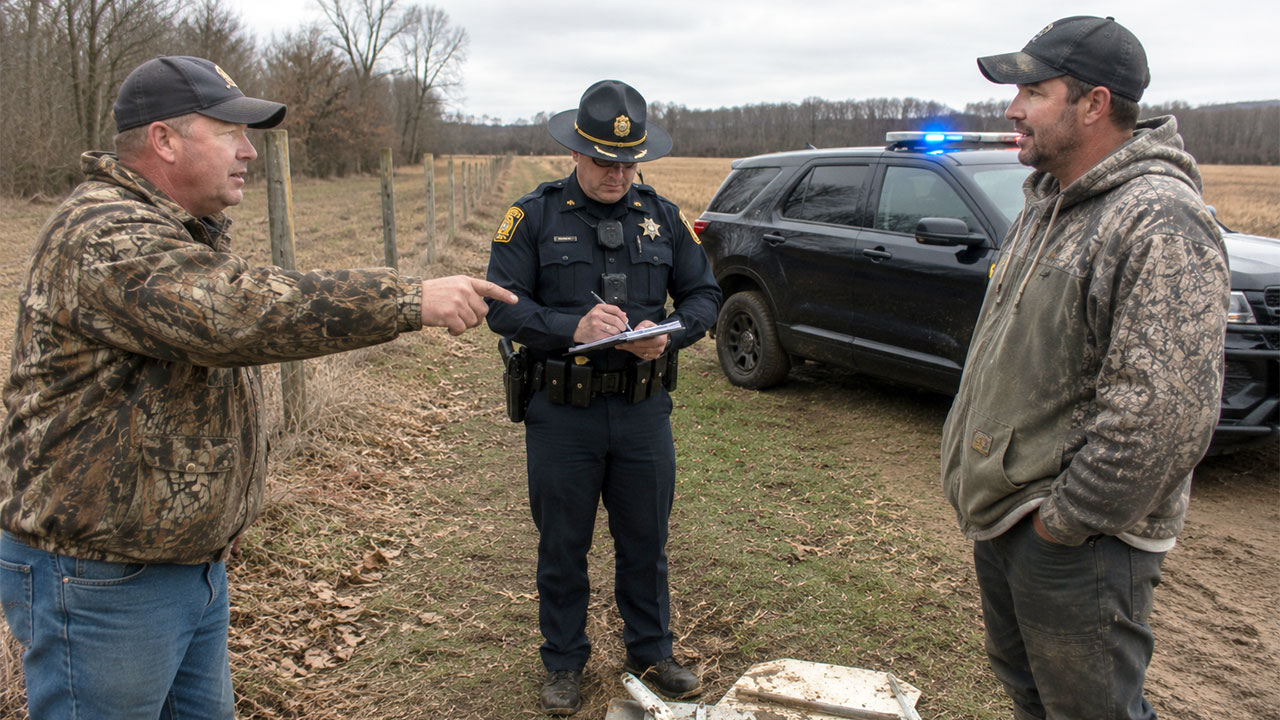
By the time an officer arrived, the hunter had stepped out near the edge of the field with a rifle slung and a small daypack. The landowner stayed back, kept his hands visible, and let the officer do the talking. Good move. Nothing good comes from a landowner and an armed hunter squaring up over a property line.
The hunter’s story was the one you hear a lot: he believed he was on public ground or had permission somewhere “close by,” and the signs he pulled down were “old” or “not right.” The landowner pointed at the staple holes and the fresh wood on the posts where the signs had been. They weren’t old.
At that point, the landowner expected the easy part—get the signs back, get the guy off the place, maybe a trespass warning. Instead, the conversation took a turn he didn’t see coming.
The officer treated the missing signs like a property dispute, not a criminal one
The landowner tried to explain that the postings were his personal property and that removing them was part of how the hunter got comfortable enough to keep hunting the area. The officer listened, looked at the boundary, and then focused on one thing: proof.
Not proof that the hunter was standing on the wrong side of the line—that was already tense enough. Proof that the landowner actually owned the signs that were taken down.
That’s where the landowner got hit with the kind of answer that makes rural people grind their teeth. The officer essentially told him that if he wanted anything done about the removed postings, he’d need to show the signs belonged to him, and that was on him to prove.
In the officer’s view, without the physical signs in hand or clear identification marks, it turned into a “he said, she said” situation over a few pieces of plastic and some staples. Meanwhile, the bigger point—the signs were removed to facilitate access—got shoved to the side.
What the landowner could actually document mattered more than what “everybody knew”
In deer country, everybody knows whose farm is whose. That doesn’t always translate to an officer on a roadside call, especially if the boundary isn’t fenced and the GPS map on a phone doesn’t match the deed.
The landowner did have some things going for him. He had photos on his phone from earlier in the season—posted signs visible on the same trees and posts. He had receipts from the farm store where he bought them in a bundle. And he had a simple hand-drawn boundary map he kept in his truck for when he talked to neighbors and lease hunters.
Those details didn’t magically turn the situation into an arrest. But they changed the tone. The officer took a closer look at the staple patterns, the fresh holes, and the direction of travel into the timber. The hunter’s confidence started to fade when it became clear there was at least some documentation behind the landowner’s complaint.
What it didn’t change was the main point the officer kept coming back to: removed signs are hard to treat like a clean theft case unless you can identify them. No serial numbers. No unique markings. Just common postings anyone can buy.
Commenters fixated on cameras, paint, and paper trails for one reason
When this kind of story makes the rounds in hunting circles, the same advice always floats to the top: trail cameras, boundary paint, and better documentation. Not because people love playing security guard, but because “common sense” doesn’t hold up well when an officer is trying to sort out two competing claims in the field.
A lot of outdoorsmen pointed out how easy it is to mark your postings in a way you can later identify. Initials on the back with a paint pen. A unique color dot in the corner. Photos of each posted location taken the day you hang them. It sounds like overkill until you’re standing there being told it’s your problem to prove the signs were yours.
Others brought up the value of clearly marked boundaries that don’t rely on one type of sign alone. In many states, boundary paint has specific legal meaning when applied correctly. When it does, it’s harder for someone to claim they “didn’t see anything,” and it’s harder for someone to erase your effort with a pocketknife and a handful of staples.
And then there were the folks who reminded everyone that local game wardens often handle hunting-related trespass differently than a patrol officer does. A warden might know the common access points, the history of complaints, and the regular offenders. That experience matters when lines get blurry.
The real risk wasn’t the plastic signs—it was what came next
Once postings start disappearing, the problem usually isn’t limited to a few missing rectangles of plastic. It turns into stands going up on the wrong side of the line, bait piles where they don’t belong, gut piles in places that make you wonder who’s been there, and vehicles cutting ruts through a wet field because somebody “didn’t think it was a big deal.”
The landowner’s biggest concern wasn’t the cost of replacing signs. It was safety and liability. When you’ve got family on the place, maybe a hired hand running equipment, and a stranger hunting where you don’t expect them, that’s when accidents happen. And when the first interaction is a confrontation, people make dumb decisions fast.
In this case, the officer did at least get the hunter to leave and issued a formal warning tied to the hunter’s identification. The landowner also insisted on walking the edge with the officer present to point out the boundary markers and where the postings had been removed. That created a basic record of the call, even if it didn’t satisfy the landowner’s sense of justice.
Back at home, he did what most landowners end up doing after a run-in like this: he bought another stack of signs, marked them on the back, took photos of each one as it went up, and moved a couple trail cameras to cover the likely entry routes. Not because he wanted more conflict, but because next time he wanted more than a feeling and a few staple holes.
It’s a frustrating lesson, but it’s a real one. In the field, “everybody knows” doesn’t carry the same weight as proof. If you don’t want your boundary enforcement to hinge on whether a stranger admits what he did, you’ve got to set yourself up to document it before the season heats up.
Like The Avid Outdoorsman’s content? Subscribe to our newsletter so you never miss an article.
Here’s more from us: