Photo credit: AI-generated image created using ChatGPT. Illustrative only
Living on a pond is one of those small blessings you don’t fully appreciate until somebody starts treating it like a public resource. One South Carolina homeowner says their neighborhood pond had been quiet and predictable for nearly a decade—five houses around it, everybody understanding the vibe—until a new older couple moved in and things changed fast.
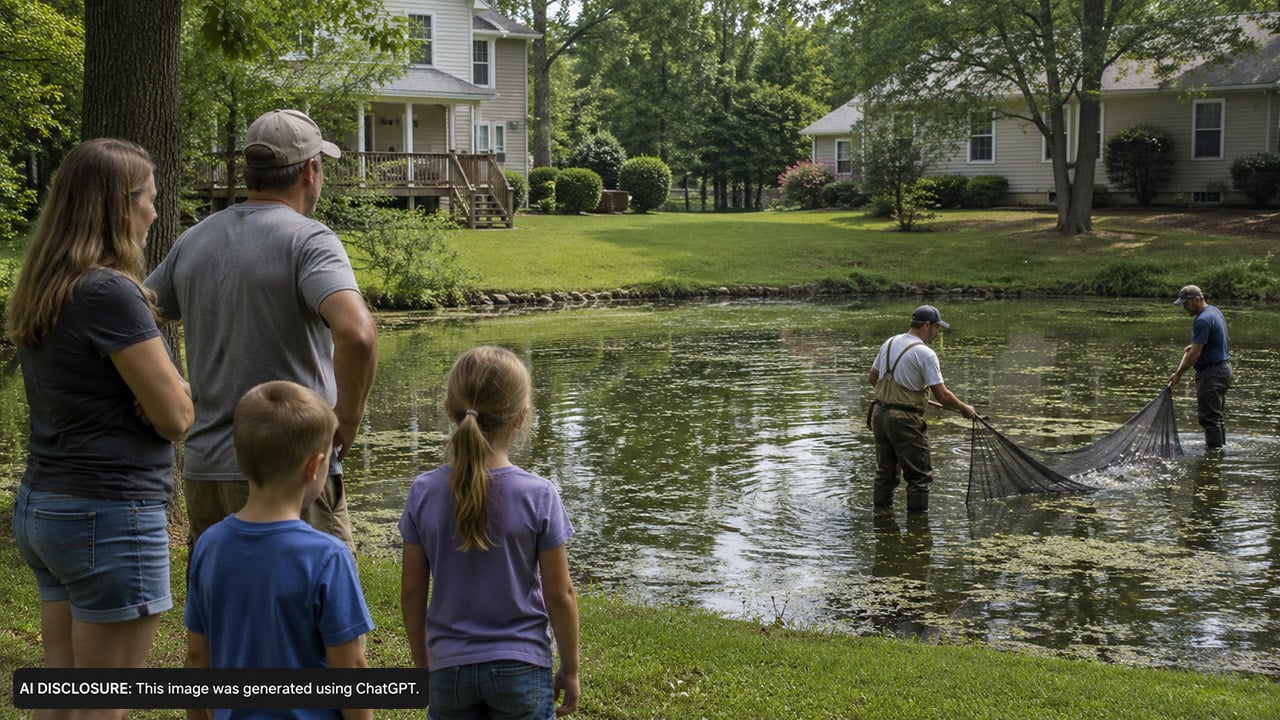
In the original post, the homeowner explains that the new neighbors’ adult children began throwing bread into the water and using a net to scoop up turtles. The first time they were confronted, they claimed they were “relocating the turtles.” A month later, the family says it was happening again—this time with the explanation that they wanted fewer turtles so they could “stock the pond with fish,” even though fish are already in the pond.
A shared pond arrangement worked—until it didn’t
The setup is common in a lot of newer developments and rural-edge neighborhoods: a pond behind multiple homes, used for drainage and stormwater, but enjoyed like a little community lake. Folks walk the bank, kids watch the bluegill beds in spring, and the turtles sun on logs like they own the place. Everybody kind of “shares” it, even if the deed lines and easements say something different.
This homeowner says they’ve lived there about nine years and their property line includes the majority of the pond. The neighbors, as they understand it, likely own the bank on the side where they live. That’s a recipe for confusion, because “owning the bank” feels like “owning the pond” to a lot of people—even when it’s not true.
Netting turtles turns a quiet dispute into a real problem
Feeding wildlife and catching turtles isn’t just a harmless hobby when it’s not your water—or when the pond is part of a stormwater system. Tossing bread draws in turtles, fish, ducks, and geese, and it can foul the water. And netting turtles is a step beyond “enjoying nature.” That’s removing animals from a habitat other neighbors value and may have rights to manage.
What makes this situation tense is that it didn’t stop after a conversation. The homeowner says they told the family they like the pond the way it is and asked them not to take turtles. A month later, the nets came back out. When folks ignore a direct request on something this straightforward, it usually means you’ll need more than a neighborly chat to fix it.
Retention ponds aren’t just “your fishing hole”
The homeowner adds an important detail: the pond is considered a retention pond. That matters, because retention ponds exist for drainage and stormwater control first, and “fun” is secondary. They may have HOA rules, city or county oversight, or maintenance responsibilities that limit what residents can do—even if the water is behind their house.
In practice, messing with a retention pond can create downstream issues. Feeding animals can increase nutrient load. Removing turtles can change the balance—turtles are scavengers and opportunistic feeders, and they’re part of the cleanup crew in a lot of ponds. And the “we want to stock fish” line can lead to more problems if someone starts dumping in fish without permission.
The HOA rulebook became the homeowner’s first lever
The homeowner says their HOA states that no one should be feeding fish or eating the fish in the ponds. That’s not an unusual rule. HOAs put those restrictions in place because feeding can cause water-quality complaints and fish kills, and harvesting can spark fights over “who owns what” in a neighborhood pond.
Instead of escalating face-to-face, the homeowner took pictures and sent them to the HOA hoping it would step in. That’s the right kind of move in a neighborhood setting—document it, stay calm, and push it through whatever process exists. It also creates a paper trail, which matters if the behavior keeps going.
What outdoorsmen zeroed in on: ownership, wildlife rules, and proof
Even without a long back-and-forth from other voices, the pressure points are obvious to anyone who’s dealt with property lines, hunting permission, or private-water disputes. The first question is always: who owns the water, who owns the bottom, and what does the plat say? “My property line owns the majority of the pond” is meaningful, but ponds can be tricky—there may be easements or shared maintenance agreements that don’t match what a person assumes from looking at a backyard.
The second issue is wildlife. Catching and “relocating” turtles sounds simple until you remember that taking wildlife can be regulated. Some turtle species are protected in certain places, and rules about capture, possession, and relocation can exist even when the animal comes from a neighborhood pond. If somebody is repeatedly removing wildlife, that’s the kind of thing that can get attention from the right office—especially if it’s being done with a net and transported off-site.
The third thing is proof. The homeowner already did one smart thing: photos. In these situations, details matter—dates, times, where they were standing, what exactly they were doing, and whether they were taking animals away or just handling them. Clear documentation makes it harder for anyone to shrug and say it’s just a misunderstanding.
Practical options that don’t involve a showdown
When it’s your pond—or mostly your pond—it’s tempting to march down there and put a stop to it. But if you’ve lived rural long enough, you know that direct confrontations can turn into long-term feuds, and nothing ruins enjoying your own property like an ongoing neighbor war.
What the homeowner is already doing—working through the HOA and keeping records—keeps it clean. If the HOA has a rule against feeding, that alone may give them authority to issue warnings or fines. And if the neighbors’ stated goal is changing the pond’s fish population, that’s another angle: unauthorized “management” of a shared retention pond is the kind of thing HOAs and property managers usually don’t like.
Beyond that, the next steps are typically administrative and boundaries-based: verifying the actual pond ownership and easements through the property documents, and asking the HOA (or whoever maintains the retention pond) what activities are allowed. If the pond is tied to stormwater infrastructure, there may be local ordinances or maintenance agreements that prohibit wildlife feeding or animal removal. None of that requires anybody to get loud at the water’s edge.
At the end of the day, a backyard pond is supposed to be a place you watch dragonflies and listen to frogs, not a place you feel like you need to stand guard. The homeowner’s best move is the one that keeps everyone safe and keeps the facts straight: document the activity, lean on the HOA rules already on the books, and get the actual ownership and pond-use restrictions nailed down before the turtle net turns into a bigger mess.
Like The Avid Outdoorsman’s content? Be sure to follow us.
Here’s more from us: