Photo credit: AI-generated image created using ChatGPT. Illustrative only
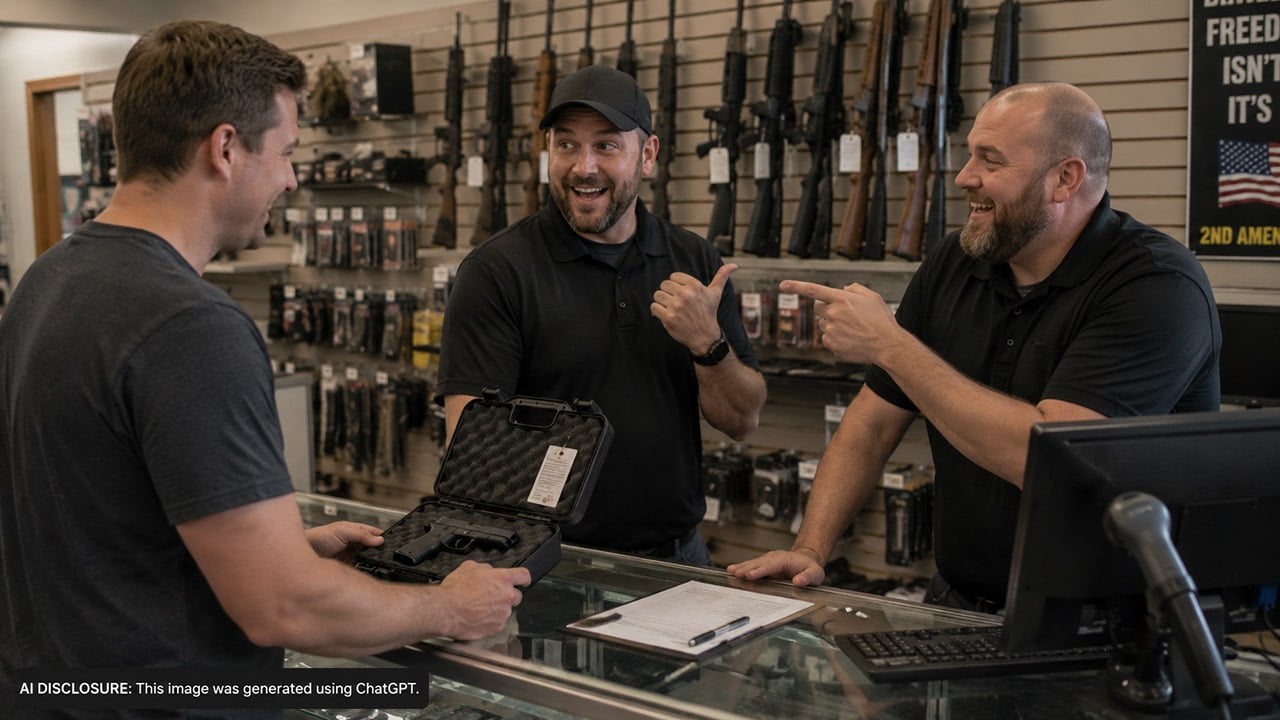
Anybody who’s done a few transfers knows the routine: a package shows up late, the shop logs it in, and you swing by the next day to do your paperwork and take it home. That’s why one gun owner did a double take when he walked into his local dealer to pick up a transfer and the employees were grinning like they’d been passing around a new toy.
In the original post, the customer said his transfer arrived late in the day, so he returned the following day to complete the pickup. At the counter, staff joked that one employee had been “drooling” over the firearm—and one of the older employees reportedly told that worker to go retrieve “the gun you took home last night.”
The moment that set off alarm bells at the counter
The customer didn’t describe a shouting match or an argument. It sounded more like that awkward, half-laughing moment where you’re trying to decide if people are joking, covering up, or just so comfortable they forgot what something sounds like to the guy who actually owns the gun.
On the buyer’s end, the concern is simple: if a firearm is transferred to a dealer for the purpose of a lawful handoff, it’s supposed to stay under that dealer’s control until the paperwork clears and the right person takes possession. When an employee jokes that it went home with him overnight, that doesn’t feel like “under control.” It feels like your property took a joyride.
Why this feels different than a normal “it’s in the back” delay
Most transfer hiccups are boring: the shipping box is still taped up, the serial hasn’t been logged yet, the person who does the books is out, or the shop is slammed. You might be annoyed, but you’re not worried about where the gun physically spent the night.
This is different because it pokes at two pressure points gun owners care about: custody and accountability. A transfer gun is in limbo—legally tied up in process, but still your purchase. If an employee can take it off premises, even as a “joke,” it raises questions about how tight their procedures really are when nobody’s watching.
Legality: what the poster said he learned after asking
The buyer’s main question was straightforward: “Is this legal?” He said he couldn’t find clear information and, regardless, he didn’t plan to use that dealer again for transfers.
In an update, he added an “ATF response” summary: it “might be a civil matter according to state law” but it “doesn’t break any of their rules or regulations.” In other words, from what he reported back, it didn’t sound like a slam-dunk federal enforcement issue based solely on that allegation.
That matters for folks who assume every sketchy-sounding gun-shop story automatically triggers a federal hammer. Sometimes the answer is messier: what’s smart, what’s professional, what’s store policy, and what’s actionable under state law don’t always line up neatly.
The bigger issue: trust, chain of custody, and safe storage
Even if you set “legal” aside for a second, the outdoorsman’s question becomes: would you hand that shop your business again? Transfers live and die on trust. The whole point of using a dealer is having a responsible middleman who logs inventory, keeps guns secure, and follows a repeatable process.
If an employee actually took a customer’s transfer gun home, you’re immediately into ugly possibilities. Was it stored securely overnight? Was it handled? Was it shown to a buddy? Did it leave the shop’s alarmed building and safes and end up in a vehicle? Even if nothing went wrong, that’s a lot of unnecessary risk stacked onto the customer for no good reason.
And if it was just joking, that’s still a problem—because it tells you the shop either doesn’t understand how it sounds, or doesn’t care. A gun counter isn’t a duck camp. Customers need confidence that the people behind that counter take custody seriously.
What other gun owners tend to focus on in situations like this
The customer later added that it “wasn’t that big of deal” to him and that the employees “probably were joking.” That’s a fair walk-back, especially if the vibe in the store was more teasing than confessing.
But gun folks tend to lock onto a few practical angles in stories like this. First: documentation. If you ever suspect mishandling of a transfer, you want to keep your receipt, shipping info, and any messages about arrival and pickup. Second: store procedure. A good dealer can explain how they log incoming firearms, where they store them, and who has access. If the answers are mushy, that’s information.
Third: your own comfort level. You’re not obligated to become a private investigator over a joke. But you also don’t have to reward sloppy professionalism. Plenty of shops run transfers like a tight ship—serial logged, tags on, locked up, and no cute comments about taking customer property home.
What you can actually do if a transfer shop gives you a bad feeling
In the real world, the cleanest move is often the simplest one: vote with your wallet. The poster already landed there—he said he wouldn’t use that dealer again for transfers. For most of us, that’s the right starting point. If a shop treats custody like a punchline, there’s always another FFL that won’t.
If you’re still mid-transfer and something feels off, stay calm and keep it professional. Ask direct questions: Was it logged in? Is it in the bound book? Where has it been stored since arrival? You’re not trying to pick a fight—you’re trying to verify that the shop is doing the basics right.
And if you truly believe a firearm was removed from the premises improperly, the poster’s update hints at the hard truth: it may turn into a state-law or civil issue depending on where you live, not necessarily a clear-cut federal violation. That’s when it becomes worth reading your state rules, and—if it’s serious—talking to an attorney rather than relying on counter talk.
At the end of the day, a transfer is supposed to be the boring part of buying a gun. When employees start joking about a customer’s firearm spending the night at somebody’s house, even in fun, it’s a sign to find a dealer that treats other people’s property—and the responsibility that comes with it—like it matters.
Like The Avid Outdoorsman’s content? Be sure to follow us.
Here’s more from us: