Photo credit: The Avid Outdoorsman
The driver did not describe it like some dramatic gunfight or split-second emergency.
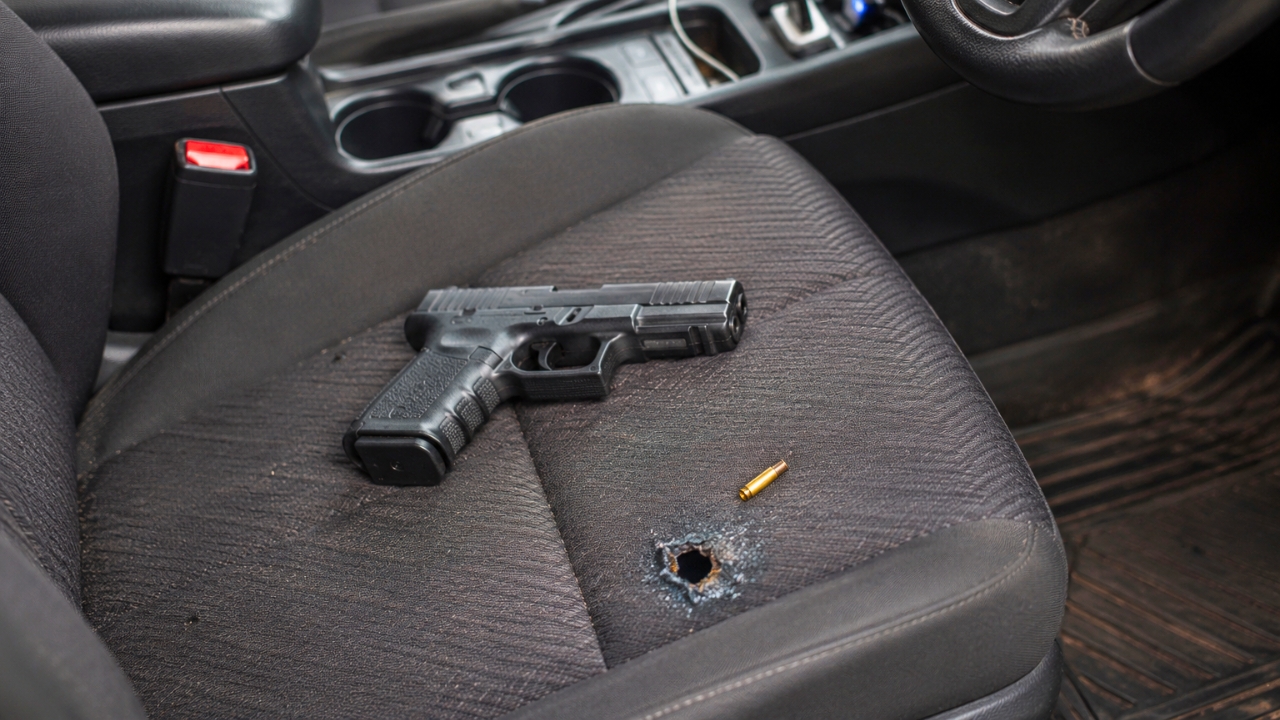
It happened in a car.
That alone is enough to make any concealed carrier wince, because cars are where a lot of bad gun-handling habits finally show themselves. Tight space, awkward angles, seatbelts, console edges, steering wheel, clothing bunched up, holsters shifted around, and nowhere for a mistake to go safely.
In a Reddit post, the gun owner said he had his first accidental discharge in his vehicle. The post set off exactly the kind of reaction you would expect from people who carry every day, because a negligent discharge in a car is one of those mistakes that can be embarrassing, expensive, dangerous, and very hard to explain.
A lot of people use the phrase “accidental discharge,” but gun owners tend to be picky about it. If the firearm had a true mechanical failure, that is one thing. If a person’s finger, clothing, holster, drawstring, or handling mistake pressed the trigger, most commenters are going to call it negligent instead.
And that distinction matters.
The driver’s situation seemed to come down to habit. Something about the way he handled the gun in or around the vehicle created the opening for the shot. That is why Reddit tore into the routine more than the gun itself. The firearm did what firearms do when the trigger gets pressed. The real question was why the trigger was able to get pressed in the first place.
Cars are bad places to be casual with a loaded gun. People unholster because the gun is uncomfortable while driving. They put it in a cup holder, door pocket, console, under a thigh, between the seat and center console, or in some little vehicle mount they trust more than they should. Then they move around, reach for something, get tangled in clothing, or try to reholster while seated.
That is where the danger comes in.
Reholstering in a car can be especially risky. You are bent at a weird angle, maybe looking down, maybe trying not to point the muzzle somewhere terrible, maybe fighting a cover garment or seatbelt. If anything gets into the trigger guard, the car becomes the backstop. And a car is full of things you do not want a bullet entering: legs, feet, fuel lines, electronics, passengers, other vehicles, houses, parking lots.
A shot inside a vehicle is loud, violent, and instantly sobering.
Even if nobody is hurt, the aftermath is ugly. There may be a hole in the floorboard, seat, door, console, or windshield. There may be police questions. There may be insurance issues. There may be a passenger who never wants to ride with you again. And if the round leaves the vehicle, now the problem is much bigger than a ruined floor mat.
That is probably why commenters were so direct. A car discharge is not something people want softened into “oops.” It is a warning that a process failed.
The lesson most carriers took from stories like this is simple: the gun should stay in the holster unless there is a real reason to remove it. If the holster is uncomfortable in the car, fix the holster, belt, position, or gun. Do not create a daily routine where a loaded pistol gets handled more than necessary in a cramped driver’s seat.
Every extra administrative handling step adds risk.
Taking the gun off before driving. Putting it somewhere else. Moving it when you get out. Reholstering before walking into a store. Unholstering again when you return. Each step may feel normal after a while, but repetition can make people sloppy. The tenth time is careful. The hundredth time gets casual. The one time clothing catches or a finger slips, the gun fires.
That seems to be the habit Reddit was really reacting to.
The driver’s post is useful because it hits a carry problem that does not get as much attention as printing or holster choice. A gun can be perfectly safe sitting in a proper holster. The danger often starts when people keep moving it around.
The better routine is boring. Holster the gun before leaving home. Keep it holstered. If you need to take it off, remove the whole holster if possible. Avoid loose storage in the vehicle. Avoid reholstering while seated unless you can do it safely and deliberately. Keep fingers nowhere near the trigger. Slow down.
That last one is the hard part. Slow down.
A lot of negligent discharges happen because someone is doing a familiar thing too fast. They assume they have done it a thousand times. They stop paying full attention. The gun becomes part of the routine instead of the serious tool it is. Then the loudest reminder possible goes off in a place where it never should have.
For this driver, the car became the classroom. And once you have a gun go off inside a vehicle, the lesson probably sticks for life.
Commenters were not very forgiving, but most of the criticism was aimed at preventing the next one.
A lot of people said the first rule is to stop handling the gun unnecessarily in the car. If the pistol is in a good holster, leave it there. If the carry position does not work while driving, change the setup instead of constantly removing and replacing the gun.
Several commenters focused on reholstering. They said reholstering should be slow, deliberate, and preferably done where you can see what you are doing. Clothing, drawstrings, seatbelts, and awkward body angles can all create problems. In a vehicle, those problems stack up fast.
Others pushed back on the phrase “accidental discharge.” To them, if the trigger was pressed through handling error, it was negligent. That may sound harsh, but the point was accountability. Calling it an accident can make it feel like bad luck, when the safer lesson is to identify the exact mistake and eliminate it.
Some commenters also brought up vehicle storage. Cup holders, consoles, seat gaps, door pockets, and loose bags are not proper holsters. If a gun is going to be off-body or stored in a vehicle, it needs to be secured in a way that protects the trigger and keeps it from shifting around.
The clearest advice was simple: build a routine that keeps the loaded gun controlled and boring. The less you handle it in tight spaces, the fewer chances you give a small mistake to become a gunshot.