Photo credit: AI-generated image created using ChatGPT. Illustrative only
A scoped Ruger Super Redhawk in .44 Mag is the kind of revolver you don’t just “forget about.” It’s heavy, loud, and built for serious work—backcountry defense, hogs, and the kind of range days where you want to feel every ounce of recoil and grin anyway.
But in the original post, a Houston-area gun owner says his legally purchased Super Redhawk was seized from a friend’s house during an unrelated domestic call, and he’s been stuck in a maze of delays ever since—even though he says he’d checked the gun’s status with police before buying it.
A boxed-up revolver became a magnet during a domestic arrest
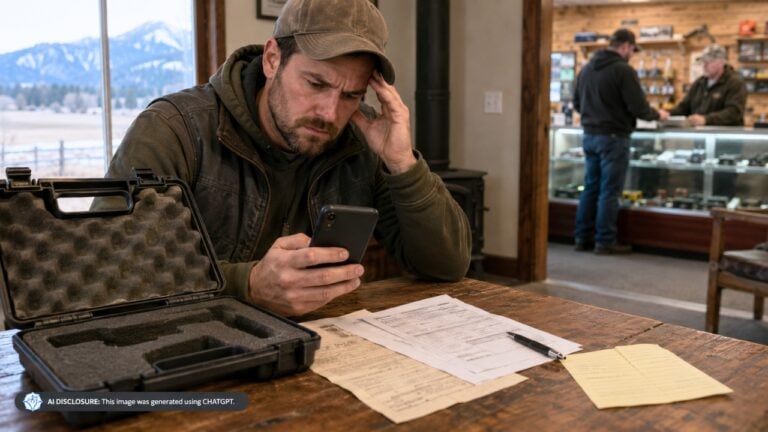
The gun owner said he was visiting a friend and had the revolver with him, secured in its box. While he was out buying groceries, his friend and the friend’s wife got into a heated argument. Police were called, and the friend was arrested on an allegation that he hit his wife.
According to the account, the revolver case was in plain view inside the house, and officers took an interest in it while they were on scene. The owner wasn’t there when they arrived—his wife was—so the gun ended up being part of what officers encountered during a high-emotion call where everything gets scrutinized.
“Reported stolen” didn’t match what he’d already verified
After opening the case, the officers reportedly ran the serial number and told the owner it came back as stolen. That’s the kind of moment that flips your stomach, especially if you’re the type who tries to do things the right way.
He said he’d bought the revolver just weeks earlier from a friend and had checked with his local police department before purchasing. At that time, he says he was told it wasn’t stolen. So hearing “stolen” on the spot, from a different set of officers, didn’t make sense—and the officers reportedly weren’t interested in hearing the backstory.
The seizure happened either way, and that’s what rattled him
One detail from his write-up is what will catch the attention of a lot of gun owners: he says officers told him they would have seized the revolver regardless of whether it was stolen, simply because they were responding to a domestic dispute call.
That’s a hard pill to swallow if you’re not the person being arrested and you’re not the subject of the call. Plenty of outdoorsmen have been in that position—your gear is nearby when something goes sideways, and suddenly you’re trying to prove you’re not part of it. In his case, the revolver wasn’t on his friend’s hip; it was boxed up. It still got swept into the incident.
He did what responsible gun owners do: documented ownership
To his credit, he didn’t just get mad and start yelling into the wind. He took down the officer’s name, badge number, and the case number, and he started gathering paperwork.
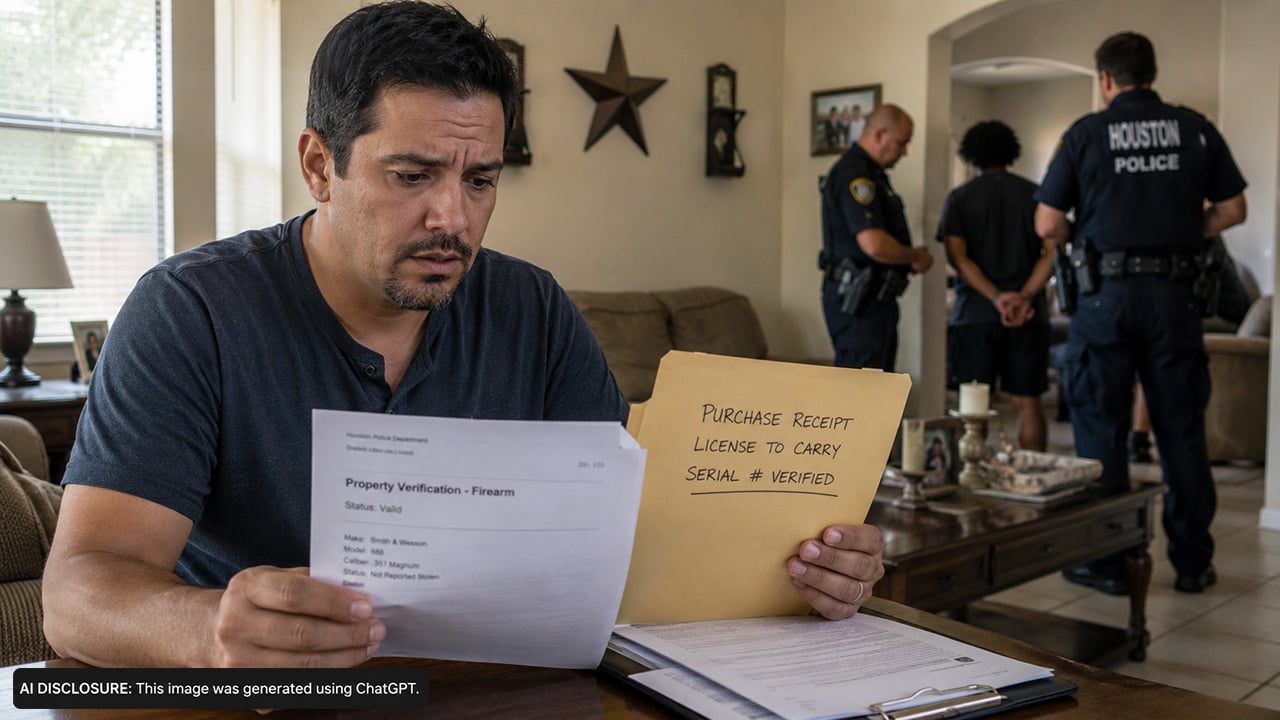
He said he collected a bill of sale from the friend he purchased it from, plus bills of sale from the prior two owners to show the chain of ownership going back roughly three years. He also stated the revolver was originally purchased new around 2–3 years ago. That’s more documentation than most private-party gun sales ever see, and it’s exactly what you want in your back pocket when something gets questioned.
The “call this unit” shuffle is where things bogged down
After being told to contact the department on a weekday (the seizure happened on a Saturday), he said he began calling and ran into stalling and handoffs. He’d reference the case number and get told, essentially, “I don’t deal with weapons,” or “You need to call another department.”
He also said that when he brought up his paperwork and argued he should at least get a hearing before a judge if they were going to keep his gun, he felt ignored. Instead, he was told the gun had to be checked by a firearms lab and the ATF before it could be released, and that the process could take a long time with no clear timeline.
He was directed to an automated “firearms release line” and told he’d get a call back after the checks were completed. In the meantime, he worried about the scenario every gun owner hates: that the gun would “go missing” in an evidence room, or that officials were simply waiting him out until he stopped calling.
What other gun owners tend to focus on in situations like this
The poster said he contacted the NRA and was told, in plain terms, to get a lawyer. That advice is common in property-seizure situations because once a firearm is logged as evidence or held for investigation, the path to getting it back often isn’t just a friendly phone call.
Even without seeing a stack of comments, you can predict what experienced folks will zero in on: documentation, persistence, and making the agency answer in writing. The owner already did the smartest “prepper” move—paperwork—by assembling bills of sale and a chain of ownership. The next step many would consider is formalizing the request so it doesn’t live and die by who answers the phone that day.
There’s also a practical, outdoorsman-grade lesson here: if you bring a firearm to someone else’s house—especially if there’s any chance of drama, alcohol, or a volatile relationship—keep it discreet, locked up, and under your control. The owner believed the gun was safer in the house than in his car while he ran to the store, and that’s a reasonable thought. But once law enforcement is inside a home for a domestic call, “plain view” can turn into “now it’s our problem,” fast.
None of that makes the situation feel fair. It’s just the reality of how quickly circumstances can change when you’re not the focus of an investigation but your property is close enough to get caught in the net.
If there’s a silver lining, it’s that he’s already taken the kinds of steps that keep a bad day from becoming permanent: he recorded the officer details, kept case information, and gathered a clean paper trail. For anyone who owns guns—whether it’s a deer rifle, a duck shotgun, or a big-bore revolver—this is a reminder that “doing everything right” sometimes still means you may have to fight to get your own property back.
Like The Avid Outdoorsman’s content? Be sure to follow us.
Here’s more from us: