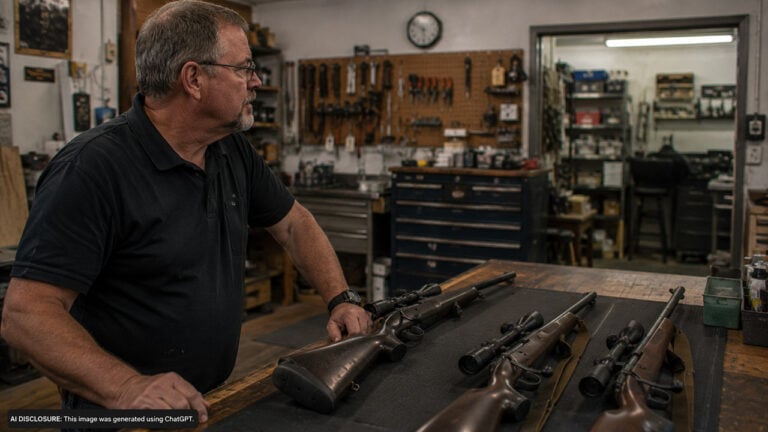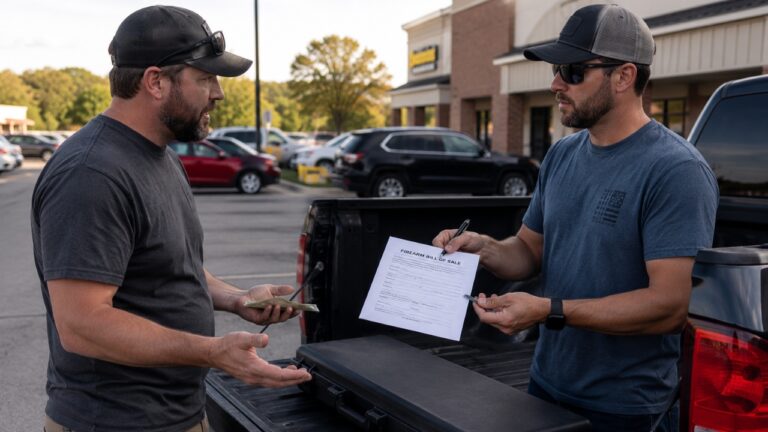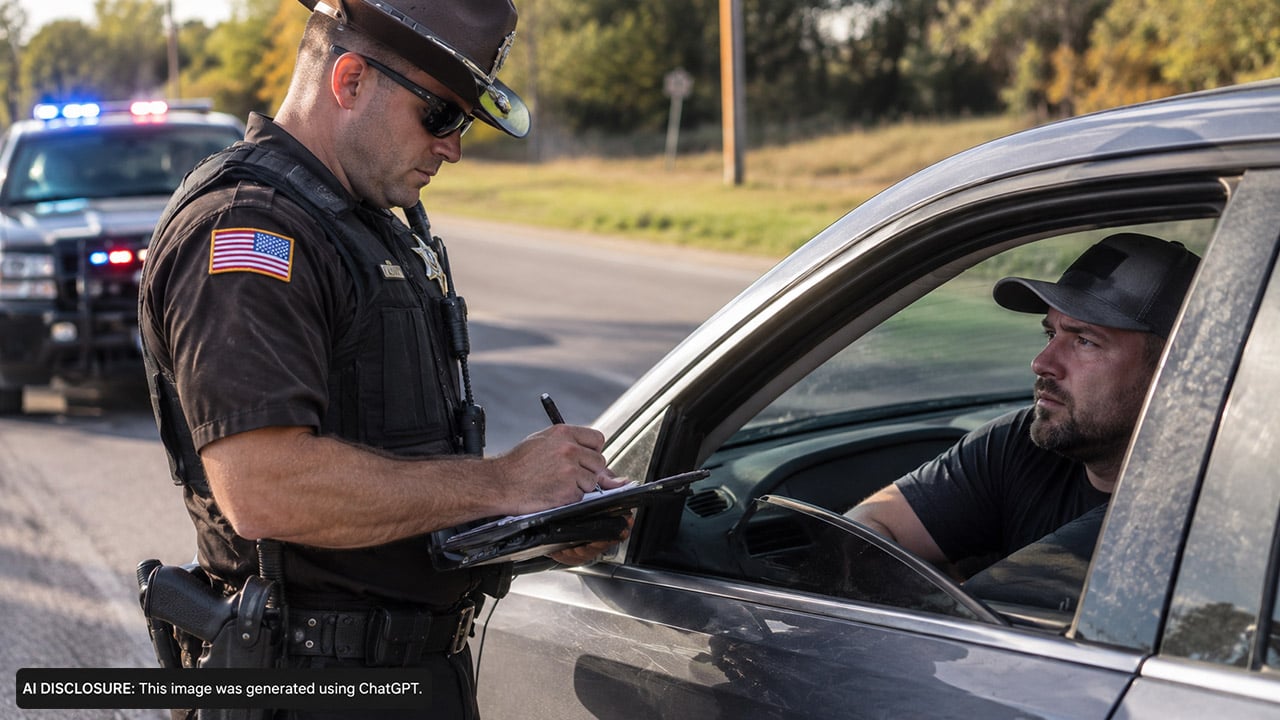
Photo credit: AI-generated image created using ChatGPT. Illustrative only
Most gun owners figure if they do the right thing—call the police, give a statement, hand over serial numbers—then the system will at least put the firearm in the right database. An Illinois gun owner learned the hard way that isn’t always how it plays out.
In the discussion, he explained that a firearm was stolen from him about four years earlier. Police reportedly came to his house, took statements, and did what he believed was a full investigation. Then, about six months after the theft, the Illinois State Police recovered the gun during a traffic stop—only for him to later find out it wasn’t listed as stolen when it was recovered, and apparently wasn’t listed as stolen in the ATF database either.
The gun was recovered, but the paperwork didn’t match reality
On paper, this should’ve been a clean win: stolen gun gets recovered, serial number comes back hot, property gets returned. Instead, the owner said he received a call back from an officer in charge of destroying guns for the state police, and that’s when the story took a turn.
When they reviewed the original case, he was told the field report from the traffic stop where the gun was recovered did not list his firearm as stolen. That’s the kind of sentence that makes any responsible gun owner’s stomach drop—because it means a stolen firearm may have been treated like just another gun found in a vehicle, not evidence tied to a theft report.
When the serial number got run, the “stolen” status wasn’t there
The owner said the same officer ran a known stolen firearm through the ATF database and it came back as stolen. Then the officer ran the owner’s firearm serial number through the exact same database, and it showed no knowledge that it was stolen.
That gap is the whole problem. If the gun isn’t flagged as stolen in the systems officers actually use, it can slip through routine checks, get transferred, get sold, or get destroyed without anyone connecting it back to the rightful owner. And for the original victim, it creates a bad situation: your property was taken, then later recovered, and the system still doesn’t show what you already lived through.
For gun owners, the real-world consequences can be serious
Out in the real world, stolen-gun reporting isn’t just “paperwork.” It’s what separates a recoverable firearm from one that disappears into the cracks. It’s what helps an officer at a traffic stop make sense of what they’re seeing when they run a gun.
It also matters for you. If your stolen gun later turns up tied to some other incident, you want a clear record showing you reported it stolen when it happened. The owner here believed that record existed—police came out, took statements, investigated—yet the serial number apparently didn’t end up where it needed to be for later checks.
And then there’s the part that makes folks mad: the call came from someone involved with destroying guns. When a firearm is sitting in a “to be destroyed” pipeline, you’re past the point of inconvenience. You’re into the territory where a clerical mistake can permanently erase your chance of getting your property back.
The legal answer was blunt: file the stolen report now
A lawyer who responded called it what it looked like: “Obviously it was a police mistake.” Her advice was plain, too—she said it won’t hurt to file the stolen report now.
That might sound almost too simple for how tangled this feels, but it’s practical. If the firearm still isn’t properly entered as stolen, getting it reported correctly is a starting point for straightening out everything downstream—especially if the gun is still in government custody and being handled as if nobody’s looking for it.
From an outdoorsman’s perspective, it’s another reminder that the “I reported it” moment should include follow-through. Not in a paranoid way—just in the same way you double-check your trail cam card or make sure your license is in your pocket before you leave the truck. Systems fail. People miss steps.
What gun owners can take from this: document, verify, and don’t assume
The details in this situation point to a basic lesson: a report being taken is not the same thing as a firearm being properly entered and discoverable when an officer runs the serial number later. If you ever have the misfortune of dealing with a stolen firearm, keep your serial number records, keep any case number you’re given, and keep notes on who you spoke with and when.
It also makes sense to stay engaged if you get a call from an agency about your firearm—especially if the conversation involves destruction, forfeiture, or “property room” procedures. The owner here learned about the missing “stolen” listing only because someone took the time to review the original case alongside him. Without that, it’s easy to imagine the firearm being processed and disposed of without the database ever telling the true story.
At the end of the day, this wasn’t a cautionary tale about doing the right thing—it was about not stopping at the first step. When you’ve got a stolen gun out there, your best protection is a clean, verifiable paper trail. If that trail doesn’t exist when the gun is recovered, you can wind up in the worst kind of limbo: the gun is found, but officially, it was never missing.
Like The Avid Outdoorsman’s content? Subscribe to our newsletter so you never miss an article.
Here’s more from us: