Photo credit: AI-generated image created using ChatGPT. Illustrative only
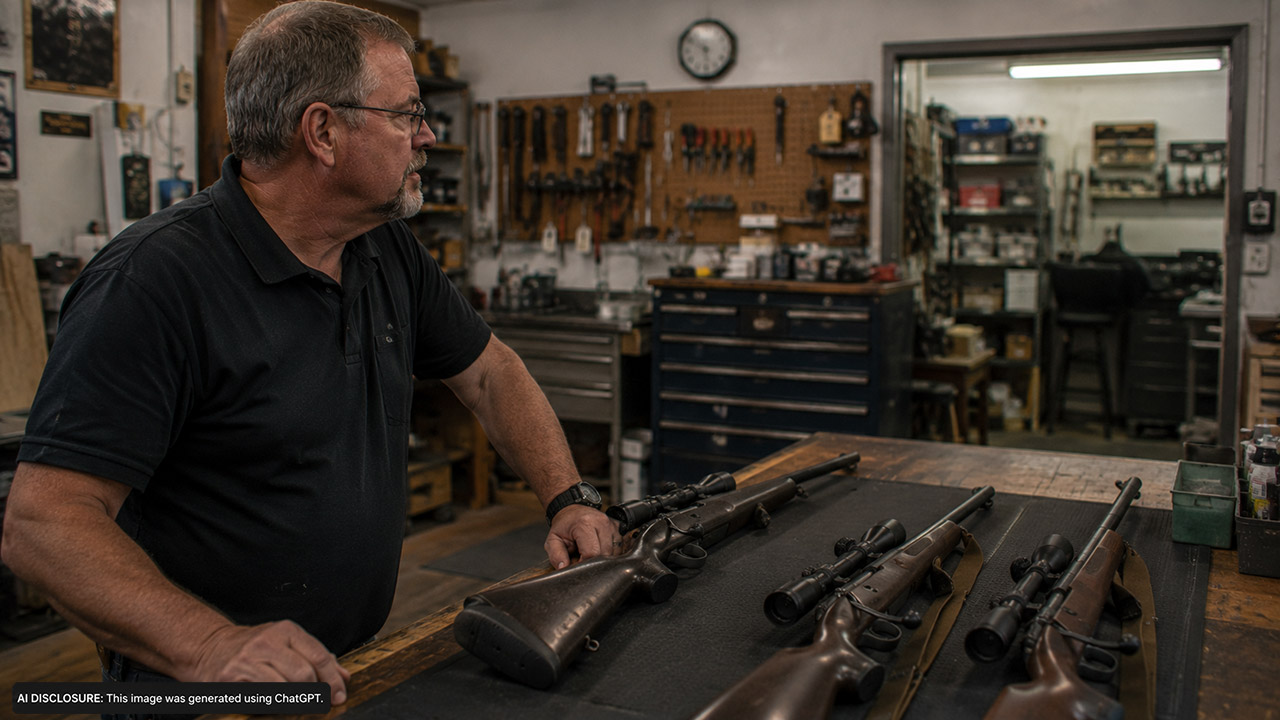
A small gun shop can feel like a tidy workshop one day and a jammed-up storage unit the next. One minute you’ve got projects moving across the bench, the next you’ve got somebody else’s firearms sitting in the corner month after month—taking up space, tying up time, and raising a question nobody wants to answer the hard way: when does “customer property” become “unclaimed property”?
That’s the spot an Alabama FFL found himself in after doing side-work as a gunsmith. He said a customer dropped off two guns for repair, the work got done, and then the customer essentially disappeared. The shop owner reported repeatedly reaching out over several months, warning about storage fees, and even telling the customer the guns could be sold to cover what was owed. The customer kept saying he’d come pick them up, but never followed through. You can read the details in the original post.
Two repaired guns, zero pickup, and a shop that’s out of room
Anybody who’s spent time around a real working gun counter knows space matters. A “small shop” isn’t just a description—it’s a hard limit. There’s only so much room for racks, parts bins, customer paperwork, and work-in-progress projects, and firearms aren’t like a lawnmower you can shove behind the shed and forget about.
According to the shop owner, the customer’s two firearms have been sitting there for months. The owner has contacted him “numerous times,” and the response hasn’t been outright refusal. It’s been the kind of delay that stringers you along: the customer says he’ll come get them, then goes quiet again.
Storage fees sound simple—until you try to enforce them
Most outdoorsmen understand the fairness of storage fees. If you tie up a man’s time, parts, bench space, and safe storage, there ought to be a cost when you don’t pick up your gear. The owner said he warned the customer that storage fees would be charged and that the guns could be sold to cover those fees.
The snag is that “I told him” and “it’s in writing” are two very different things when money and firearms are involved. In the real world, if the customer decides to get mad later, it’s not hard to imagine him claiming he never agreed to storage terms, never got proper notice, or didn’t understand the consequences. That’s how a simple shop policy turns into a headache you didn’t budget time for.
Selling a customer’s guns isn’t just business—it can look like theft if you do it wrong
The owner’s big worry wasn’t whether he can sell guns in general—he has an FFL and can lawfully transfer firearms in the normal course of business. His concern was whether selling these particular guns, which were brought in for repair by a specific customer, could expose him to theft allegations or a civil lawsuit for the value of the firearms.
That’s a fair concern. In most folks’ minds, there’s a clear line between “inventory” and “somebody else’s property.” Even if you’re owed money for labor, parts, and storage, you don’t want to be the guy who sells a firearm and then has a former customer show up acting like you stole it. Firearms also bring extra scrutiny—especially if a former owner later claims the gun was taken or improperly disposed of.
And from a practical standpoint, selling used guns to “cover fees” can create its own disputes. What if the gun sells for more than what’s owed? What if it sells for less and the owner claims you didn’t try hard enough to get fair value? If you don’t have a paper trail and a process, you’re leaving yourself open.
The paper trail matters as much as the work on the bench
Gunsmithing is hands-on, but this situation is paperwork-heavy. When a customer drops off firearms for repair, the smartest shops treat that intake like a contract moment: a work order that lists the firearms, states the estimates/authorization, and lays out pickup deadlines, storage fees, and what happens if the customer abandons property.
That’s not “being difficult.” That’s protecting the shop and the customer. It also keeps expectations clear. If the customer knows in black and white that after X days the shop starts charging storage, and after Y days the shop begins an abandonment process, you avoid a lot of the “I didn’t know” games.
The owner in this case made verbal warnings and attempted contact over months, which shows good faith. But when it comes time to actually sell or dispose of a customer’s firearm, good faith isn’t always what decides whether you get dragged into an expensive mess. Documentation does.
What people tend to focus on in situations like this
When gun owners talk about abandoned firearms at a repair shop, the conversation usually goes straight to two things: state law and written notice. Alabama has its own rules, and on top of that you’ve got the practical side of being an FFL handling firearms that aren’t yours.
In situations like the one described, people generally urge shop owners to avoid “just selling it” based solely on a verbal warning. The safer route is typically a clear, trackable notice process—something like certified mail—and following whatever state procedures apply to abandoned property or a mechanic’s lien-style claim for unpaid labor and storage. That’s the kind of step that feels slow when you’re tripping over somebody’s rifle cases, but it’s often what keeps a shop from being accused of wrongdoing later.
Another point that comes up a lot: even if you can legally sell, you still want a clean chain of records. For an FFL, that means handling any disposition the way you’d handle any other firearm transfer and keeping your books tight. The moment a gun is in a gray area, your recordkeeping becomes your best friend.
The common-sense path for shops stuck holding firearms
Out in the country, we like to solve problems with a handshake and a straight conversation. Most of the time, that works. But when a customer stops showing up and the property in question is a pair of firearms, it’s worth slowing down and doing it by the book.
That usually means two things at once: keep trying to contact the customer in a way you can prove, and get professional guidance on the proper Alabama procedure before you sell anything. A quick consult costs money, but it can be cheaper than defending yourself against claims of theft or paying damages because you skipped a required step.
On the front end, it’s also a reminder for every gunsmith and small shop owner: have your drop-off paperwork dialed in. Spell out storage fees. Spell out pickup timelines. Spell out what “abandoned” means in your shop. Most decent customers will never test it—but the one who does can clog up your operation for months.
For hunters and shooters, there’s a lesson on the other side of the counter too. If you drop off a firearm for work, pick it up. If money’s tight, talk to the shop. Leaving guns in limbo doesn’t just inconvenience somebody—it creates real legal and safety complications that can bite everyone involved.
Like The Avid Outdoorsman’s content? Subscribe to our newsletter so you never miss an article.
Here’s more from us: