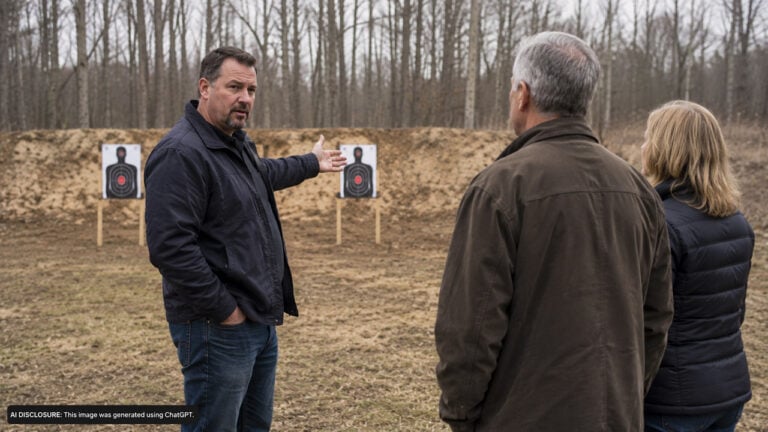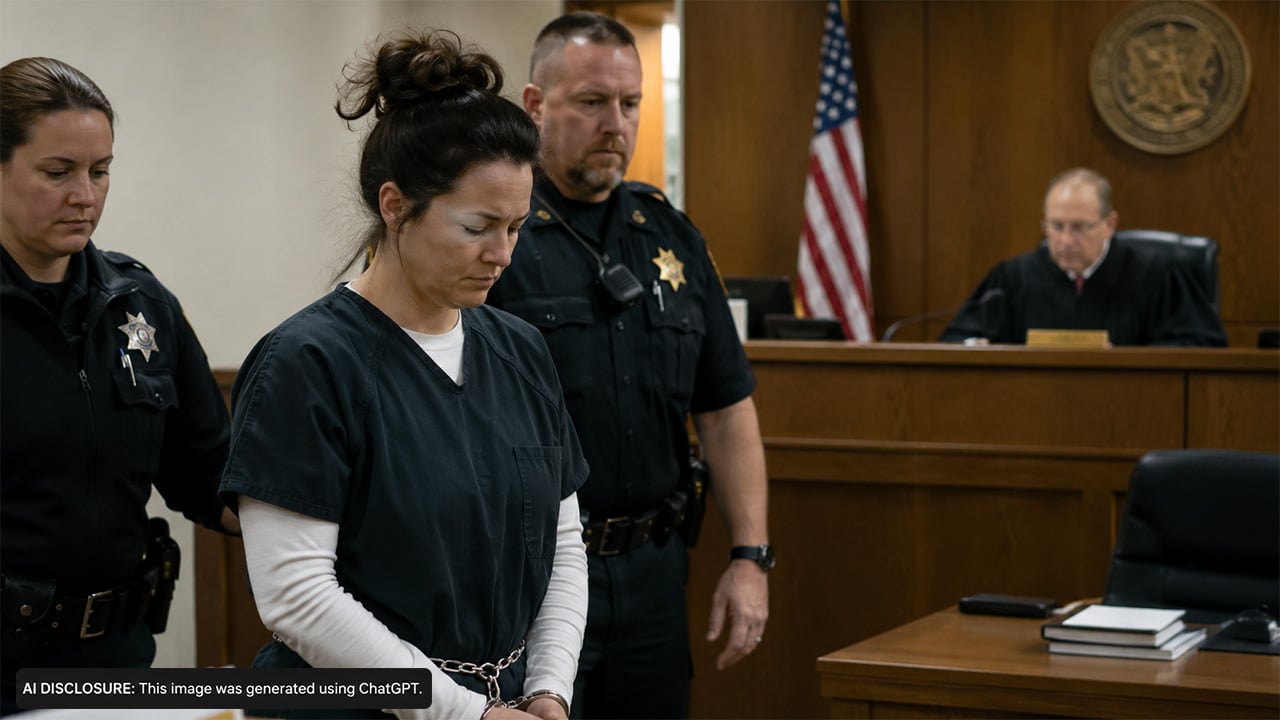
Photo credit: AI-generated image created using ChatGPT. Illustrative only
Most folks who hunt, shoot, or keep a firearm around the house understand the paperwork side of the gun counter is part of the deal. The forms aren’t “just forms.” They’re the line between a lawful purchase and a federal case.
That line is exactly what a 29-year-old Illinois woman crossed over a span of years, and it ended with an 18-month federal prison sentence. The details were laid out in the source post from the U.S. Attorney’s Office for the Northern District of Iowa.
A long stretch of bad decisions, one purchase at a time
Federal prosecutors say Daniella Maldonado-Paraday, of Palos Hills, Illinois, bought multiple firearms from 2021 through 2024 for her boyfriend, who was a convicted felon and legally barred from possessing guns. That’s the classic setup for a straw purchase: one person with a clean-enough path to buy, buying for someone who can’t.
If you’ve spent time in gun shops, you’ve heard clerks warn people about it in plain language. “If you’re buying it for someone else, don’t.” The reason is simple: the law wants the actual intended possessor to be the actual buyer going through the background check and paperwork.
The false statement that turned it into a federal charge
Maldonado-Paraday ultimately pleaded guilty on December 4, 2024, to making a false statement during the purchase of a firearm. The government also stated she was a drug user but represented during firearm purchases that she was not an unlawful user of marijuana.
Outdoorsmen tend to think of trouble as something that comes from one big mistake. But cases like this usually hinge on paperwork and a single bad “yes/no” answer. Once you lie on a firearm transaction, you’re not in the realm of “oops” anymore. You’re in the realm of a federal felony.
Sentencing: 18 months inside, then three years on paper
On April 15, 2025, United States District Court Chief Judge C.J. Williams sentenced Maldonado-Paraday in Cedar Rapids to 18 months in federal prison. After that, she’ll serve three years of supervised release.
One detail a lot of folks don’t fully grasp until it’s too late: the federal system doesn’t have parole. When a federal judge hands down time, you should assume you’re serving it, and then you’re still answering to conditions on the back end.
Why this matters to everyday gun owners who do things the right way
There’s a temptation to treat straw purchases like “paperwork crimes” that don’t affect anyone else. But in the real world, they’re a direct pipeline to putting firearms in the hands of prohibited people—felons, domestic abusers, and others who can’t lawfully possess them.
For responsible gun owners, this is also how the screws get tightened on everyone. Every time guns are bought this way, it fuels the argument that lawful buyers can’t be trusted, that private ownership needs more restrictions, and that the good folks should pay for the actions of the careless ones.
And if you’re thinking, “Well, that’s city stuff,” consider how often rural families buy guns as gifts, or pick something up for a spouse who’s working late, or try to handle a purchase “for” someone else. The safe rule is simple: the actual owner should be the one filling out the forms and taking possession, every time.
The investigation was built by local cops, troopers, and ATF working together
The case was investigated by the Cedar Rapids Police Department, the Marion Police Department, the Iowa State Patrol, and the Bureau of Alcohol, Tobacco, Firearms and Explosives. It was prosecuted by Assistant U.S. Attorney Nicole L. Nagin.
That mix of agencies is worth noting. Straw purchases don’t always stay “local,” especially when guns and people cross state lines or bounce between jurisdictions. When multiple agencies lean in, it usually means they’re looking at patterns—repeated purchases, repeated lies, and a prohibited person connected to the guns.
The U.S. Attorney’s Office also tied the case to Project Safe Neighborhoods, a Department of Justice program focused on reducing violent crime and gun violence. Whether you love those initiatives or hate them, the takeaway is practical: these are the kinds of cases that get prioritized, and they’re treated seriously.
For the rest of us, it’s another reminder that the simplest way to stay out of trouble is also the most old-fashioned: buy your own guns, answer honestly, don’t “help out” someone who can’t pass the check, and don’t gamble your future on somebody else’s bad situation.
Like The Avid Outdoorsman’s content? Subscribe to our newsletter so you never miss an article.
Here’s more from us: