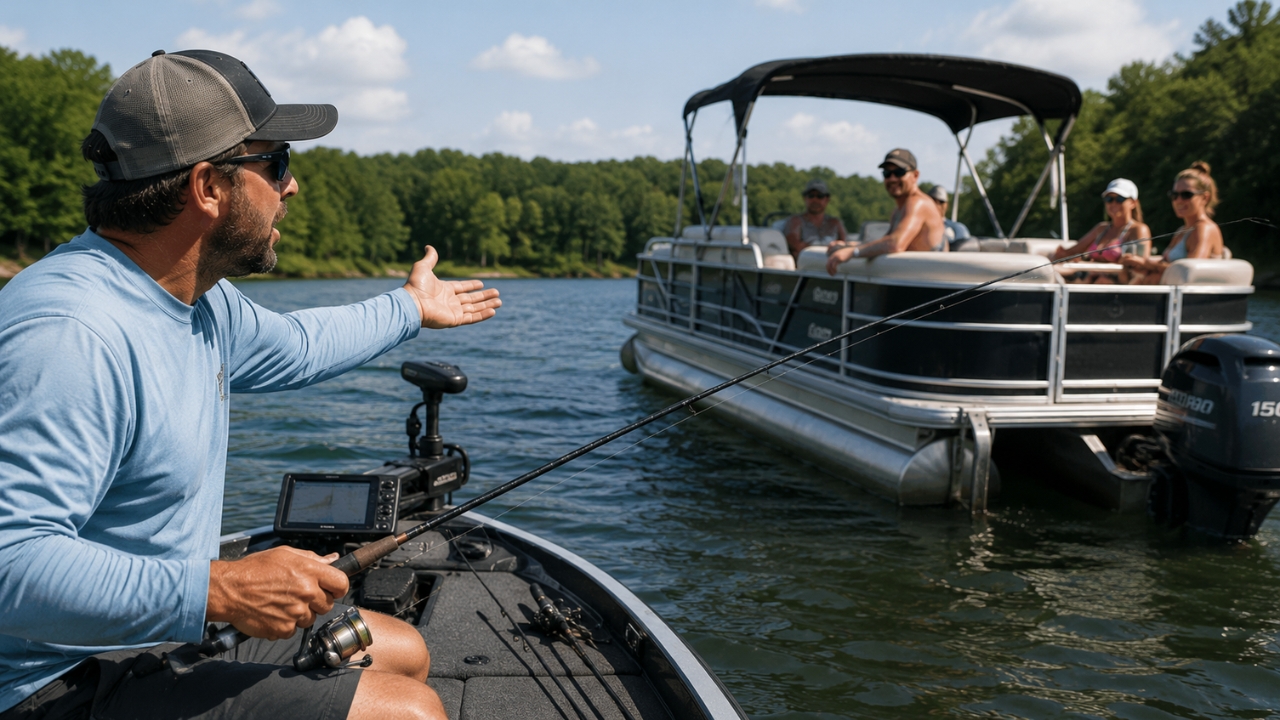
Photo credit: The Avid Outdoorsman
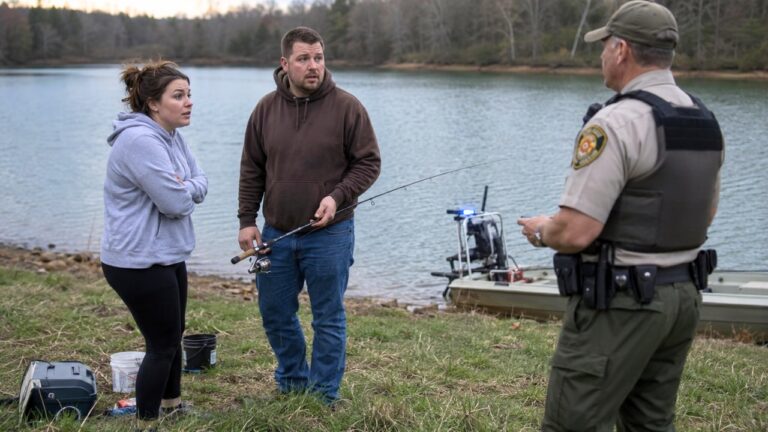
A shore angler said a quiet fishing trip kept getting interrupted by pontoon drivers who repeatedly cut through the area he was casting, leaving him wondering what a fisherman can actually do when boat traffic turns a good spot into a wake zone.
The angler brought the question to r/Fishing in a post titled “How do you deal with this?”. The issue was simple on the surface: he was fishing from the bank, and pontoon boats kept moving through the water he was trying to work.
For anglers, that kind of thing gets old fast. A cast is not random. A fisherman may be aiming at a specific edge, drop-off, current seam, brush pile, dock line, shade pocket, or feeding lane. When a boat cuts through that stretch, it can ruin the cast, push fish away, stir up the water, and make the whole spot feel pointless for a while.
The poster was not asking how to start a fight. He wanted to know how other anglers handled it. That question matters because fishing conflicts can get awkward quickly. The water may be public, the boaters may have a right to pass, and the angler may still feel like the spot is being disrespected.
That is the frustrating middle ground. Not every rude pass is illegal. Not every boat wake is personal. But when it happens over and over, especially right through someone’s casting lane, it starts feeling less like normal lake traffic and more like people either not paying attention or not caring.
Shore Anglers Have Less Control Than Boaters
Fishing from the bank comes with one major limitation: you cannot simply move the water.
A boater can idle to another cove, slide down a shoreline, or reposition away from traffic. A shore angler may have only one good opening through the brush, one public access point, or one piece of bank where casting is even possible. If boats keep cutting through that zone, the person on shore may not have many options.
That is why boat traffic can feel so personal from the bank. The boater may see open water. The angler sees the only reachable water he can fish.
Pontoon boats add another layer because they are often used casually. Families are cruising, people are talking, music may be playing, and the driver may not be thinking about the person casting from shore. They may not understand that running through a narrow casting lane can blow up the spot.
Some boaters are careful around anglers. They slow down, give room, and avoid cutting across lines. Others treat the shoreline like scenery and assume anyone fishing can just cast somewhere else.
That is where resentment builds. A fisherman does not need the whole lake. He just needs enough room to work the water in front of him without someone driving through every few minutes.
The Hard Part Is Knowing What’s Rude Versus What’s Normal
Commenters in fishing threads like this usually split the issue into two parts: boating rights and basic courtesy.
Boaters are allowed to use public water. A shore angler cannot claim an entire stretch of lake simply because he cast there first. If a boat passes at a reasonable distance, follows the law, and is not intentionally interfering, the angler may have to accept that as part of fishing public water.
But courtesy still matters.
A boat cutting close to shore, running over lines, throwing a wake into someone’s spot, or repeatedly passing through an obvious casting lane is different from normal traffic. It may not always be enforceable, but it is still poor manners.
The poster’s frustration seemed to come from that repeated disruption. One pontoon passing through is annoying. Several doing it over and over makes a person wonder whether the spot is even fishable anymore.
That is why anglers often look for practical ways to adapt. They may fish earlier or later when boat traffic is lighter. They may choose weekdays instead of weekends. They may move to areas with no-wake rules, tighter access, or less recreational boat use. They may fish deeper, switch presentations, or wait until the water settles.
None of that fixes rude boating, but it gives the angler some control back.
Some Commenters Said Not to Escalate
One of the strongest pieces of practical advice in these situations is also the most boring: do not start a fight with people on boats.
It can be tempting to yell, cast toward them, throw your hands up, or make it clear they are ruining the spot. But that rarely helps. People on the water can be defensive, careless, or flat-out hostile. If they already do not care about cutting through someone’s fishing area, they may not respond well to being called out.
There is also a safety angle. A boat is bigger than a fisherman on the bank. If the driver is reckless, angry, drunk, or immature, the angler does not have much leverage. Escalating from shore can turn a ruined cast into a real confrontation.
Commenters usually suggest staying calm unless the boaters are doing something dangerous or illegal. If they are violating no-wake rules, harassing anglers, or creating a safety issue, then documenting the boat, registration numbers, time, location, and behavior may be more useful than yelling across the water.
If it is simply inconsiderate traffic, the answer may be less satisfying: move, wait it out, or fish when the lake is quieter.
That is not fair, but it is often the cleanest option.
Boat Traffic Does Not Always Kill the Bite
Some anglers pointed out something worth remembering: fish do not always react the way people think.
Boat traffic can absolutely make fishing harder, especially in shallow water or small areas. But on busy lakes, fish may be used to wakes, motors, and pontoons. Sometimes they return quickly. Sometimes the disturbance even stirs bait or pushes fish toward cover. It depends on the water, the species, the pressure, and the type of disturbance.
That does not make it less irritating when a boat cuts through a cast. But it may keep the angler from giving up immediately.
A good fisherman may use the disruption as a chance to change tactics. If boats are pushing waves into the bank, he might throw something that can handle disturbed water. If fish seem spooked from the shallows, he may cast deeper or slow down. If traffic is constant, he may target protected corners or structure that boats avoid.
Still, there is only so much adapting a person can do if the same spot keeps getting run over.
The best solution is courtesy from boaters. The backup solution is strategy from the angler.
Commenters mostly understood the frustration, but they did not all think there was a perfect fix.
Some said public water means dealing with boat traffic, especially on weekends and in popular areas. Pontoon drivers may not realize how much they are disrupting a shore angler’s cast, and not every annoying pass is something that can be stopped.
Others focused on etiquette. They agreed that boaters should give anglers room, avoid cutting across lines, and slow down when passing close to shore. A little awareness from the boat would make the whole situation easier.
Several commenters likely suggested changing timing or location. Early mornings, late evenings, weekdays, no-wake areas, and less accessible banks can make a big difference. If a spot gets overrun by pontoons during the day, it may still be productive when the recreational traffic dies down.
A few would have warned against yelling or casting near the boats. That may feel satisfying in the moment, but it can create a confrontation and does not solve the problem.
For the angler, the issue came down to a basic frustration: he was trying to fish, and the boaters kept turning the water in front of him into a traffic lane. He may not own the lake, but courtesy still matters. When drivers see someone casting from shore, giving them a little room is not complicated. It is the difference between sharing the water and acting like nobody else is there.