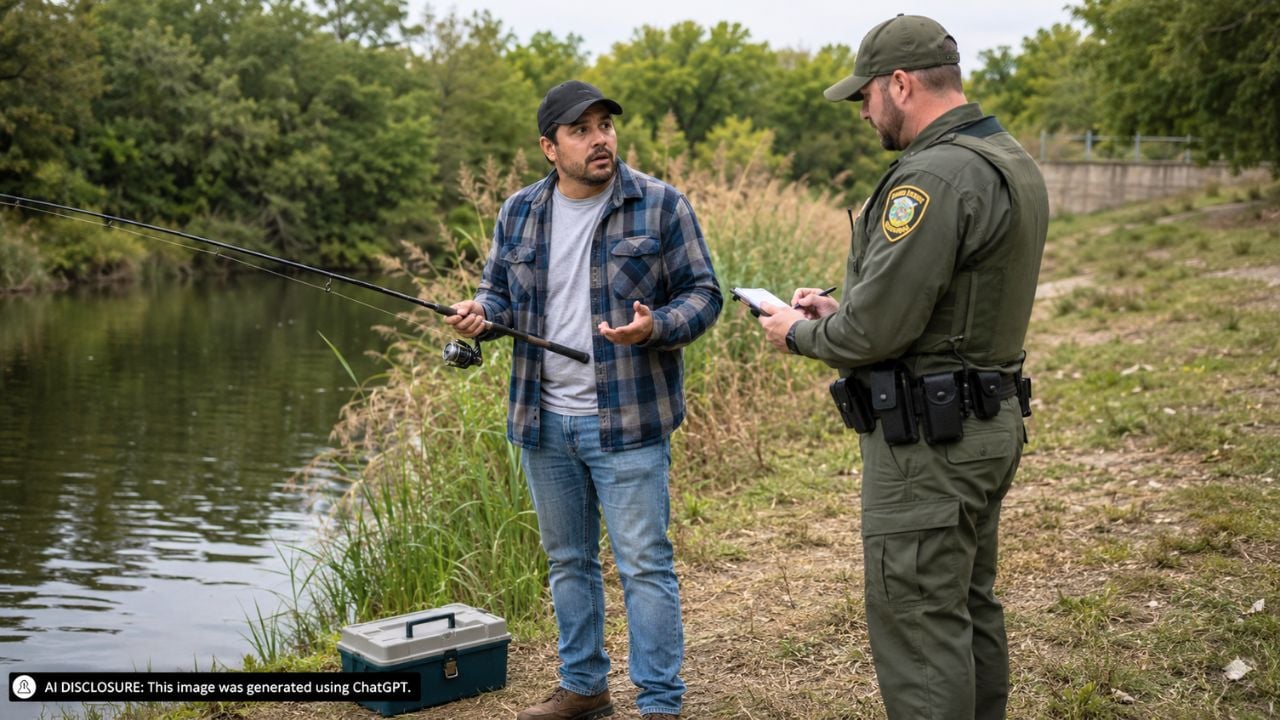
Photo credit: AI-generated image created using ChatGPT. Illustrative only.
A lot of folks get introduced to fishing the simple way: a buddy says, “Bring a rod,” you grab some tackle, and you head to the water without thinking twice. That’s usually how it goes—until a game warden steps out of the brush and starts asking for a license you didn’t even know you needed.
That’s the situation a first-time angler in Texas found himself in, laid out in the original post. After being cited for fishing without a license on a first offense, he wasn’t just worried about the fine. He wanted to know whether paying the ticket would still leave him unable to buy a fishing license later—because a friend told him that happened to them.
It wasn’t the fish that got him—it was the paperwork
In the post, the angler keeps it straightforward: he got caught fishing without a license in Texas and it was his first offense. Now he’s trying to figure out what the long-term consequences look like once the ticket is handled.
If you’ve spent any time outdoors, you already know this is how a lot of “honest mistake” violations happen. People assume a pond is private when it’s not. They assume a public bank is fair game. Or they assume a license is only needed for certain species or certain waters. Then a warden checks licenses, and suddenly it’s not a relaxing afternoon anymore.
The real fear: getting blocked from buying a license later
The biggest concern wasn’t just the citation—it was whether the ticket could follow him even after it’s paid. He specifically asked if he’d be able to attain a fishing license after paying the ticket.
That question matters, because an outdoorsman who can’t buy a license isn’t just dealing with a one-time penalty. If your ability to get licensed is held up, you can’t fish legally even if you’re trying to do it right going forward. For a new angler trying to get into the sport, that’s a fast way to get discouraged—and it’s also how people end up risking a second violation because they feel stuck.
His friend’s story is what raised the stakes
The poster added one key detail: his friend told him that after getting a ticket, “they held his ability to attain a fishing license even after he paid the ticket.” That’s what put the worry in his head.
Whether the friend’s situation was exactly as described or had other strings attached isn’t spelled out. But in the real world, these stories travel around bait shops, deer camps, and tailgates like gospel. A guy hears, “Don’t mess with that—my buddy got locked out,” and suddenly a basic ticket feels like it could turn into a long-term problem.
Why waterways and permits confuse new anglers
The headline angle fits a common trap: a person may not realize a particular waterway still requires a state fishing license. A lot of beginners assume “permit” rules are tied to access—like paying to enter a park or fishing a stocked neighborhood pond—rather than tied to the act of fishing itself.
Texas, like most states, manages fish populations through licensing and enforcement. The money funds stocking, habitat work, access sites, and conservation staff. But none of that helps you on the bank when you didn’t know, you’re holding a rod, and the warden wants to see paperwork.
The outdoors lesson here is simple: if you’re on any water that isn’t clearly and unquestionably private—and even sometimes when it is—checking the state rules first saves you a pile of trouble. That includes figuring out whether you need a freshwater license, a saltwater license, or an add-on depending on where you’re fishing.
What a practical next step looks like after a first offense
The post itself is short, but the situation is familiar: first offense, citation issued, and now the angler wants to get legal and move on. In most cases, the most practical path is handling the ticket properly and getting clear answers from the authority that actually controls licensing in that state.
That means confirming whether there’s any kind of administrative hold tied to the citation, whether it lifts automatically after the case is resolved, and whether any extra steps are required. A lot of confusion comes from mixing up “paid the fine” with “case fully closed,” or assuming a ticket works like a parking citation when it may be treated more like a wildlife violation with its own process.
It also means learning the system now, before the next trip. If you’re new to fishing, it’s worth saving screenshots or printing proof of your license, keeping it on your phone and in your tackle bag, and making sure you’re covered for the specific water you’re on.
Getting stopped by a warden can rattle a new angler, but the best move is usually the boring one: handle the citation, get your licensing squared away the right way, and treat it as a lesson you only pay for once.