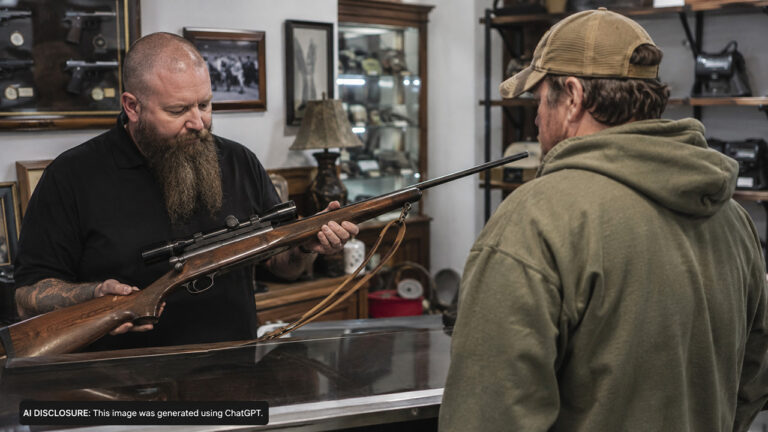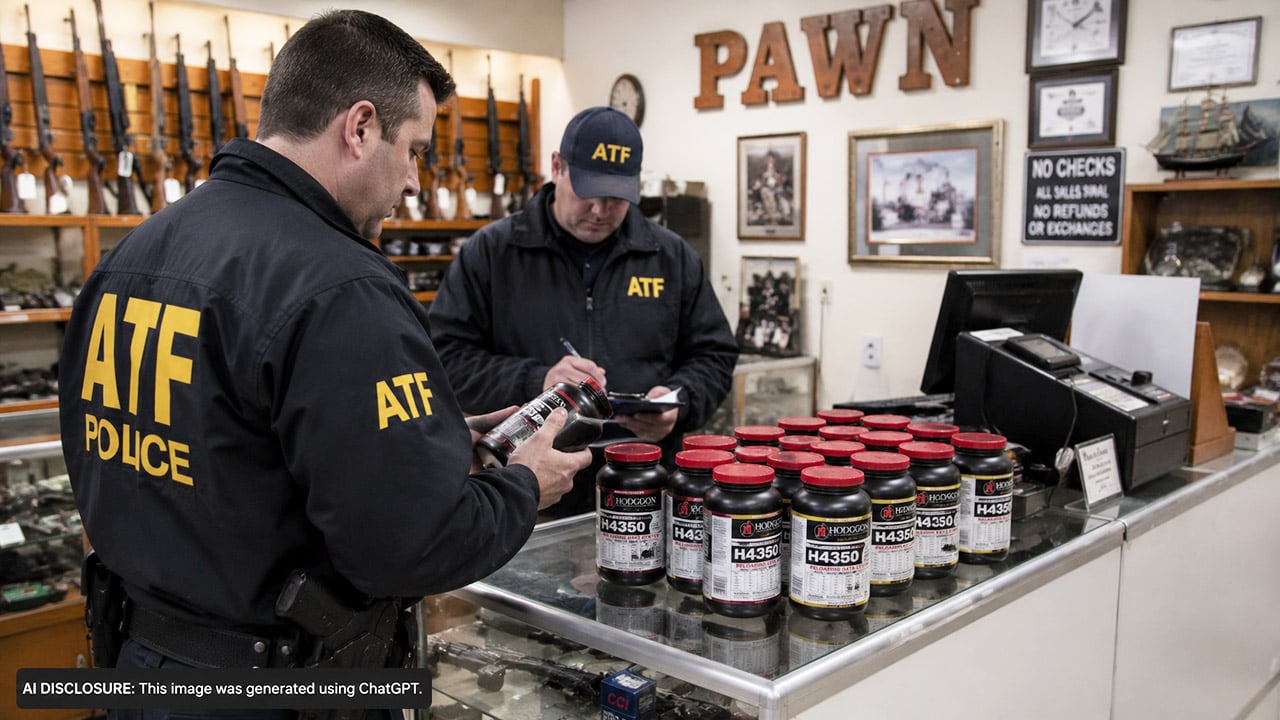
Photo credit: AI-generated image created using ChatGPT. Illustrative only
Pawn shops sit in a unique spot in the outdoor world. They’re where working folks find a used scope that still tracks true, trade for a reliable deer rifle, or pick up ammo when shelves are thin. That only works when the counter is run by people who treat firearms laws and basic safety like non-negotiables.
Federal prosecutors say that’s exactly what broke down at a Helena shop, where an ATF investigation that started with stolen gunpowder ended up uncovering illegal gun possession and a straw-purchase-style transaction. The details are laid out in the source post from the U.S. Attorney’s Office for the District of Montana.
It began with 88 pounds of stolen gunpowder
In court filings, the government alleged the Bureau of Alcohol, Tobacco, Firearms and Explosives started looking into Modern Pawn & Consignment in 2021 after learning employee Isaiah Maurice Morsette was involved in the purchase of 88 pounds of gunpowder stolen from Montana Outdoor Sports in February 2021.
If you’ve ever hauled a couple one-pounders of powder out to the bench for load development, you know how eye-opening that number is. That’s not a “forgot a can on the shelf” amount. It’s the kind of quantity that draws attention fast, and it’s exactly the sort of thing that makes regulators dig into paperwork, inventory, and who’s actually running the gun counter.
The shop’s “firearms expert” allegedly wasn’t allowed to have guns
According to the government, the federal firearms licensee (FFL) for the business was Morsette’s wife, Catherine Suzanne Morsette. Isaiah Morsette, however, was described as the firearms and ammunition expert—the person the licensee deferred to on firearms-related matters.
The big problem: prosecutors said Morsette had felony convictions and knew he had been convicted of felony sexual intercourse without consent in Montana in December 2011. That matters because a prohibited person doesn’t get to “handle guns for work” or “just show customers options” as a loophole. If you can’t legally possess a firearm, you can’t be the one moving them around behind the counter, period.
Undercover buys allegedly showed how business was being done
The court documents describe multiple undercover visits. In March 2021, an undercover ATF special agent went to Modern Pawn, where Morsette allegedly said he would have two Smith & Wesson 9mm pistols available for sale in four days. The government said Morsette handed the agent both pistols and discussed other firearms for sale or soon to be for sale.
In April 2021, two undercover ATF special agents went back. Prosecutors said special agent #2 eventually bought a Savage 6.5 Creedmoor rifle from Morsette for special agent #1, and that Morsette handed the rifle to special agent #1. When special agent #1 mentioned not having a Montana address yet, the government said Morsette told him to purchase the firearm anyway.
The situation got more serious when the paperwork came into play. The government alleged that while waiting for special agent #2, Morsette handed special agent #1 a box of ammunition. When special agent #2 arrived, prosecutors said he and Morsette filled out an ATF form for the rifle purchase, and when asked about the “actual purchaser” question, Morsette responded, “yeah, it’s your gun brother, as far as I’m concerned.”
According to prosecutors, Morsette then executed the ATF form stating special agent #2 was the actual purchaser when, in fact, he knew special agent #1 was the actual purchaser.
The search turned up 110 firearms and some were stolen
On July 14, 2021, the ATF arrested several suspects, including Morsette, and searched the business, according to the release. The ATF recovered 110 firearms and an assortment of ammunition. Some of the guns were determined to be stolen.
That’s the part that should make any hunter or gun owner sit up straight. When stolen firearms are mixed into a retail-looking environment, it doesn’t just create legal exposure for the people involved—it puts regular customers at risk of unknowingly buying a problem they can’t fix with a refund.
Most outdoorsmen don’t mind buying used guns. Lots of older rifles have more seasons in them than we do. But we’re talking about the difference between “used” and “stolen,” and that difference can ruin a guy’s month in a hurry. A firearm that comes back as stolen can be seized, and even if you did everything in good faith, it becomes a headache you never budgeted for.
Sentencing: prison time for the employee, probation for the licensee
Isaiah Maurice Morsette, 39, of Boulder, pleaded guilty in November 2021 to prohibited person in possession of a firearm and to false statement during a firearms transaction, the U.S. Attorney’s Office said. Chief U.S. District Judge Brian M. Morris sentenced him to three years in prison followed by three years of supervised release.
The release also states Catherine Suzanne Morsette—described as the federal firearms licensee for the business—was a co-defendant, was convicted in the case, and was sentenced to four years of probation.
The news release notes the case was investigated by the ATF and tied to Project Safe Neighborhoods, a DOJ initiative focused in Montana on violent crime connected to issues like meth trafficking, armed robbers, firearms offenses, and violent offenders with outstanding warrants.
What gun owners can take from this—without the drama
Most of us will never be anywhere near a federal investigation, and that’s the point. But there are a few practical lessons here worth keeping in your back pocket if you buy guns locally, consign gear, or even just like browsing pawn shops on a Saturday.
First, paperwork matters because it’s tied to real accountability. The “actual buyer” question on the ATF form isn’t a technicality—it’s aimed at stopping exactly the kind of arranged purchase prosecutors described. Second, shops live and die by who’s allowed to be behind the counter. An FFL can’t be a figurehead while someone else runs firearms sales and decisions, especially if that person is prohibited.
And third, stolen guns don’t stay “somebody else’s problem.” If a shop is sitting on stolen firearms, that mess can spill onto the next honest buyer in line. If something feels off—pressure to rush a sale, odd workarounds, or casual attitudes about forms—there are plenty of other places to spend your money.
In the outdoor world, trust is hard-earned. Whether it’s a handload recipe, a handshake deal on a used rifle, or the guy behind the counter saying, “You’re good to go,” it only works when it’s backed by straight behavior. This case is a reminder that shortcuts in the gun business don’t stay small for long.
Like The Avid Outdoorsman’s content? Subscribe to our newsletter so you never miss an article.
Here’s more from us: