Photo credit: AI-generated image created using ChatGPT. Illustrative only
Buying a place on a good river in northern Michigan is the kind of move a lot of us daydream about—room to breathe, a stretch of bank to fish, and enough acreage to feel like you’ve finally got your own little slice of the outdoors. But the first warm weekend can also bring the uninvited “traditions” you didn’t sign up for.
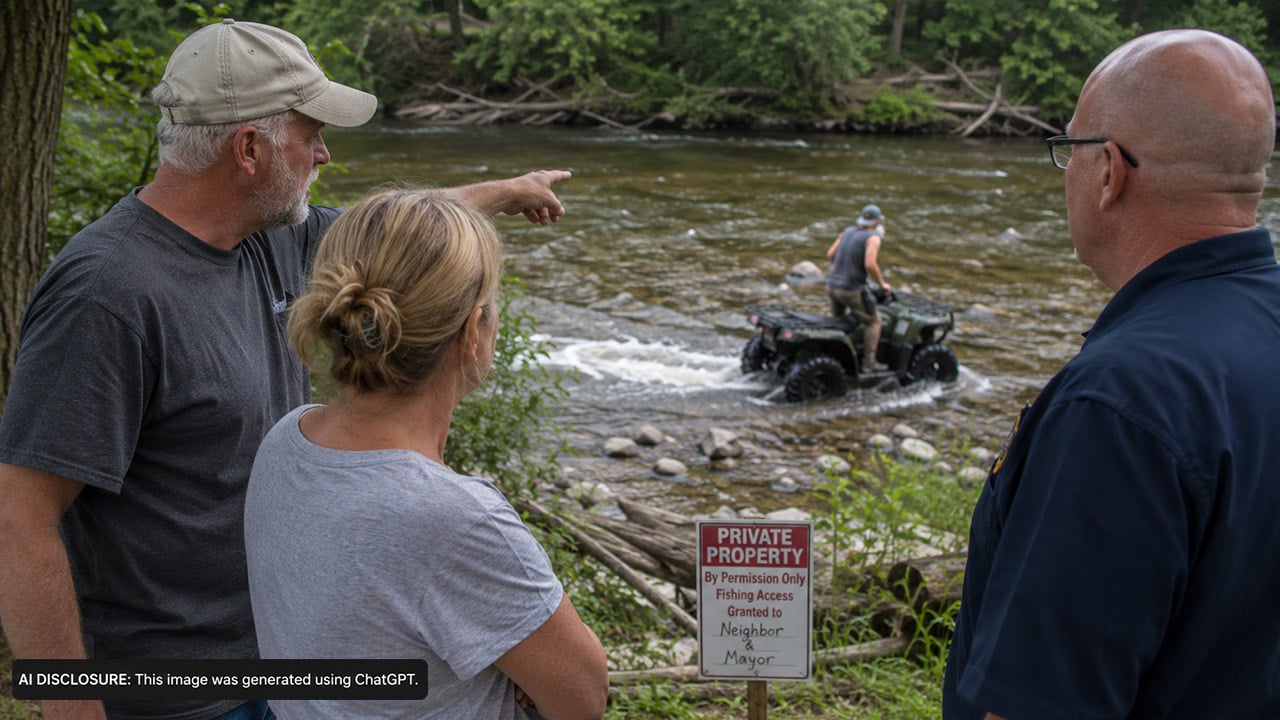
That’s exactly what one new landowner described in the original post: a friendly request from a next-door neighbor and the town’s mayor to fish his river frontage, followed not long after by a much less friendly move—an ATV/side-by-side coming in from the road, rolling down a trail through the woods, and even clearing small trees to make the path wide enough.
A polite ask turned into “we’ve always done it this way”
The new owner had recently bought a home with about five acres and roughly 500 feet of river frontage—prime real estate for anyone who likes to fish. Not long after moving in, he and his wife got a visit from the next-door neighbor and the mayor, who asked for permission to fish that stretch.
The owner was away at the time, and his wife agreed, with a reasonable condition: text or call beforehand. They’ve got a rescued pitbull and want her leashed when people are around, and they also want to know who is on the property and when. That’s not being difficult—that’s basic safety and basic respect.
The first surprise angler didn’t seem like a big deal
Not long after, the owner was walking the property when the dog alerted to someone down by the river. He found an older gentleman fishing along the bank, said good morning, and put the dog inside. At the time, he assumed it might be legal for people to walk along the river edge, but he later realized the bank is still private property and being there without permission is trespassing.
Still, his attitude was neighborly. He didn’t mind folks fishing down at the water’s edge, especially since there’s a steep incline up to the main part of the property. He also noted his dog won’t go down there, so he wasn’t worried about the dog mixing it up with someone at the river.
Then the side-by-side came ripping in—and trees got cut
Later that same day, the situation changed fast. The dog went “nuts” again, and this time it wasn’t a quiet angler slipping along the bank. Someone had driven a side-by-side across the property from the road, down a trail through the woods, and toward the river.
According to the owner, they’d cleared small trees in the woods to widen the trail, then parked facing the house about 100 feet away. That’s a whole different level of access—now you’re talking about property damage, safety issues, and the kind of entitlement that can snowball if it isn’t checked.
When the owner confronted the group, he met a younger man (early 30s, by his estimate) who claimed they had permission from the new owners. The owner says the man turned away and continued fishing, acting disrespectful, then called his dad over.
That dad turned out to be the older fisherman from earlier—and also the mayor who had initially asked permission. The owner and his wife reiterated what they thought was a fair stance: fishing is okay, but they need a heads-up before anyone shows up.
It wasn’t just about fishing anymore—it was about control of the property
This is where a lot of rural landowners can relate. Fishing permission is one thing. Driving motorized vehicles through the woods, creating trails, cutting trees, and parking close to the house is something else entirely.
The owner admitted he should have been more direct in the moment and explicitly said “no driving” and “don’t cut trees.” That’s a lesson a lot of folks learn the hard way: if you grant access, spell out the rules like you’re writing them for someone looking for loopholes.
There’s also the everyday home-and-family side of it. The couple wanted privacy. They wanted to control when strangers were near their house. And they wanted to manage their dog responsibly—because even a good dog can get blamed if something goes sideways, especially when unexpected visitors appear.
The riverbank confusion and the “public water” myth
A lot of anglers genuinely don’t understand how river access works, and some pretend not to. In the owner’s case, he initially thought walking the bank might be legal, only to learn it’s still trespassing.
In many places, the water may be navigable, but that doesn’t automatically make the banks fair game for walking, fishing, or dragging gear across private land to get there. If someone needs to cross your property to reach the river, that’s the ballgame: permission matters, and “we’ve always fished here” isn’t a deeded easement.
Even if you’re the kind of landowner who doesn’t mind a bootprint near the water, that leniency can get taken as a blank check—especially when the next step becomes tire tracks and a widened trail.
Why cameras, signs, and firm boundaries matter—especially with “important” locals
The owner started thinking like most of us would: trail cameras, signage, and possibly fencing if people kept showing up unannounced. That’s not being hostile. That’s documenting what’s happening and setting a clear line.
He also checked the county GIS and noticed the mayor appears to own a larger stretch of river frontage downstream. That raised a fair question: if the mayor has his own access, why the need to come up onto this new owner’s property at all?
Then there’s the litter. The owner mentioned beer cans and bottles along the river, and he’s also found beer cans and small plastic vapes up on the higher edge—trash that likely didn’t float up there from high water. He didn’t accuse the mayor or neighbor directly, but he did connect the dots that if the son felt comfortable driving in and cutting trees, that same mindset could lead to careless behavior like leaving junk behind.
From a practical standpoint, cameras and signs do two things: they discourage the casual trespasser, and they create a record for the serious one. If you ever have to involve law enforcement, conservation officers, or an attorney, “I’ve got dates, times, and photos” is stronger than “I think it was them.”
And when the “important local” is part of the story, a calm, documented, rules-first approach keeps you from getting pulled into a personality contest you didn’t ask for.
Private river frontage is a blessing, but it comes with a responsibility to protect it. The best time to set boundaries is day one—before tire tracks become a tradition and a widened trail becomes somebody else’s “right.” In a situation like this, it’s not about picking a fight with neighbors or officials. It’s about making it clear that fishing permission doesn’t include free rein to drive in, cut timber, and treat your place like public land.
Like The Avid Outdoorsman’s content? Subscribe to our newsletter so you never miss an article.
Here’s more from us: