Photo credit: AI-generated image created using ChatGPT. Illustrative only
When you grow up around guns, you learn early that “it’ll be fine” is not a safety plan. A live-in breakup is already messy, but it gets real serious real fast when a firearm ends up where a kid can get to it.
That’s the spot one mom found herself in after discovering a loaded handgun inside an unzipped backpack on the floor of a room her 6-year-old plays in every day. In the original post, she described sharing a home with her ex after a cross-country move for his career, and said her child’s biological dad isn’t involved.
A breakup that never really turned into separate lives
The mom said she ended the relationship last May after three years, but the two still live together and remain wrapped up in day-to-day life. She described it as not a traditional breakup, with both of them still considering each other close friends.
That kind of arrangement can work for some people, but it also blurs lines. The blurred line that matters most here is who is responsible for the child’s safety in the home, and what standards are non-negotiable when there’s a firearm under the same roof.
The warning signs were already on the table
She wrote that her ex was recently diagnosed with CPTSD and alcohol abuse, and she suspects there could be more going on. She also described a confession he made earlier this year about how he thinks and experiences emotions, saying it reframed “every problem we’ve ever had.”
Her takeaway was blunt: she’s spent “a lot of time and mental energy” trying to determine whether she and her son are safe around him. That’s a heavy thing to carry, and it tells you the household wasn’t operating from a baseline of trust even before the gun showed up in the playroom.
A loaded handgun in a kid’s space isn’t a mistake—it’s a failure
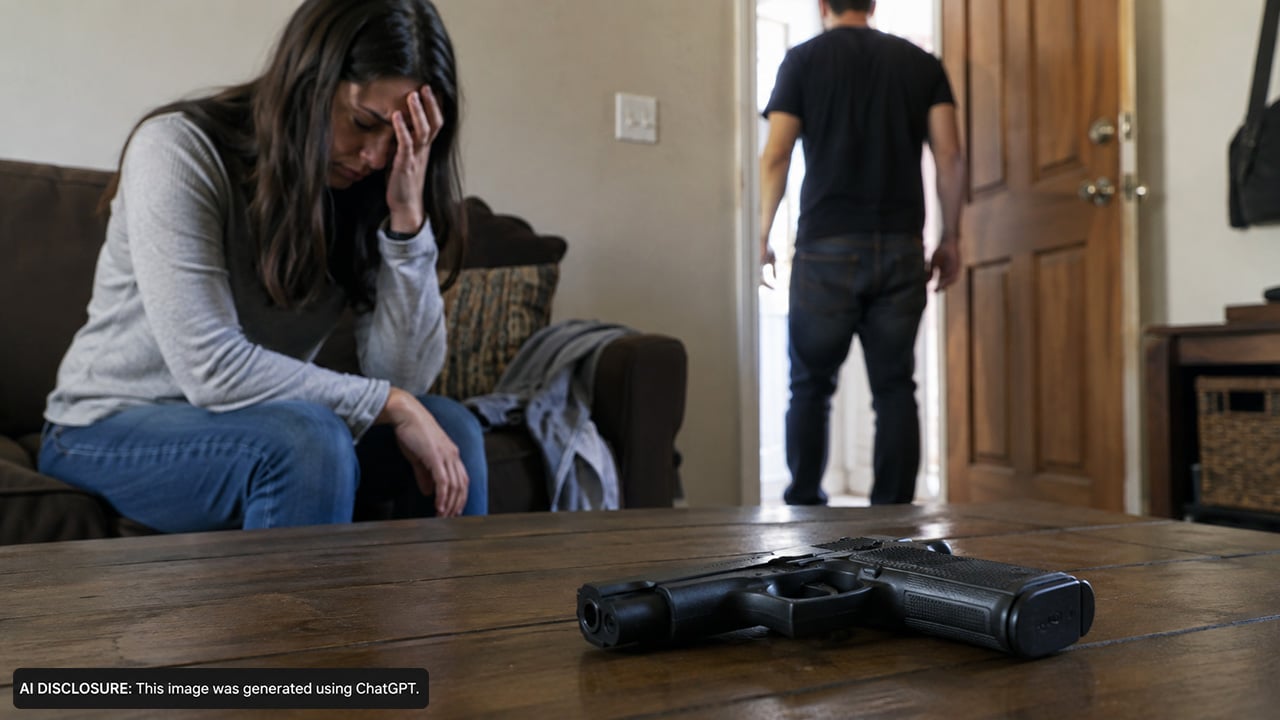
Then came the moment that changed everything. She found a loaded handgun in an unzipped backpack on the floor in a room her son uses daily, sometimes with an hour or two alone. She didn’t know how many days it had been there or how long her child may have had unsupervised access.
If you’ve spent any time hunting, shooting, or even just being around responsible gun owners, you already know the hard truth: a loaded handgun within reach of a 6-year-old is an emergency, not a conversation starter. It doesn’t matter if it was “forgotten,” “set down for a second,” or “not usually like this.” A child only needs one curious moment.
What makes this even more frustrating is she said they had multiple in-depth discussions about firearm safety before they moved. She grew up shooting, and she made it clear that there must be multiple barriers in place to prevent a child from accessing a gun unsupervised. She called that a non-negotiable.
What “multiple barriers” actually looks like in real life
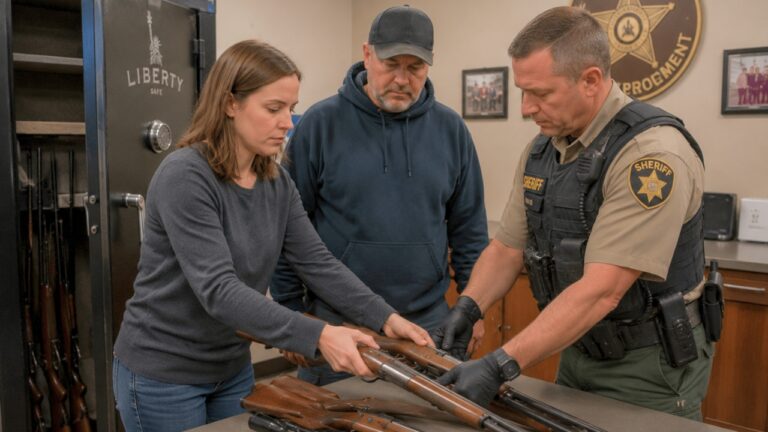
In the outdoors world, we don’t treat safe storage like a political statement. It’s just part of being an adult with a firearm, like keeping your finger off the trigger and knowing what’s beyond your target. In a home with a child, “multiple barriers” usually means the gun is unloaded, locked up in a safe or lockbox, and ammunition is secured separately—plus the child doesn’t have the access code or key.
A backpack on the floor is the opposite of that. It’s one barrier (a zipper) that wasn’t even closed. From a safety standpoint, it’s the same as leaving the gun on the couch.
And from a practical standpoint, it raises ugly questions: Is this sloppy day-to-day behavior? Is it influenced by alcohol? Was it a moment of carelessness, or is there a pattern of disregard for rules that were already clearly stated?
The immediate move is safety, not “testing”
The mom floated an idea that a lot of people will think of in the heat of the moment: holding onto the gun and waiting to see how long it takes him to notice it’s missing. It’s understandable—she’s trying to gauge how “present” he is and whether he even knows where his firearm is.
But in a situation like this, the priority is making the home safe right now and keeping it that way. If there’s a firearm left accessible to a child, it’s time to treat the problem like a house fire: remove the immediate danger, get the kid secure, and then figure out the longer-term plan from a calmer place.
In plain terms, “how long until he notices” is less important than “can this happen again tomorrow.” If the answer is even a maybe, the standard has already been broken.
What people tend to focus on in situations like this
Even without a long thread of responses included, you can predict what grounded, safety-minded folks will zero in on: the kid comes first, and the living arrangement needs to change fast. When a child has had possible unsupervised access to a loaded handgun, most reasonable adults stop debating nuances and start talking about removing the child from the situation.
Another point people commonly make is that firearm safety isn’t just about “teaching the kid.” Yes, you should teach kids age-appropriate rules. But safe storage is the adult’s job, every time, without exception. A 6-year-old is not responsible for resisting temptation and curiosity. The grownup is responsible for making access impossible.
And finally, people tend to call out the combination she mentioned: mental health struggles plus alcohol abuse plus poor firearm storage. Any one of those is worth taking seriously. Together, they’re a flashing warning light.
The hard part: deciding what “next” looks like
The mom asked the question that hits like a gut punch: “Is this when I pack my stuff and run?” That’s not drama. That’s a parent realizing the margin for error has disappeared.
She also wrote that her sense of normal has been destroyed and that she doesn’t trust her own judgment anymore. That’s another big signal. When you’re second-guessing yourself about basic safety, it’s time to bring in outside support—someone who can help you make a clear plan and follow through.
From a common-sense, outdoorsman perspective, “next” usually means setting a hard boundary that’s enforced with action, not words. Safe storage requirements aren’t a suggestion, and a child’s living space isn’t the place to gamble on someone else suddenly becoming careful.
Whatever she decides, the key is treating this as a serious breach—because it is. A loaded handgun in an open bag on the floor of a playroom is the kind of preventable mistake that changes lives forever. Responsible gun owners know that, and so do parents.
Like The Avid Outdoorsman’s content? Be sure to follow us.
Here’s more from us: