
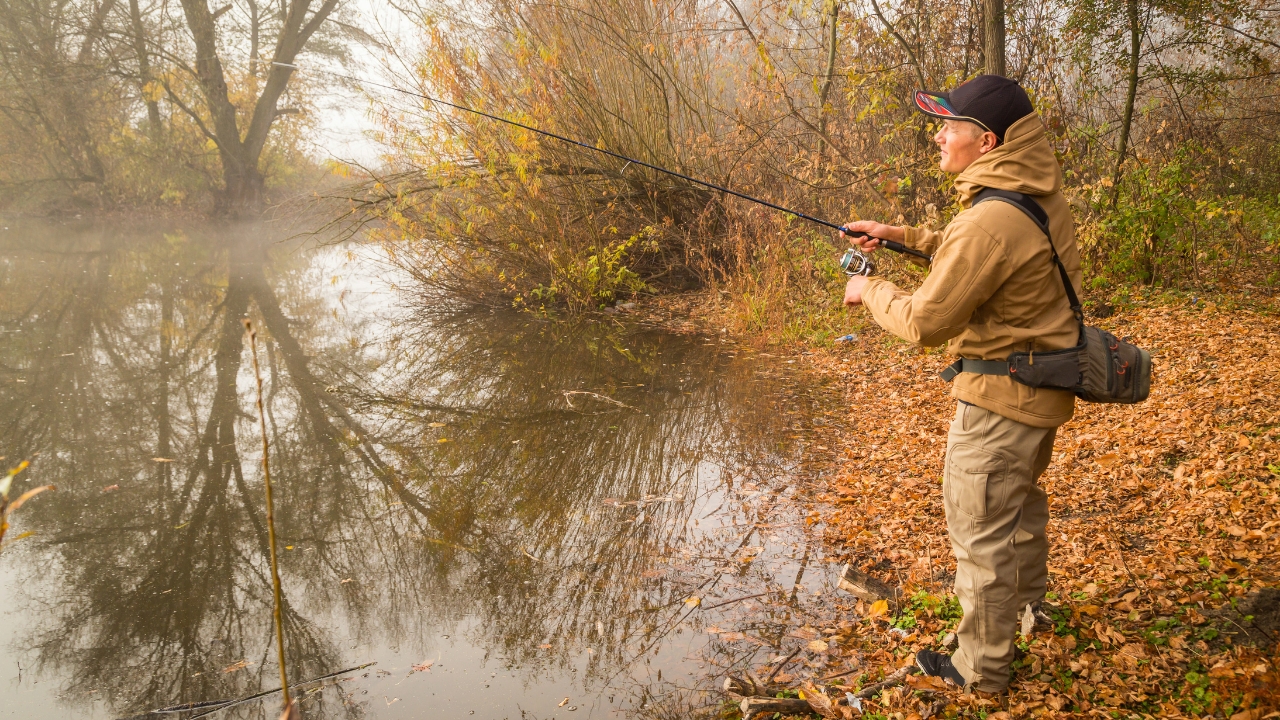
Photo credit: Alexander Lukatskiy/Shutterstock.com
Bank fishing gives you access to some excellent water, but it comes with its own set of challenges—especially when it comes to staying stealthy. You don’t have the benefit of a boat’s reach or mobility, so anything that pushes fish away from the shoreline can ruin your chances fast. And when fish feel pressure from noise, shadows, or scent, they often move deeper, leaving you with nothing but casts and crossed fingers.
A lot of folks don’t realize they’re scaring fish off before they even make their first cast. Whether it’s how you walk the bank or what you’re doing with your line, little mistakes add up. If you’re not getting bites, it’s not always the bait’s fault. Here are the bank-fishing mistakes that send fish packing before your lure ever hits the water.
Stomping along the shoreline
Every footfall sends vibrations through the ground and into the water. If you’re stomping or shifting rocks with every step, you’re ringing the dinner bell in reverse—telling fish to get out of there. Fish, especially pressured ones, are sensitive to those signals. They feel it and move on before you ever set up.
When you approach the water, walk slow and soft. Take your time. If you’re on gravel or loose rock, step lightly and avoid kicking debris. It might feel like overkill, but you’d be surprised how much better your luck gets when you stop announcing your arrival like a marching band.
Throwing shadows on the water
Fish pay attention to shadows, especially in clear water and bright conditions. If you’re standing where the sun puts your silhouette over the spot you’re targeting, you’re making those fish nervous. Big ones especially don’t tolerate overhead movement.
Stay low and behind cover when you can, and pay attention to the sun. Fish into the light, not with it at your back. If you’re casting a long shadow across a calm pocket or shallow edge, you’re probably already too close. Position yourself to keep your presence out of the water.
Slamming rod holders and gear down
Nothing wakes up a quiet cove like slamming a rod holder into hard ground or dropping your tackle box. That sudden metal-against-rock sound carries underwater more than you think. It doesn’t take much to clear the bank of anything worth catching.
Set your gear down quietly. Don’t jab those holders into rocky soil—press them slowly and securely. Keep your metal pliers or knife on a towel or mat to avoid clatter. Once you start thinking like a hunter more than a camper, your hookups will reflect it.
Reeling your bait in too fast
A lot of folks rush the retrieve, especially if the spot “looks dead.” But a fast-moving lure in pressured, shallow water rarely fools fish. They’ve seen it before. That frantic motion can spook fish that are already wary from shoreline activity.
Try slowing it down. Let soft plastics soak, twitch jigs naturally, and pause hard baits to mimic real prey. If your bait tears through the water every cast, you’re teaching fish to avoid it. Patience from the bank pays off a lot more than speed.
Fishing too close to your feet
It’s easy to start casting to the far side of the lake, but what about the water right in front of you? Shoreline fish often hold tight to the bank, especially early or late in the day. When you walk right up to the water and cast long, you might step right over the best spot.
Back off the edge and fish close before you go long. Hit the margins first—those small ambush zones that bass or trout love to sit in. By the time you’re bombing 60-yard casts, you should already have covered the hot zone near your boots.
Talking loud or playing music
Fish don’t have ears like ours, but they do sense sound and vibration through their lateral line. Loud voices, music, or yelling across the water puts fish on edge. It’s not always about total silence, but there’s a threshold—and most people cross it without realizing.
If you’re fishing with buddies, keep voices low near the water. Save the Bluetooth speaker for after dark at camp. If you’re trying to catch fish that have been caught before, loud noise is a good way to make sure you won’t catch them again.
Wearing bright clothing
You might not think your neon shirt matters, but in clear or shallow water, fish see movement and color. Bright clothing flashing on the bank draws attention, and not the good kind. It’s one more thing that says “danger” to fish that are already wary.
Stick to earth tones when you’re on the bank—greens, browns, grays. Blend in like you would in a tree stand. It’s a small detail that makes a surprising difference, especially when you’re sight-fishing or stalking edge cruisers in still water.
Casting over active fish
When you spot fish close to shore, the natural reaction is to fire a cast right over them. But your line cutting through the water above their heads often freaks them out. They bolt, and now you’re casting at empty water.
Cast well past them and work your bait into their zone. Use the angle to avoid dragging line over their back. Fish that see the bait before the line stay put longer. It’s more like what they’re used to in the wild—prey coming from ahead, not sky-snakes landing on their head.
Not checking your shadow during sunrise or sunset
Low light makes fish more active, but it also makes your shadow longer and more threatening. Early morning and evening are prime times, but they’re also when your shape can stretch halfway across a cove if you’re not paying attention.
Move your position as the sun shifts. If your shadow’s creeping toward where you’re casting, reposition. Get low, step back, or change angle. The bite might be heating up, but if fish see your form looming over their water, they’ll disappear before your first cast hits.
Letting line slap the surface
When you cast with too much slack or an awkward loop, your line smacks the water like a whip. That sudden impact on a calm surface can clear the whole pocket of fish. It’s not just the lure hitting the water that matters—it’s how the whole presentation arrives.
Keep your line tight on the cast and let the bait land softly. Practice feathering the spool or thumbing it gently to slow the drop. A quiet entry keeps fish curious, not cautious. If the line’s the loudest part of your cast, you’re likely spooking the fish before the bait even moves.
Fishing spots that were just pressured
Bank spots get pounded, especially near parks, pull-offs, or docks. If you roll up and see fresh boot tracks or leftover bait containers, odds are someone was there an hour ago. Fish don’t reset immediately after pressure, especially if they’ve been hooked recently.
Move down the bank. Look for places that don’t have a trail or where the grass is still thick. Find that untouched corner and approach it slow. Fish need a break between encounters. Giving them that space increases your shot at finding one still willing to bite.
Standing right on the edge
It’s tempting to walk right up to the water and cast, but the closer you are, the more fish see you. You’re putting yourself in their sightline and making the water around you move. That ripple, noise, or shadow drives fish deeper.
Fish from a few feet back. Stand behind brush, tall grass, or even crouch down if you’re working shallow water. You’ll get more bites by being less visible. Fish aren’t dumb—they watch for threats. And a fisherman framed against the sky is one of the biggest ones they see.
Like The Avid Outdoorsman’s content? Subscribe to our newsletter so you never miss an article.
Here’s more from us:


