Photo credit: AvidOutdoorsman
A clean shot doesn’t always mean a clean ending. One bowhunter learned that the hard way when a good blood trail led him right to a fence line, then into a conversation with a landowner, and finally into the path of a game warden who wrote a ticket based on a rule that wasn’t even on the books anymore.
It’s the kind of mess that makes hunters nervous—not because recovering game is wrong, but because the line between “doing the right thing” and “getting jammed up” can get blurry fast when property boundaries, tempers, and outdated enforcement collide.
A solid hit, a short track, and a bad boundary
The hunt itself sounded normal enough. Early season conditions, a treestand tucked into a treeline, and a deer that gave a reasonable shot window before fading into the brush. The hunter did what most of us do: watched, listened, waited, then climbed down and started the track.
Blood wasn’t hard to find. What was hard to swallow was where it went. The trail angled toward a neighboring parcel—one the hunter didn’t have permission to enter—and the last splashes of red stopped right at the edge of a posted property line.
That’s the moment where a lot of guys freeze up. Nobody wants to lose a deer, and nobody wants to be the person walking past a “No Trespassing” sign like it doesn’t matter.
Trying to do it right still turned into a confrontation
From the way it played out, the hunter didn’t just hop the fence and hope for the best. He made a reasonable attempt to get permission, and when that didn’t go smoothly, he tried to keep things calm and focused on recovery.
The landowner on the other side saw it differently. Some folks don’t care if it’s a wounded deer, a shed hunt, or a lost dog—if you’re not invited, you’re not coming in. And when emotions are already hot around hunting season, a request at the wrong time can turn into a hard “no” in a hurry.
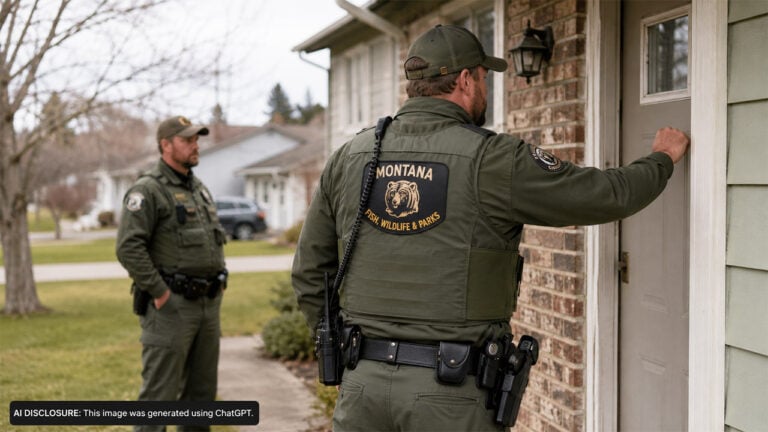
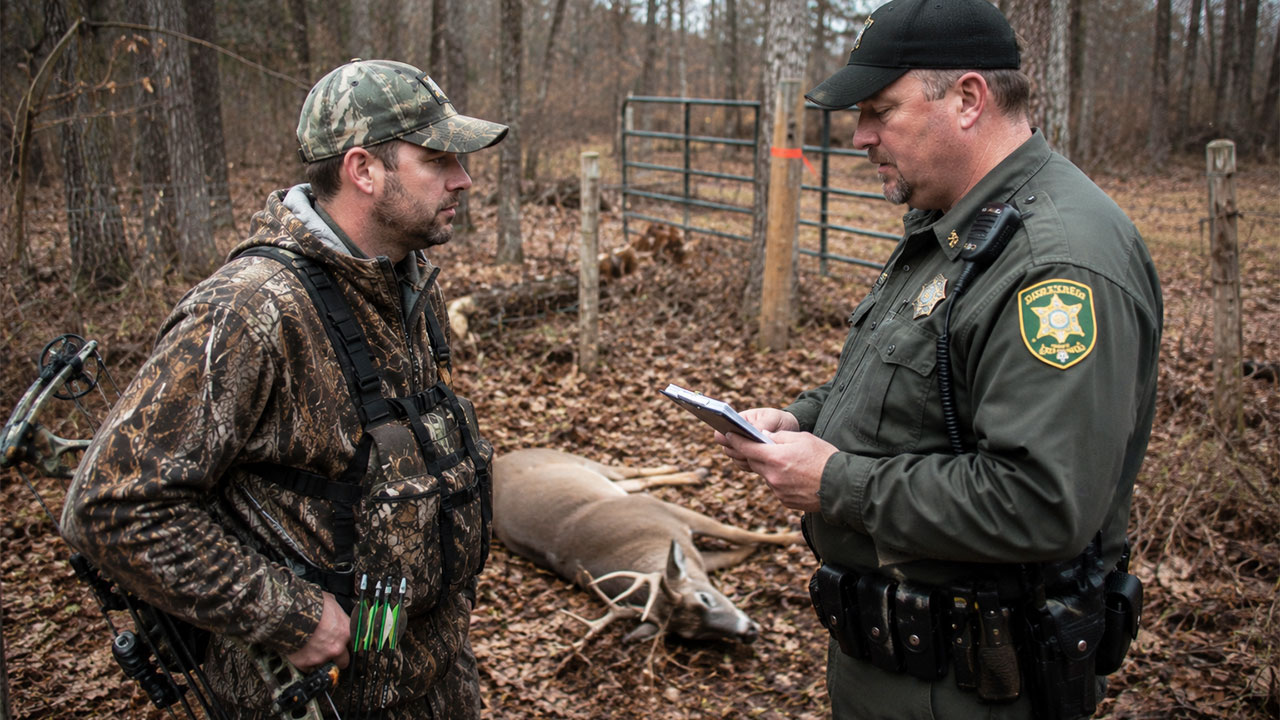
Things escalated from there. The landowner contacted a warden, and the hunter—standing there with archery gear, blood on the ground, and a deer likely expired just over the line—ended up having to explain himself to law enforcement instead of dragging a buck.
The warden wrote a ticket using a repealed law
The surprising part wasn’t that a warden showed up. Wardens get called to boundary disputes all the time, and they’re often the only neutral party who can keep it from becoming a shouting match.
The surprising part was the citation itself. The warden reportedly referenced an older rule that treated crossing a property line to retrieve game as a punishable offense under specific conditions. The problem: that language had been repealed in a prior legislative update.
In plain terms, the hunter got ticketed under a rule that no longer existed. That’s not a minor technicality. The whole point of a citation is that it’s tied to enforceable statute or regulation, not a page that used to be in a handbook years ago.
This is where hunters should pay attention. Even good wardens can be operating on old training, old cheat sheets, or old interpretations, especially when laws change and the field guidance doesn’t keep up. That doesn’t make it acceptable, but it does make it possible.
What the hunter could have done in the moment
When you’ve got a deer down across a line, you’re stuck choosing between bad options. You can risk losing meat and letting an animal go to waste, or you can risk a trespass charge by stepping over without permission. Neither one feels right.
The most defensible move is usually the least satisfying one: stop at the boundary, document what you’ve got, and start making calls. Take photos of the blood trail at the line. Mark the last blood with GPS on your phone. If you have a mapping app showing property ownership layers, screenshot it. If you can contact the landowner calmly, do it. If they won’t respond or they refuse, call the warden yourself and request assistance.
It’s also smart to have a “recovery plan” before you hunt a boundary. If you don’t have neighboring permission and you’re set up where a deer can easily cross, you should at least have the neighbor’s number—or decide ahead of time that you’re passing shots that angle that direction.
What you don’t want to do is argue your way into a bigger problem. If the landowner is fired up, the best thing you can do is back off, keep your voice down, and let the warden be the middleman.
Commenters zeroed in on property rights, ethics, and paperwork
Whenever a story like this gets around, the outdoor crowd splits into predictable camps. One side says, “If the deer is yours, you should be able to recover it.” The other side says, “If it’s my land, nobody sets foot on it without permission.” Both can be true in principle, and still leave you with a dead deer in the middle.
A lot of hunters focused on ethics: you have a responsibility to make every reasonable effort to recover an animal you shoot. They also pointed out that refusing recovery permission isn’t exactly neighborly, especially in rural areas where people depend on each other for help with fences, livestock, and emergencies.
Landowners pushed back with their own reality: liability, past bad experiences, people “recovering” a deer and then wandering around looking for another one, and strangers ignoring boundaries. One bad actor can make a person clamp down forever.
But the biggest point folks latched onto was the paperwork side—how in the world a repealed rule ends up on a ticket. That’s the kind of thing that rattles confidence, because it suggests the hunter can do everything in good faith and still be the one who pays for someone else’s mistake.
How this usually shakes out and what hunters can learn
Tickets tied to invalid or repealed statutes don’t tend to hold up well once they’re challenged, but that doesn’t mean the hunter wins automatically. He still has to show up, take time off work, possibly hire an attorney, and deal with the stress of being treated like a violator when his goal was to keep an animal from being wasted.
The bigger lesson is practical: know your state’s current recovery rules before season starts, not after you’re standing at a fence. Some states allow limited retrieval without weapons. Some require permission, no exceptions. Some offer a warden-assisted recovery process. And some have changed their laws recently, which is exactly how confusion like this can happen.
If you hunt near boundaries, get written permission when you can, even if it’s just a text message. Keep it saved. Use mapping apps, mark corners, and don’t rely on old fence lines to be accurate. And if you’re forced to involve a warden, be the calm one. Explain the shot, show the blood at the line, and keep the focus on recovery and respect for the property owner.
Most hunters aren’t looking for trouble. They’re trying to do right by the animal and by their neighbors. When outdated enforcement turns that into a citation, it’s a reminder that staying legal in the field sometimes means doing your homework—and keeping your cool when the situation goes sideways.
Like The Avid Outdoorsman’s content? Subscribe to our newsletter so you never miss an article.
Here’s more from us: