Photo credit: AI-generated image created using ChatGPT. Illustrative only
Every gun owner has heard the phrase “it only takes one.” One negligent trigger press can turn a normal evening into a life-changing mess—fast. In one case shared online, a renter said a guest handled a pistol inside the apartment, worked the slide, and fired a round indoors. The next thing you know, management isn’t debating apologies or intentions—they’re moving to get the tenant out.
What happened in the apartment
In the original post, the renter explained that they were showing a friend a handgun—specifically, letting her feel different grips and the weight. The renter said they warned the gun had a magazine inserted but “not one in the chamber,” and assumed she knew basic safety because she claimed to be experienced.
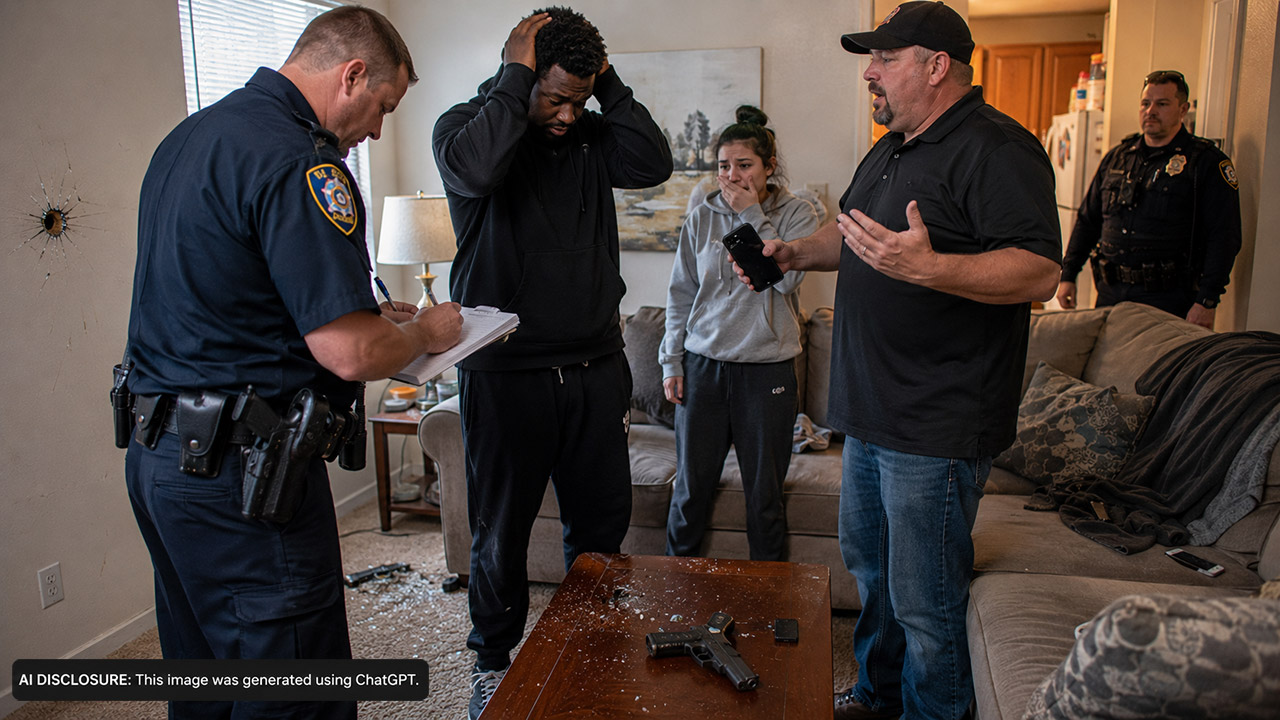
According to the renter, the guest then racked the slide and “accidentally” pulled the trigger, discharging the firearm inside the unit. The post doesn’t describe injuries, but commenters made it clear: regardless of who got hurt or didn’t, an indoor discharge in an apartment building is a serious incident that can put neighbors at risk through walls, doors, and shared hallways.
Why management treated it like a deal-breaker
The renter said the apartment company served a “notice to quit,” effectively starting the eviction process. A commenter with legal experience pointed out the obvious: many leases include rules about criminal activity, dangerous conduct, and property damage. Even if the firearm itself is legal to possess, firing it inside a multi-unit building can still be treated as endangerment, nuisance, or a major lease violation.
There’s also the property damage side. A round going off indoors often means a hole in drywall, trim, a cabinet, a floor, or even something worse. That commenter noted that if the unit was damaged, the landlord has even more justification to remove the tenant if the damage isn’t promptly repaired and paid for.
The safety failures that set the stage
One commenter laid out a blunt list of safety breakdowns, and it reads like a checklist of what not to do. Don’t hand a firearm to someone unless you’re absolutely sure they can handle it. If you do hand it over, clear it first and visually confirm the chamber is empty—then watch the other person verify it, too. Treat it as loaded anyway. And don’t load a gun unless you actually intend to fire.
That last point is going to ruffle some feathers because plenty of folks keep a defensive firearm loaded at home. But in an apartment setting—especially when company is over and curiosity gets involved—there’s a real argument for dialing down the administrative handling. Guns don’t go off by themselves; they go off when people get casual, distracted, or eager to “just check something real quick.”
How fast a “good tenant” reputation can evaporate
The renter said they had already talked to the apartment manager and had an excellent history with the company. It didn’t matter. Management reportedly wasn’t willing to budge, even if the renter could prove they sold the gun or moved it elsewhere.
That’s a hard lesson for anyone who rents: your track record helps with late fees and minor disputes, but it may not protect you from a high-risk incident that scares other tenants. An indoor gunshot is the kind of thing that gets immediate complaints, triggers liability worries, and forces a property manager to choose between one tenant and the peace of an entire building.
What other people focused on: neighbors, liability, and eviction records
A second commenter made a point that outdoorsmen understand instinctively: if you spook the neighbors, you’re not just dealing with feelings—you’re dealing with consequences. They noted that if they were the neighbor who heard a gunshot through the wall, they would complain, and they’d expect management to act. In a multi-unit building, the “backstop” is other people’s living space, and that changes the whole tone.
Another practical warning was about paperwork. One commenter advised avoiding an eviction filing if at all possible because filings can become public record. Even if you later win, settle, or move out voluntarily, having an eviction case tied to your name can make finding your next place harder—especially on a short clock.
The options the renter seemed to have—and what most gun owners should take from it
The advice in the discussion wasn’t complicated, but it was real-world. Talk to the landlord anyway, even if it’s embarrassing. Show up with an apology, offer to repair the damage, and present a concrete plan to make sure it never happens again—things like a firearms safety refresher and moving guns into more controlled storage. The commenter even suggested renting secure storage at a range, which is a practical option in some areas when you need to remove firearms from the home quickly.
But the same commenter also acknowledged the hard truth: the landlord may refuse to negotiate, and the renter may need to move quickly to avoid the longer-term damage of an eviction suit. The renter themselves summed it up as suddenly having to play “find a new apt in 5 days,” which is about as stressful as it gets.
For the rest of us, the takeaway isn’t anti-gun—it’s anti-careless. If you’re going to handle firearms around other people, keep it boring. Clear it. Verify it. Keep fingers off triggers. Don’t mix show-and-tell with distractions like movies and guests milling around. Whether you live on 40 acres or on the third floor, one loud mistake can cost you your home, your reputation, and someone else’s safety.
Like The Avid Outdoorsman’s content? Subscribe to our newsletter so you never miss an article.
Here’s more from us: