Photo credit: AI-generated image created using ChatGPT. Illustrative only
A Missouri mom thought a hard conversation about firearms had already happened—and that the fix was in place. Then she heard her 6-year-old tell a teacher, plain as day, that he’d taken a real gun away from his little brother during a weekend at his dad’s house.
The details come from the source post, where the mother laid out what her child reported, what the school flagged, and what she was told by CPS when she tried to stop the next scheduled visit. For anybody who owns firearms and has kids in the house, it’s a gut-check story—because this isn’t about politics. It’s about access.
A “locked up” gun that apparently wasn’t
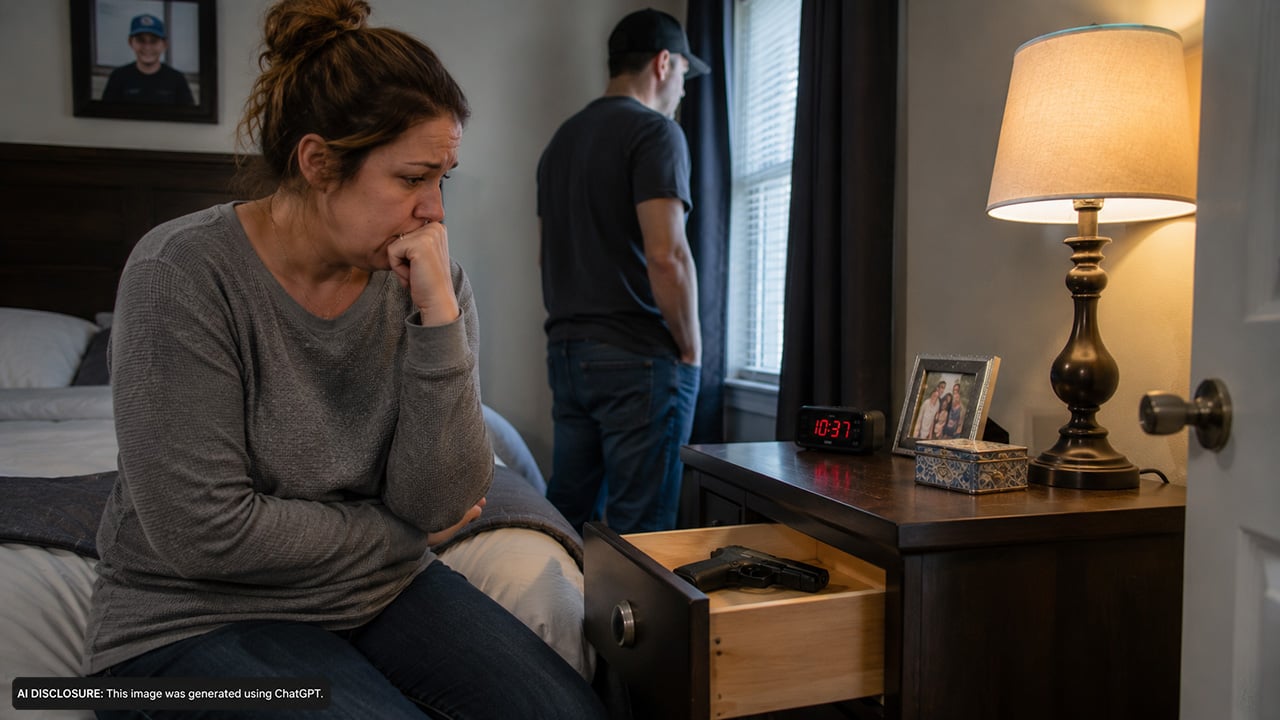
The mother said the concern started months earlier, back in November, when her son mentioned his dad kept a gun in a nightstand “to keep them safe.” She confronted her ex about why their child knew where it was and why it wasn’t secured.
According to her account, the father said he was “just about to buy a lock box” but had to wait due to cost. She asked for proof and was sent a photo of a gun in a lock box. With that, she believed the firearm was secured—likely out of reach, in a closet, and not sitting where little hands could wander onto it.
But later, she said her child reported they now had two guns—one in each nightstand. Whether that means the lock box was removed, never consistently used, or only used for the photo, the result is the same: young kids apparently had access to an unsecured handgun in a bedroom nightstand.
The moment it came out: a school pickup conversation
The situation didn’t come to light because an adult at the house reported it. It surfaced during a normal school day, when her son was picked up through an after-school program and started talking with another child about BB guns.
Her son reportedly said, “I took a gun from my brother this weekend.” The teacher who overheard it did exactly what you’d want a professional to do—talked to him about never touching guns and finding a grown-up, then called the mother to report what was said.
When the mother and her husband picked the boy up, she said she tried to calmly get clarity. The child’s response wasn’t confusion or exaggeration. He told her, “but I was safe, that was dangerous for my brother to have.” That’s a heavy statement coming from a 6-year-old, and it points to a kid who understands something about consequences—even if he shouldn’t have had to learn it that way.
What the 6-year-old described happening in the bedroom
As told by the mother, her son said he and his 4-year-old half-brother went into the father and stepmother’s room. The younger child opened the nightstand, pulled out the gun, and began aiming it at his own face and at the ceiling while pulling the trigger.
The 6-year-old told his mom he believed there were no bullets in it because “no bullets came out” when the trigger was pulled. That detail is terrifying for one simple reason: a child can’t reliably confirm whether a gun is loaded. A magazine could be in, a round could be chambered, and a misfire can happen. Even if it truly was unloaded, you’re still one bad decision away from tragedy if ammunition is present elsewhere in the home.
She asked questions a lot of parents would ask to sort “toy” from “real”: Was it heavy? Did it have an orange tip? What color was it? The child said it was real, black, “kinda heavy,” and had no orange tip. She also showed him the earlier photo she’d been sent of the gun in a lock box, and the child said that was the same gun.
According to the mother, her son took the handgun away from his little brother and put it back in the nightstand along with other items the younger child had pulled out. Then he told his stepmom what happened. The stepmom’s reported response was, “oh, well he’s not supposed to do that. Stay out of my room.” The boy said he didn’t believe his father was told and that his dad wasn’t around during the moment.
Why this hits gun owners differently: storage isn’t optional with kids
Most folks who’ve spent time around firearms understand something city headlines miss: a gun isn’t “safe” because you told a child not to touch it. Kids are curious, kids explore, and kids can reach places you wouldn’t believe. A nightstand drawer is basically an invitation.
Nightstand storage is common in the home-defense world because it’s convenient. But in a house with young kids, convenience has to come second to access control. That generally means a quality quick-access safe that’s actually used every single time, not “when I get around to it” or “most days.” If the gun is out, the adult is in direct control of it. If the adult isn’t in direct control, it’s secured.
And there’s another piece here that outdoor folks understand: “unloaded” isn’t a safety plan. If there’s a gun in a drawer and ammo anywhere else in the house, that’s still an access problem. Even without ammo, muzzle discipline and trigger control are learned skills. A 4-year-old shouldn’t be handling a firearm at all, much less pointing it at his own face.
CPS, custody orders, and the hard wall parents run into
The mother said a mandated reporter notified CPS, and she answered questions based on what her child told her. She also contacted an attorney. But with the child scheduled to go back to his dad’s the next day, she felt like the clock was ticking and she had no clean move.
In her update, she said she called 10 lawyers and found one who advised her on what to file quickly. She went to the courthouse and filed for an emergency protection order. She said she was told it would not override the custody arrangement set in their divorce about 4 1/2 years ago.
She also wrote that CPS classified the situation under “lack of supervision” and told her the main action would be ensuring the guns were locked up. Later, she said CPS spoke to her child and to the stepmom. The stepmom reportedly confirmed the guns were in the nightstand and said they’d put them “up and away.” The mother said CPS told her they never personally saw the guns and that locks were being provided that day.
That’s the part that leaves a lot of parents feeling helpless: family court and child welfare systems often move slowly, and they tend to focus on remediation—“make the guns secure”—instead of immediately changing custody without a longer process. Whether that’s right or wrong, it’s a reality families run into.
The other details that shaped her fear
Beyond the gun access, the mother described a broader pattern that made her unwilling to trust the situation would truly change. She said her son has had meltdowns before visits, hiding and sobbing, and has said he’s scared to go and doesn’t want to because his brother hurts him.
She also claimed her ex has not paid child support in three years, doesn’t contribute to school or medical costs beyond insurance, and has been largely absent from appointments, conferences, and major events. Those points don’t prove the firearm issue, but they do explain why she doesn’t believe a “we’ll fix it” promise is enough when the stakes are life and death.
And that’s the plain truth: when a 6-year-old has to be the responsible one in the room, the adults already failed.
For gun owners reading this, the lesson is simple and non-negotiable: if children are in your home—even part-time—secure your firearms like you mean it. A real quick-access safe used consistently is cheaper than a tragedy, and it’s a whole lot cheaper than court. In this case, a little boy did what he could. He shouldn’t have been put in that position in the first place.
Like The Avid Outdoorsman’s content? Be sure to follow us.
Here’s more from us: