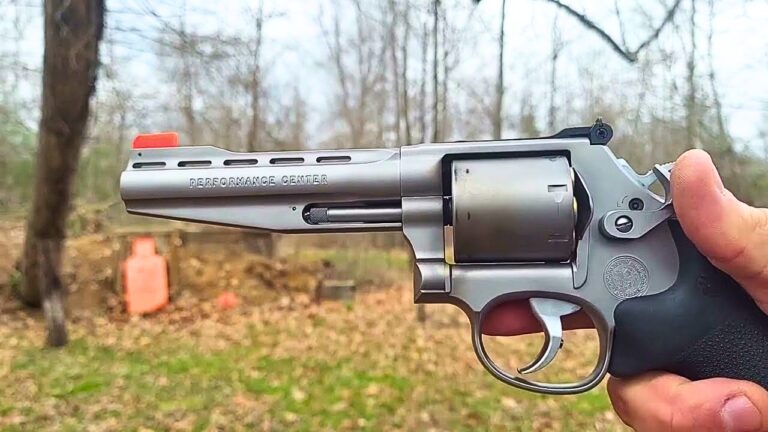
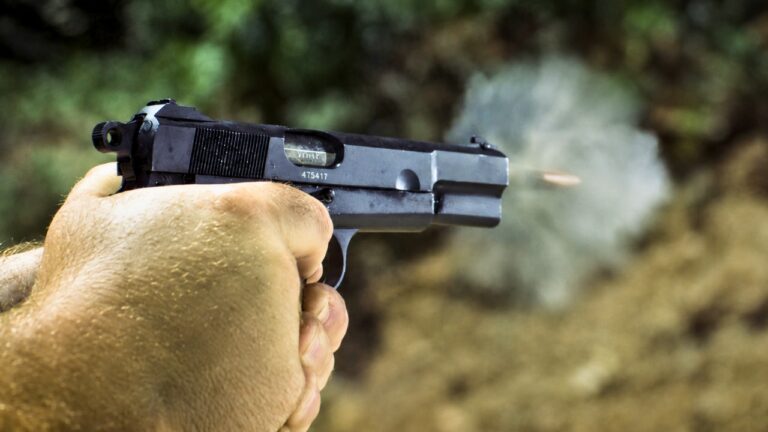
Photo credit: WHO_TEE_WHO/YouTube
A lot of niche calibers exist for good reasons: old rules, old gear limits, a marketing push, or a real attempt to solve a narrow problem. The catch is that most shooters don’t live in that narrow problem. You live in the real world of ammo availability, parts support, magazine options, and what you can find on a random Tuesday in a small-town shop.
If a caliber can’t give you a clear advantage on target, in the field, or on a timer, it starts feeling like extra work. More time hunting ammo. More time tweaking springs. More time explaining what you’re shooting. These are the rounds that often end up in that category—because a more common option covers the same ground with fewer headaches.
.45 GAP

.45 GAP was built to get .45-caliber performance into a shorter grip frame than a traditional .45 ACP pistol. On paper, that sounds useful. In practice, you’re still sending a similar weight bullet at similar speeds, and you’re doing it with ammo that’s harder to find and usually costs more.
If you want a .45, .45 ACP is everywhere, with endless load choices and proven support. If you want a handier grip, modern 9mm pistols offer better capacity and cheap practice ammo without giving up practical performance for most defensive use. .45 GAP can work fine, but it rarely gives you something you can’t already get from .45 ACP or 9mm—only with less convenience.
.41 Action Express
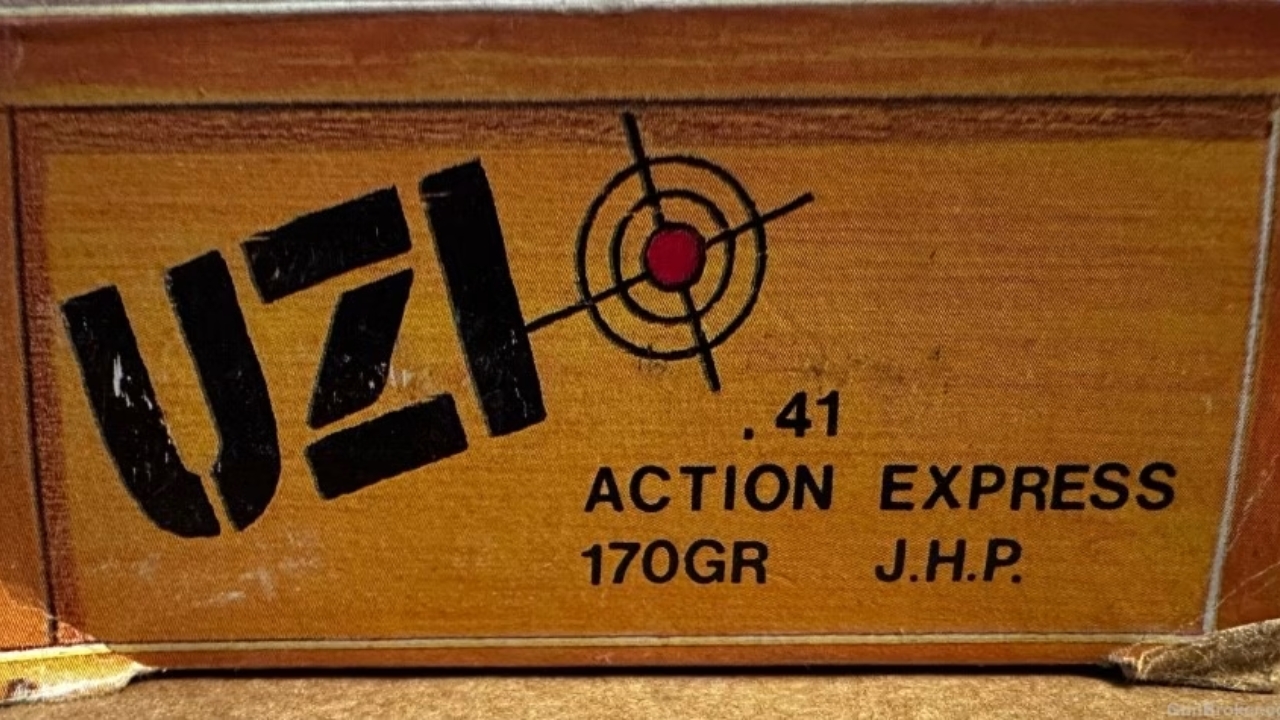
.41 AE had a clever goal: give you near-.41 Magnum bullet diameter in a semi-auto that could share a 9mm-sized breech face. For a short window, it was an interesting way to chase more punch without swapping major parts. The problem is that modern shooters have easier paths to the same results.
If you want more than 9mm, .40 S&W and 10mm Auto have broad factory support and lots of proven pistols. If you want common and affordable, 9mm stays king. .41 AE doesn’t outperform those options in a way you can feel at typical handgun distances, and it’s far tougher to feed. That turns it into a curiosity more than a practical choice.
9×21 IMI

9×21 exists largely because some places restrict civilian ownership of 9×19. By stretching the case a couple millimeters, it stays out of “9mm Luger” territory while keeping similar performance. If you live under those rules, it makes sense. If you don’t, it’s a solution to a problem you aren’t dealing with.
In the U.S., 9×19 is everywhere. You can buy it in bulk, find it in small shops, and get defensive loads from every major maker. 9×21 doesn’t shoot meaningfully flatter, hit harder, or run cleaner. It mainly asks you to chase ammo and brass. Unless you’re bound by legal quirks, 9mm Luger does the same job with far less effort.
7.65 Luger (.30 Luger)

.30 Luger is a piece of history that helped lead to 9mm. It’s accurate, mild, and flat-shooting for what it is. The issue is that it doesn’t bring a practical advantage today unless you’re collecting or trying to keep a period-correct pistol running.
For punching paper and steel, 9mm gives you the same ease of shooting with more energy and far better availability. For soft recoil and low cost, .22 LR and 9mm both beat it in convenience. .30 Luger ammo shows up in small batches, often priced like a specialty item, and not every range has a stash on hand. If you want to shoot often without planning around ammo, 9mm covers the ground and then some.
.38 Super

.38 Super earned its place in competition and in the 1911 world, and it can be a great round. The point is that it rarely gives the average shooter an advantage that a common 9mm can’t match in the real world. For defensive use, modern 9mm loads perform extremely well, and you can practice far more for the same money.
Where .38 Super shines is in certain race-gun setups and in jurisdictions where it offers legal workarounds. Outside that, it’s hard to justify the extra cost and the narrower selection. If your goal is a flat-shooting, reliable semi-auto round with good capacity, 9mm does it with easier magazines, easier ammo, and fewer parts hassles.
.356 TSW

.356 TSW was designed with competition and duty performance in mind, pushing 9mm-diameter bullets fast in a longer case. It’s a real cartridge with real performance, but it lives in a world where 9mm +P, .357 SIG, and .40 S&W already exist with broad support.
For most shooters, the target doesn’t care that your 9mm bullet left the muzzle a bit faster if your recoil control and practice budget suffer. 9mm +P and standard-pressure defensive loads are widely available and proven, and you can actually find them when you need them. .356 TSW tends to turn into a handloader’s project or a collector’s rabbit hole. If you want to shoot more and fuss less, 9mm is the easier lane.
.357 SIG

.357 SIG can be a hard-hitting, flat-shooting service round, and it feeds well thanks to its bottleneck shape. The tradeoff is cost, blast, and fewer options on store shelves. For most people, the real-world gain over quality 9mm +P loads is smaller than the headache of feeding it.
If you want common practice ammo and broad pistol choices, 9mm wins. If you want a heavier bullet with a similar duty role, .40 S&W fills that gap with more widespread support. .357 SIG isn’t “bad,” but it often lands in a spot where you’re paying extra for a performance edge that doesn’t show up clearly at typical handgun ranges. You end up managing the caliber instead of focusing on shooting.
.44 Special

.44 Special has a loyal following because it’s pleasant to shoot and can be very effective. The problem is that it’s often redundant for the person who wants a practical revolver setup. Many .44 Magnum revolvers can shoot .44 Special all day, and that gives you both mild loads and full-power options in the same gun.
If you’re buying a revolver and want flexibility, .44 Magnum covers .44 Special’s comfort zone while keeping the option to step up. If you want a common big-bore revolver round with lots of ammo choices, .357 Magnum is easier to find and cheaper to practice with. .44 Special can be great, but it often ends up as a specialty purchase when a more common chambering gives you the same mild shooting experience with fewer limitations.
.32 H&R Magnum

.32 H&R Magnum is accurate, low recoil, and easy to shoot well. It also runs into the reality that most people can get the same benefits from far more common revolver ammo. A .38 Special with wadcutters or standard-pressure loads can be extremely manageable, widely available, and effective for training.
The other issue is support. Not every shop stocks .32 H&R, and not every range buddy has some in their bag when you run out. That matters if you shoot a lot. .32 H&R can make sense if you’re committed to it, but it rarely gives you something you can’t already get from .38 Special in terms of shootability and practical accuracy. For most people, the common round keeps range days easier and cheaper.
.260 Remington

.260 Remington is a fantastic 6.5mm cartridge that can shoot accurately, carry energy well, and handle deer-sized game cleanly. The issue is not performance. The issue is that 6.5 Creedmoor covers the same role with far better factory support, rifle availability, and load variety.
If you handload, .260 can be a joy. If you buy ammo off shelves, Creedmoor is far easier to live with. Ballistically, they overlap heavily with similar bullet weights and real-world trajectories. When two rounds do the same work, the one with more rifles, more ammo options, and more availability tends to win. That’s why .260 often feels like extra effort today, even though it remains a solid performer.
.243 WSSM

.243 WSSM was built to push .243-level performance in a short-action package, often with a velocity bump. It can work, and it can shoot well. What it doesn’t do is create a meaningful advantage for most hunters and range shooters compared to the plain .243 Winchester.
.243 Win is everywhere. Rifles are common, ammo choices are broad, and brass and dies are easy to track down. The WSSM family has a smaller ecosystem and fewer options when something breaks or you want to change rifles. Even if you gain some speed, you’re still operating in the same general .243 performance lane. For deer and varmints, .243 Win already handles the job with less hassle.
7mm WSM

7mm WSM was intended to deliver magnum-like performance in a shorter action. It can do that, and in the right rifle it shoots great. The question is what you gain in day-to-day use. For most hunters, 7mm Remington Magnum gives you similar downrange results with far more ammo availability and rifle options.
When you’re trying to stay stocked for a season, common wins. 7mm Rem Mag is a staple. You can find multiple loads, from budget soft points to premium hunting bullets, without special ordering. With 7mm WSM, you might love the cartridge and still spend time hunting ammo more than you want. The animal won’t know the difference between the two when the shot is placed well, but you’ll feel the difference every time you buy ammo.
.300 Remington SAUM
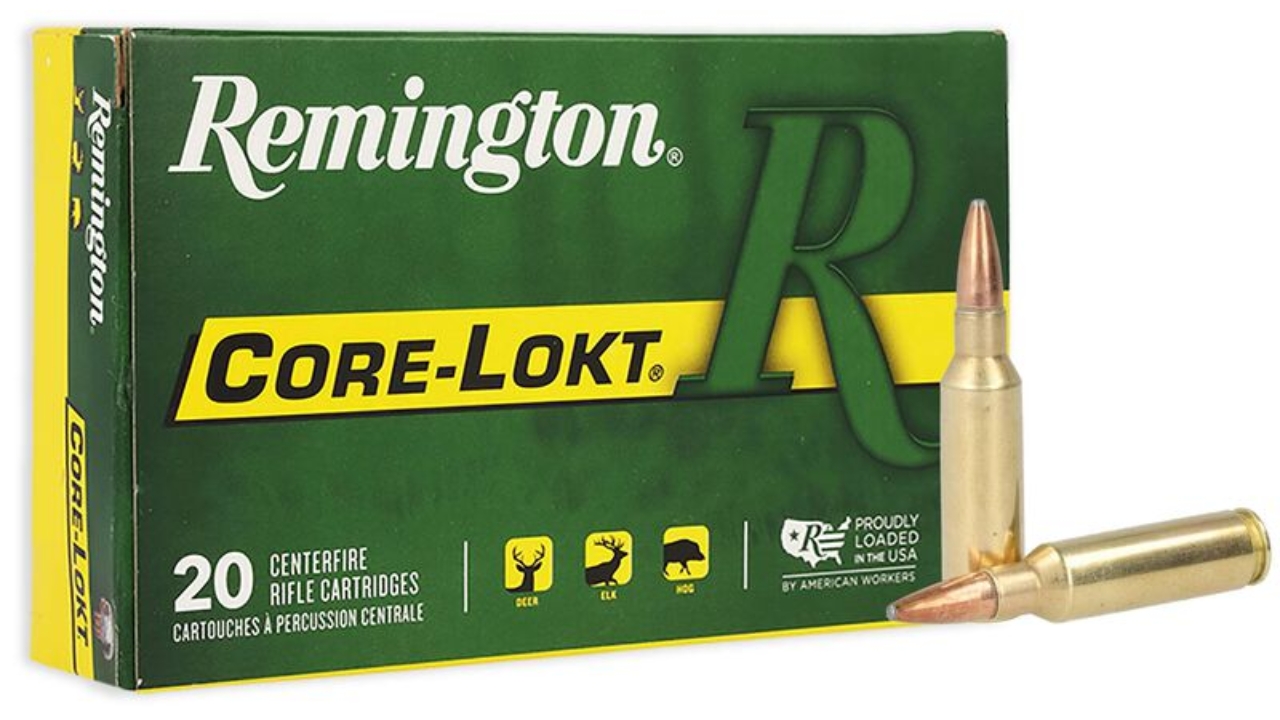
.300 SAUM can be an excellent short-action .30-caliber option, and it delivers real performance. The problem is that .300 WSM occupies the same space with more widespread adoption, better factory support, and more rifle options. For most shooters, SAUM ends up being the less convenient version of the same idea.
If you want short-action .30-caliber power, .300 WSM is easier to feed. If you don’t need magnum performance, .308 Winchester handles an enormous amount of hunting and range work with lower cost and less recoil. SAUM often becomes a “because I like it” cartridge, which is a fine reason, but it doesn’t give the average hunter a practical edge that a more common .30-caliber round can’t already deliver.
16 gauge

The 16 gauge sits between 12 and 20, and it has a real following. The hard truth is that 12 and 20 already cover the same hunting jobs with better ammo selection, more gun choices, and easier sourcing. You can load 12 gauge light for upland and push it heavy for waterfowl. You can run 20 gauge for a lighter carry gun with plenty of effective loads.
With 16 gauge, you often end up limited in shot size options, payload variety, and local availability. It can work extremely well, but it doesn’t open doors that 12 or 20 can’t open. If you’re buying into a system you want to shoot and feed easily, the more common gauges make life easier without giving up capability.
28 gauge

28 gauge is fun to carry and pleasant to shoot, and in the right hands it’s deadly on birds. The question is what it does that a 20 gauge can’t do for most people. A 20 can be loaded light for the same soft-shooting feel, and it can be loaded heavier when you need more margin on tough birds or longer shots.
The 28’s biggest drawback is the everyday stuff: ammo cost and availability. Many shops stock a few boxes, not a shelf full of options. If you shoot a lot, that adds up fast. If you hunt occasionally and love the feel of a 28, it can be a great choice. If you want one gauge that covers the broadest ground with the least hassle, 20 gauge does the same work and more.
Like The Avid Outdoorsman’s content? Be sure to follow us.
Here’s more from us: